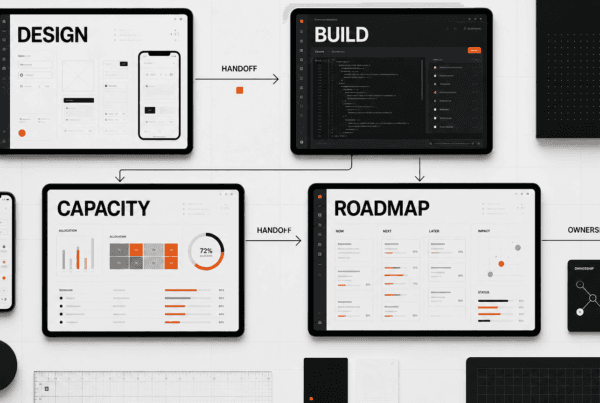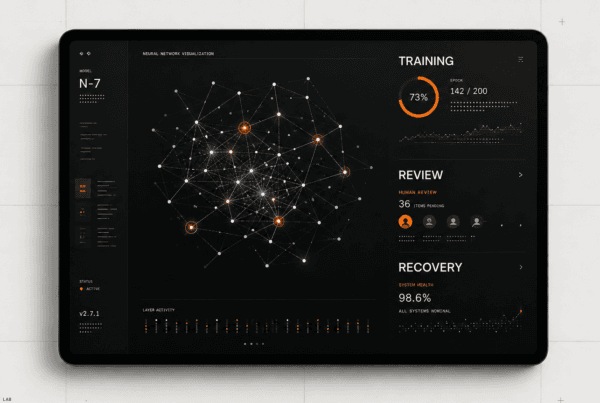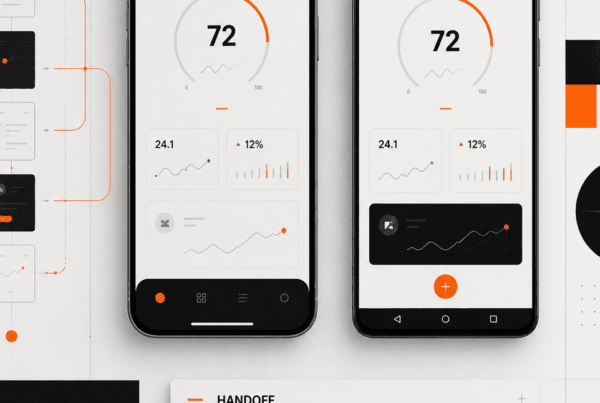

A design agency for app launch should own the critical path from core user problem to a buildable first product experience, not decorate a feature list after engineering is already mid-build. DesignX works this way with startup and product teams: senior designers map the launch journey, cut nonessential scope, and leave developers with flows, UI, and system rules they can ship.
The short version:
- Hire for problem compression and launch-path ownership, not a stack of pretty screens.
- Buy a defined launch package: primary journey, return loop, empty/error states, and engineering-ready handoff.
- Budget and timeline should match scope bands you can inspect, not open-ended "we'll figure it out."
- Keep one decision owner on your side and review buildability every week.
- Skip agencies that cannot show a shipped path from brief to production decision.
CB Insights' recent failure analysis of 431 VC-backed shutdowns since 2023 puts capital running out at the end of the story (70%), with poor product-market fit sitting underneath as a primary cause in 43% of cases with identified reasons. A launch design partner cannot invent market demand. They can stop your team from spending months and runway on screens nobody can use, trust, or complete.
What a design agency for app launch actually sells
Founders often search "design agency for app launch" when they need one of four things:
- A clickable prototype to validate demand before writing product code.
- High-fidelity product UI for a first release already confirmed as worth building.
- A brand-to-product system so the app, site, and pitch materials feel like one company.
- Temporary senior design capacity while the founding team finishes early growth hires.
Those are different buys. A pure brand studio can make a strong mark and still leave your product unserious. A production UI house can ship 40 screens that solve the wrong problem faster. A staff-aug arrangement can fill seats without forcing the hard tradeoffs a launch requires.
Treat the agency as a launch path partner. Their job is to help you decide what the first product must prove, design the shortest credible path to that proof, and package the work so engineering can build it without nightly clarification calls.
At DesignX, launch-shaped work usually sits next to MVP design for startups and the product design sprint process. The agency beta is judgment under constraint: what to cut, what to keep, and how to make the first session feel complete.
When you need an agency vs building in-house or hiring freelancers
You need a design agency for app launch when the cost of a wrong first product experience exceeds the cost of senior outside help. Common triggers:
- You have a technical founder and no product designer who has shipped a first release.
- You have one designer covering brand, product, and marketing, and launch quality is slipping.
- Investors or design partners want a clearer product story before the next raise.
- Engineering is blocked on unresolved flows, edge cases, or component ownership.
- Your prototype converts poorly and the team cannot separate messaging problems from product problems.
Stay internal when you already have a strong product designer, a stable problem definition, and a week-to-week critique culture. Use freelancers when the work is narrow: one landing page, one illustration set, or a small screen polish pass after the journey is fixed.
Agency engagement makes the most sense when you need several connected artifacts under one set of decisions. Launch rarely fails because a single button was ugly. It fails because onboarding, empty states, permissions, pricing surfaces, and the return visit never formed one coherent path.
What to put in scope for the first launch package
Do not buy "the whole app" as an undefined blob. Buy the smallest complete launch map.
Must-have scope
- One primary user and one supporting role only if the product cannot function without it
- Problem statement and success metric for the first release
- End-to-end core journey from entry to first value
- Return path or reactivation moment for week-one usage
- Account, permission, or billing moments that block completion
- Empty, loading, error, and edge states for every critical screen
- Component and spacing rules reading enough that engineering can extend without freestyle guesses
- Annotated Figma handoff with flows, variants, and open questions marked as open
Strong add-ons when the launch depends on them
- Marketing site or waitlist page that matches the product promise
- Pitch or demo prototype for sales and investor conversations
- Lightweight design tokens for color, type, and elevation
- Motion guidance for the moments that teach product behavior
- Usability tests with 5 target users on the riskiest flow
Park for later
- Admin back offices the early customer never sees
- Multi-role complexity beyond the first paid user
- Deep personalization
- Every settings panel
- Feature parity with incumbents
Competitor market context is useful here. Public agency writing from 925Studios' 2026 MVP agency roundup places complete MVP designs for 10 to 15 screens in a $5,000 to $15,000 band at many specialist shops, with multi-role products climbing to roughly $30,000 to $50,000, and dedicated teams claiming 4 to 6 week prototype timelines from a structured brief. Use those ranges as market signal, then judge partners on what is included, not the headline number alone.
Budget and timeline bands that hold up in diligence
Pricing language on the open web is noisy. Still, buyers need anchors.
From current public competitor content:
- Specialist MVP design packages often land around $5,000 to $15,000 for 10 to 15 core screens.
- Multi-role or more complex first products climb into the $15,000 to $50,000 design range before full product engineering.
- Subscription-style AI/SaaS design partners such as Eleken publicly discuss full-time designer retainers in the mid four to low five figures per month, with flexibility marketed around cancel anytime models.
- Broader app UI programs in industry roundups often cite $20,000 to $100,000+ depending on systems depth and enterprise constraints.
DesignX's commercial packaging is intentionally senior-led rather than commodity production. Our public pricing context for product and SaaS work put focused projects in the $15,000 to $25,000 range and fractional design retainers from $9,700 per month when a team needs ongoing senior ownership after the first launch. See the fuller bands in our UI/UX design agency pricing guide and design agency pricing guide.
| Launch need | Reasonable design shape | What good looks like |
|---|---|---|
| Validate one risky journey before build | 1 to 2 week prototype or sprint | Test result and a build/no-build decision |
| Ship a credible first release UI | 3 to 6 week fixed package | Complete core path + system seeds + handoff |
| Launch while still iterating weekly | Retainer after base package | Same senior owners, backlog triage, QA will |
| Brand + product + marketing under one system | Coordinated multi-surface package | Shared language, components, and narrative |
If a quote is dramatically cheaper than market, ask which of the following disappeared: research, edge states, testing, system rules, or senior time. Cheap screens that force engineering rework are not cheaper.
The hiring scorecard
Score every candidate from 0 to 2 on the criteria below. Total is 20.
| Criterion | 0 | 1 | 2 |
|---|---|---|---|
| Launch experience | Portfolio is mostly marketing or mature redesigns | Some early product work, thin proof | Multiple first-release journeys with outcomes |
| Problem compression | Accepts the full wish list | Mentions prioritization | Forces a must-ship path and documents cuts |
| Journey ownership | Screen dump orientation | Mentions flows | Owns entry-to-value, return loop, and failure states |
| Buildable handoff | Pretty Figma, vague specs | Some annotations | Components, states, and open questions labeled for eng |
| Decision speed | Multi-week feedback theater | Weekly updates | Working sessions with decisions same week |
| Testing discipline | None | Informal feedback | Real user tests on the riskiest flow |
| Commercial clarity | Vague "depends" quote | Range without inclusions | Scope, exclusions, revision rules, owners |
| Post-launch path | Project ends at file delivery | Optional add-on | Retainer or staged iteration plan |
| Team stability | Unknown juniors | Named lead, rotating support | Named senior owners who will stay |
| Fit with your stack | Generic templates | Some platform awareness | Comfortable with your product type and constraints |
Reject any team that scores 0 on problem compression or buildable handoff. Those are the failure modes that waste the most runway.
Red flags that waste runway
Watch for the sales process as carefully as the portfolio.
- The pitch starts with visual style before asking what the first product must prove.
- The team cannot name what they would cut from your brief in the first week.
- Discovery is billed as open-ended months with no decision gates.
- Handoff is "we'll share the Figma" without states, tokens, or engineering walkthrough.
- Every case study ends at visuals. No mention of activation, conversion, build time, or residual support.
- The people on the sales call are not the people shipping the work.
- Brand, product, and website are sold as disconnected packages with no shared system.
- AI-generated concept decks arrive faster than any questions about users, constraints, or engineering capacity.
Eleken's startup agency guidance is clumsy in places because every agency is selling itself, but the buyer filter is sound: look for partners comfortable with ambiguity, lean collaboration, buildable delivery, and outcomes instead of asset dumps. Borrow the filter. Ignore the self-congratulation.
How to prepare before the kickoff
Agencies go faster when the founder arrives with material. Prepare this pack:
- Problem statement in two sentences.
- Target user and the situation that brings them in.
- Competing options those users already try, including spreadsheets and manual workarounds.
- Non-negotiable constraints: platform, compliance, integrations, launch date, budget ceiling.
- Analytics or interview notes if you already have a prototype or waiting list.
- Engineering reality: stack, team size, release process, and what "done" means for handoff.
- Decision owner and weekly review slots that will not move.
If you cannot name the single user outcome that must work on day one, pause agency search and run a short sprint first. DesignX's product design sprint process exists for that gate.
Engagement model that keeps launch on track
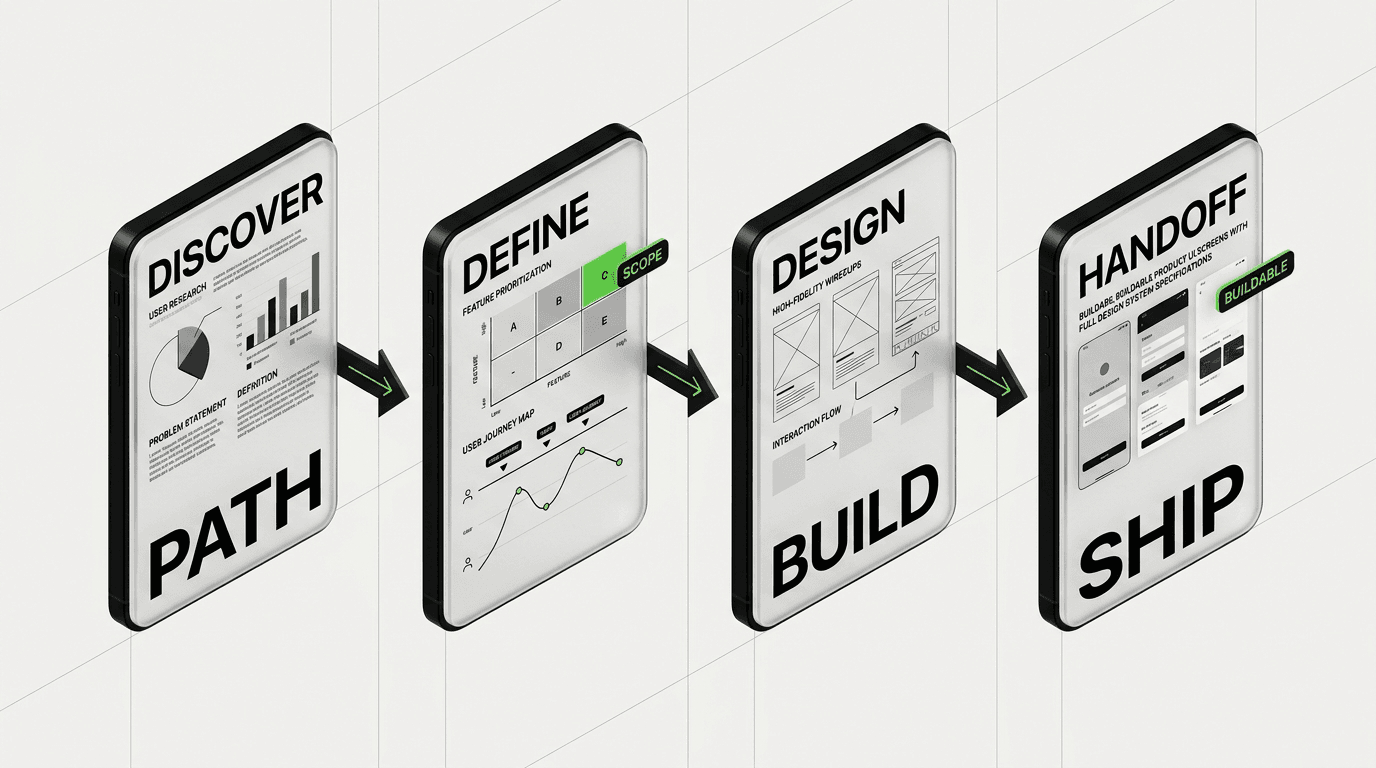
Use a four-stage shape even if the calendar is short.
1. Pressure-test the brief
Confirm the user, the riskiest assumption, and the launch success metric. Write the out-of-scope list before screens start.
2. Map the core path
Flow first. Screens second. If the happy path needs 18 steps, cut until the path teaches value faster.
3. Design buildable product UI
High fidelity belongs after structure is stable. Include edge states in the same pass. Founders often review happy paths and miss the failure states users hit first.
4. Handoff and first iteration window
Walk engineers through the file. Record decisions. Keep two weeks of cleanup capacity after the first engineering questions land. Launch design that ends the day files are emailed is theater.
For regulated monetization, payments, or health data, bring specialists early. Fintech and sensitive app surfaces have design constraints that change information architecture, not just color. Our notes on fintech app design regulations are a useful primer if your product lives under those rules.
How DesignX approaches launch design
DesignX is a senior design studio, not a junior production bank. Team experience spans product, brand, and complex catalogs for companies such as Klein Tools, Oura Ring, HP, and Bodybuilding.com backgrounds on the roster. The Klein Tools catalog work produced a 23% lift in dealer adoption after redesign, which is the standard we want around measurable product clarity.
For app launch work, we usually:
- Start with the commercial outcome and primary user path
- Kill nice-to-have screens early
- Design brand, product UI, and launch site language as one system when the offer needs it
- Leave engineering a file with states and components, not a mood board
- Offer a fractional path after launch when the product still needs senior taste week to week
If you are comparing models, read fractional design team vs full time and how to hire a UI/UX design agency. The right answer depends on whether you need a one-time launch path or ongoing product ownership.
Sample 30-day launch design plan
This is a realistic high-level plan for a scoped first release, not a fantasy Gantt chart.
Week 1: Brief pressure test, user definition, success metric, competitive teardown, information architecture, flow map. Decision gate: approve the cut list.
Week 2: Wireframes for core path, empty and error states, mid-fidelity prototype. Decision gate: test or internal walkthrough on the riskiest journey.
Week 3: High-fidelity UI, component seeds, content rules, marketing surface alignment if included.
Week 4: Engineering handoff, QA checklist, polish pass, backlog of post-launch improvements ordered by activation impact.
If the product risk is higher than the visual risk, compress weeks 1-2 into a formal sprint before spending on polish.
A note on "MVP agencies" and roundup content
Search results are crowded with "best MVP design agencies" listicles. Many are useful for market orientation and rotten as exclusive truth. 925Studios, Arounda, Eleken, thoughtbot, Superside, and others all sell different mixes of design-only, design-plus-build, retainer, or productized packaging. Fuselab's app agency comparison makes the same point from another angle: fit depends on complexity, industry, and whether your internal engineering team is strong.
Use roundups to learn the market shape. Then diligence the actual team:
- Who does the work?
- What do they refuse to put in an MVP?
- How do they measure launch success?
- What happens the week engineering finds a missing state?
An agency that can answer those without slide theater is rare. Hire that one.
Frequently Asked Questions
What should a design agency for app launch deliver in the first engagement?
Expect a defined problem statement, a core journey map, high-fidelity UI for the launch path, empty and error states, component rules, and an engineering handoff. If your commercial story matters, include the primary marketing or waitlist surface in the same system. Delivery should end with decisions and files someone can build, not a concept compost heap. Ask for a written out-of-scope list so side quests do not silently reappear midstream.
How much does launch app design cost?
Public specialist ranges often sit around $5,000 to $15,000 for compact 10 to 15 screen MVP design packages, with more complex multi-role products moving into the $30,000 to $50,000 design band before engineering. Broader product UI programs can exceed that when systems work, multiple platforms, or heavy research are required. DesignX typically scopes senior launch projects in the $15,000 to $25,000 range and retainers from $9,700 per month when ongoing ownership is the better fit. Judge cost by inclusions, senior time, and rework risk.
How long should a first app design engagement take?
A focused prototype or sprint can answer one high-risk question in about one week. A buildable first-release package often needs three to six weeks depending on roles, integrations, and content readiness. Longer than that usually means either bloated scope or slow decision-making on the client side. Put decision owners on the calendar before kickoff or the timeline will expand without buying better product quality.
Should we hire a design-only agency or a design-and-development shop?
Hire design-only when you already have engineering capacity and need product judgment, UX structure, and UI systems. Hire design-and-development when you lack internal build capacity and want one delivery chain. Mixed shops can reduce handoff friction, but only if the same team keeps product quality high under coding pressure. A gorgeous no-code demo that ignores your real stack can still leave you rewriting the product.
When is a design sprint better than a full launch package?
Use a sprint when the costly risk is strategic: wrong user, wrong value proposition, or wrong workflow. Use a launch package when the core bet is settled and the team needs production-ready UI and handoff. Many teams waste money polishing a product story that should have been killed or redirected after five user tests. If your biggest unknown is desirability or workflow fit, run the sprint first.
What makes an app launch design partner different from a branding agency?
A branding agency can create identity, narrative, and launch assets. A design agency for app launch has to solve product completion: flows, states, permissions, comprehension, and buildability. You may need both. The failure mode is buying brand theater while the product path still confuses the first user. When budget forces a sequence, lock the core product journey before expanding into a full brand universe.
Ready to plan the launch path?
If you need a design agency for app launch that will cut scope, protect the core journey, and hand engineers something real, talk to DesignX. Bring your user, your constraint, and your launch date. We will tell you whether a sprint, a fixed launch package, or a fractional team is the smarter next move.