
TL;DR: The core difference
When deciding between a fractional design team vs full time, the decision comes down to scope variation and required velocity. A fractional design team provides instant access to senior-level specialists (UX, UI, brand, strategy) without the overhead of recruiting and benefits. A full-time hire provides deep, continuous product focus but limits you to a single person’s skill set and bandwidth. Startups and mid-market companies scaling rapidly typically benefit most from fractional models, while established enterprise teams with stable feature pipelines favor full-time hires.
Fractional Design Team vs Full Time: The Real Trade-Off
Most growing companies hit a breaking point where founder-led design or freelance contractors can no longer support product velocity. At that point, the question is not just budget. It is whether your team needs deeper B2B UX design capability, more output capacity, or both. Leaders face a structural choice: build an internal department or partner with an agency on retainer. Understanding the nuances of a fractional design team vs full time headcount is the first step toward building a sustainable growth engine.
A full-time employee requires upfront investment in recruiting, onboarding, and training before they ever touch an active project. According to the Bureau of Labor Statistics and industry data, standard employee benefits and overhead add roughly 30% to base compensation costs. In contrast, a fractional model operates as a predictable monthly operating expense with zero ramp-up time. If you are comparing costs more broadly, our design agency pricing guide gives a useful benchmark for what senior design support usually costs.
The true cost difference extends beyond salary. When a company hires one full-time product designer, that individual is expected to handle user research, interface design, brand identity, and marketing assets. This often results in diluted quality because deep specialization is sacrificed for generalist coverage.
The Specialized Output Advantage
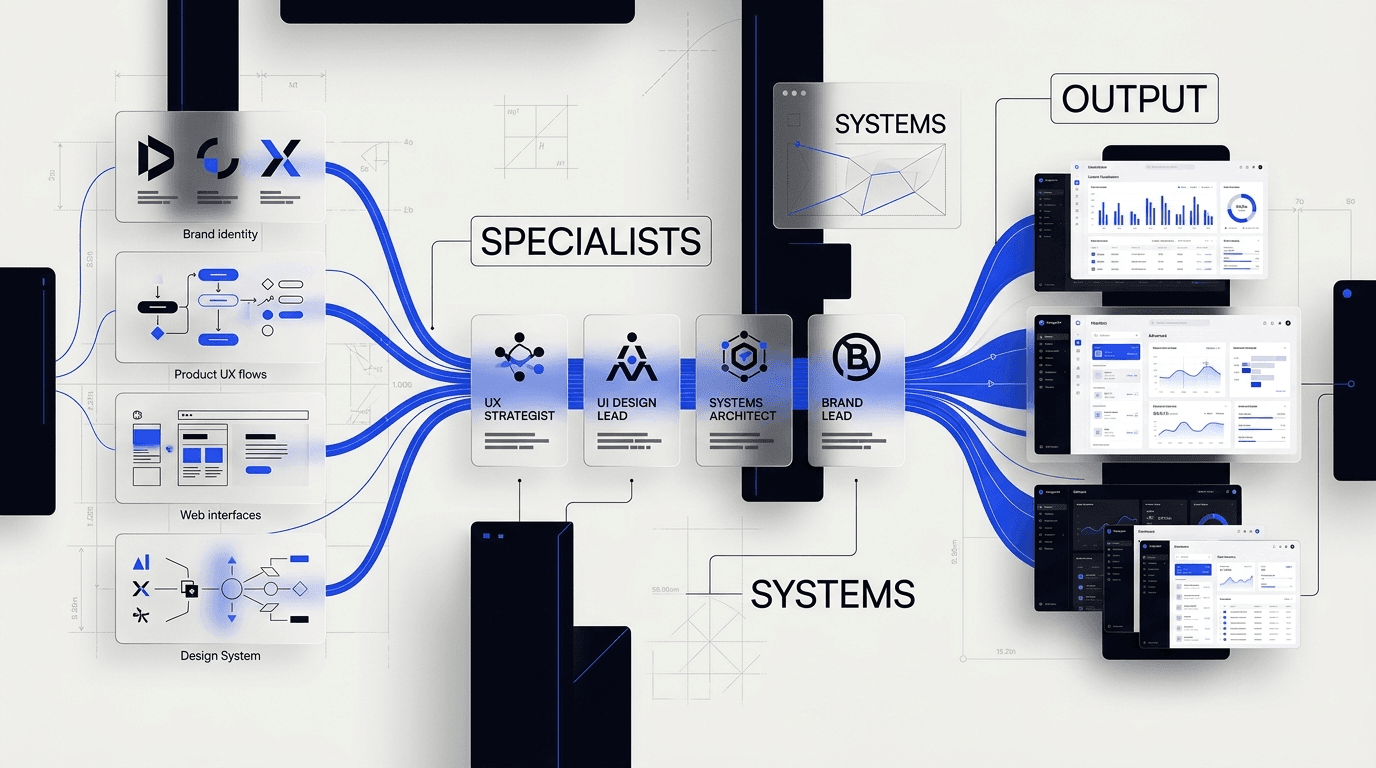
The primary advantage of a fractional partnership lies in skill diversification. A premium fractional design team operates as a synchronized unit rather than a single siloed employee.
- Strategic oversight: Senior creative direction without the executive salary requirement.
- Skill mapping: Direct access to specialized specialists like motion designers or UX researchers precisely when a sprint requires them.
- Instant velocity: Established teams have existing internal workflows and design systems ready to deploy on day one.
- Scalability: Resources dial up during major product launches and dial down during development cycles.
We saw this dynamic clearly when we partnered with Klein Tools. They needed to modernize a massive digital catalog and improve dealer adoption rates. A single full-time hire would have taken months to audit the existing architecture. Our team delivered a 23% increase in adoption by deploying specialized UX researchers and interface designers simultaneously.
The DesignX 4-Part Capacity Test
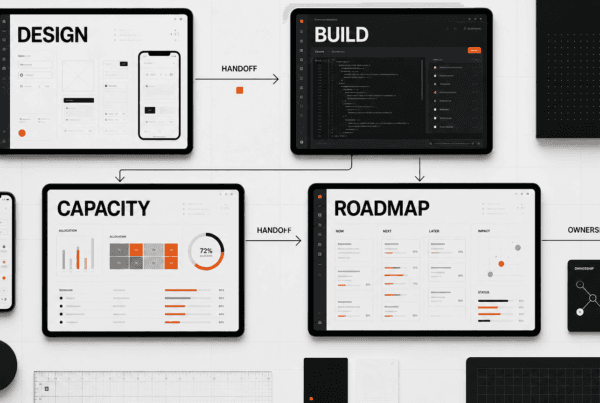
We use a specific diagnostic framework to help executives objectively evaluate whether they need internal headcount or external partnership. If you answer “yes” to three or more of these questions, a fractional model is the mathematically sound choice.
- The Skill Variance Question: Does your upcoming roadmap require distinct disciplines (e.g., brand identity one month, complex dashboard UX the next)?
- The Speed Requirement: Do you need high-fidelity output delivered within the next 14 days?
- The Management Reality: Do your current engineering or product leaders lack the time to mentor and manage a junior or mid-level designer?
- The Budget Threshold: Is your total allocated budget for design operations under $150,000 annually?
Companies that score highly on this test inevitably experience friction with full-time hires. The designer gets pulled in too many directions, experiences burnout, and output velocity plummets.
When Fractional Design Team vs Full Time Stops Being a Close Call
There are specific inflection points where the choice becomes obvious. If a company has achieved product-market fit and is preparing for a Series B funding round, the visual language needs to transition from “scrappy startup” to “enterprise-grade platform.” This transition requires a level of polish and systemic thinking that generalist hires rarely possess.
A standard full-time recruitment cycle for a senior designer taking 40 to 60 days creates a massive strategic delay. While the internal team reviews portfolios and conducts final interviews, a fractional partner would have already delivered the V1 design system and audited the core user journeys.
| Factor | Full-Time Hire | Fractional Design Team |
|---|---|---|
| Ramp-Up Time | 45-60 days (recruiting + onboarding) | 3-5 days (immediate deployment) |
| Cost Structure | Base + 30% overhead + equipment | Fixed flat-rate monthly retainer |
| Skill Depth | Deep in 1-2 core areas | Expert-level across 5+ disciplines |
| Flexibility | Fixed 40 hours/week threshold | Scales with product launch cycles |
By engaging a specialized team, executives mitigate the hiring risk. If an internal hire is a poor culture fit or lacks the necessary technical proficiency, replacing them consumes another two quarters. Fractional relationships operate on performance; if the output misses the mark, the contract is simply adjusted.
Structuring the Transition to Full-Time
The most successful technology companies often use a hybrid approach as they mature. They do not view fractional support as a permanent replacement for internal culture, but rather as an accelerator to bridge the gap until their design needs stabilize into predictable, continuous sprints.
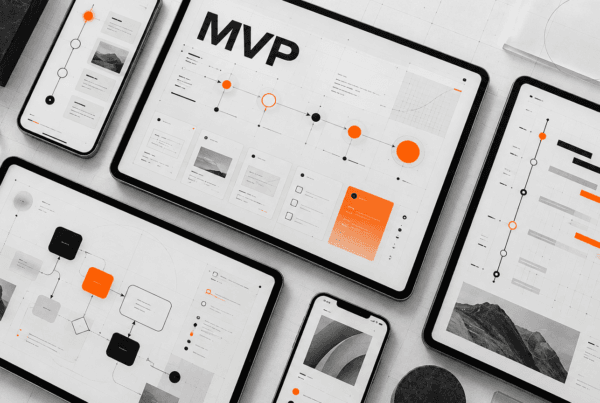
A common pattern involves engaging a fractional design team to establish the foundational design system, build the component library, and redesign the core application architecture. Once the “heavy lifting” is completed, the company hires a full-time mid-level designer to maintain the system, build new screens using established components, and handle day-to-day tickets. This is especially common for teams still shaping the product surface area, which is why MVP design for startups often benefits from a fractional model first. The agency then transitions into a strategic advisory role.
Frequently Asked Questions
Is a fractional design team the same as hiring freelancers?
No, a fractional team operates as an established, integrated unit rather than a collection of disparate individuals. Freelancers require you to act as the project manager, coordinate communication, and align their outputs. A premium fractional partner provides their own creative direction, project management, and quality assurance, delivering finished outcomes rather than raw hours.
How do you manage communication with a fractional design team?
Top-tier agencies integrate directly into your existing communication stack, typically using shared Slack or Microsoft Teams channels for daily updates. They also participate in your standard agile ceremonies, including sprint planning and design review calls. This ensures alignment without requiring new software or drastic changes to how your engineering team already works.
What happens to the design files if we decide to hire a full-time team later?
Professional agencies structure their agreements so you retain complete ownership of all working files, assets, and design systems upon completion. The fractional team will conduct a structured handoff process, walking your new full-time hires through the Figma files and component logic. This guarantees your internal team can pick up exactly where the agency left off without losing momentum.
Can a fractional design team handle both marketing assets and product UX?
Yes, this is one of the primary advantages of the model over a single full-time hire. Because you are accessing an entire roster of talent, the agency can assign a brand designer to your pitch deck while a product designer simultaneously works on your application dashboard. This parallel processing accelerates both marketing and product initiatives without requiring two separate salaries.
How quickly can a fractional partnership start producing usable work?
Unlike a standard W-2 hiring cycle that involves long notice periods and onboarding, fractional teams can typically begin auditing your current product within 48 hours of an agreement. Expect high-impact tactical improvements to ship within the first sprint, while larger systemic overhauls follow the established strategic roadmap.
Choose the Right Model for Your Stage
Building a world-class product requires exceptional design execution. Deciding between a fractional design team vs full time talent dictates how quickly you can move and how high your quality ceiling will be. If your roadmap demands specialized skills, rapid deployment, and enterprise-grade polish without the recruiting overhead, the fractional path provides the highest probability of success.
Ready to accelerate your product design without the hiring headache? Let’s talk.
If you want a senior design partner to turn this into a sharper product, brand, or website, see how DesignX works.