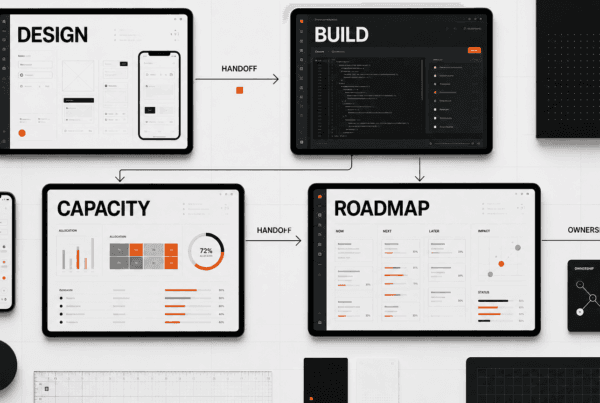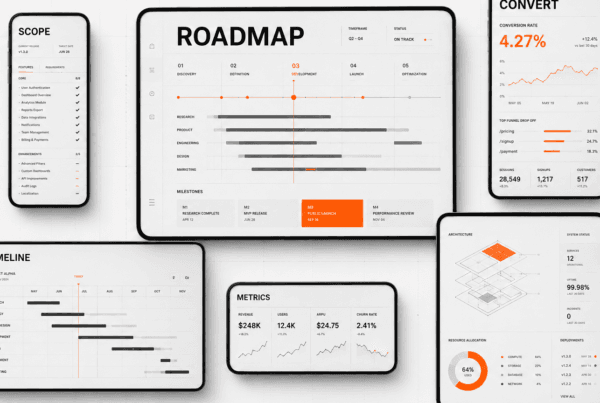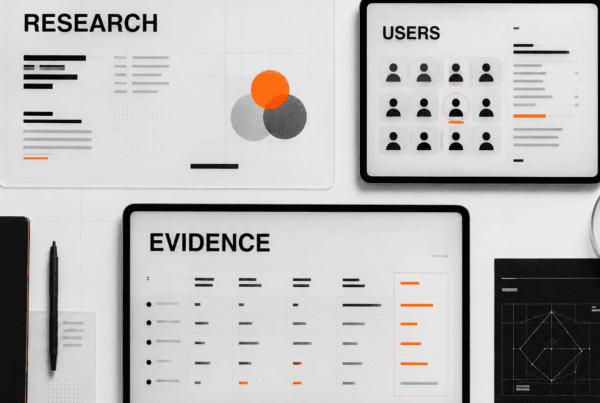
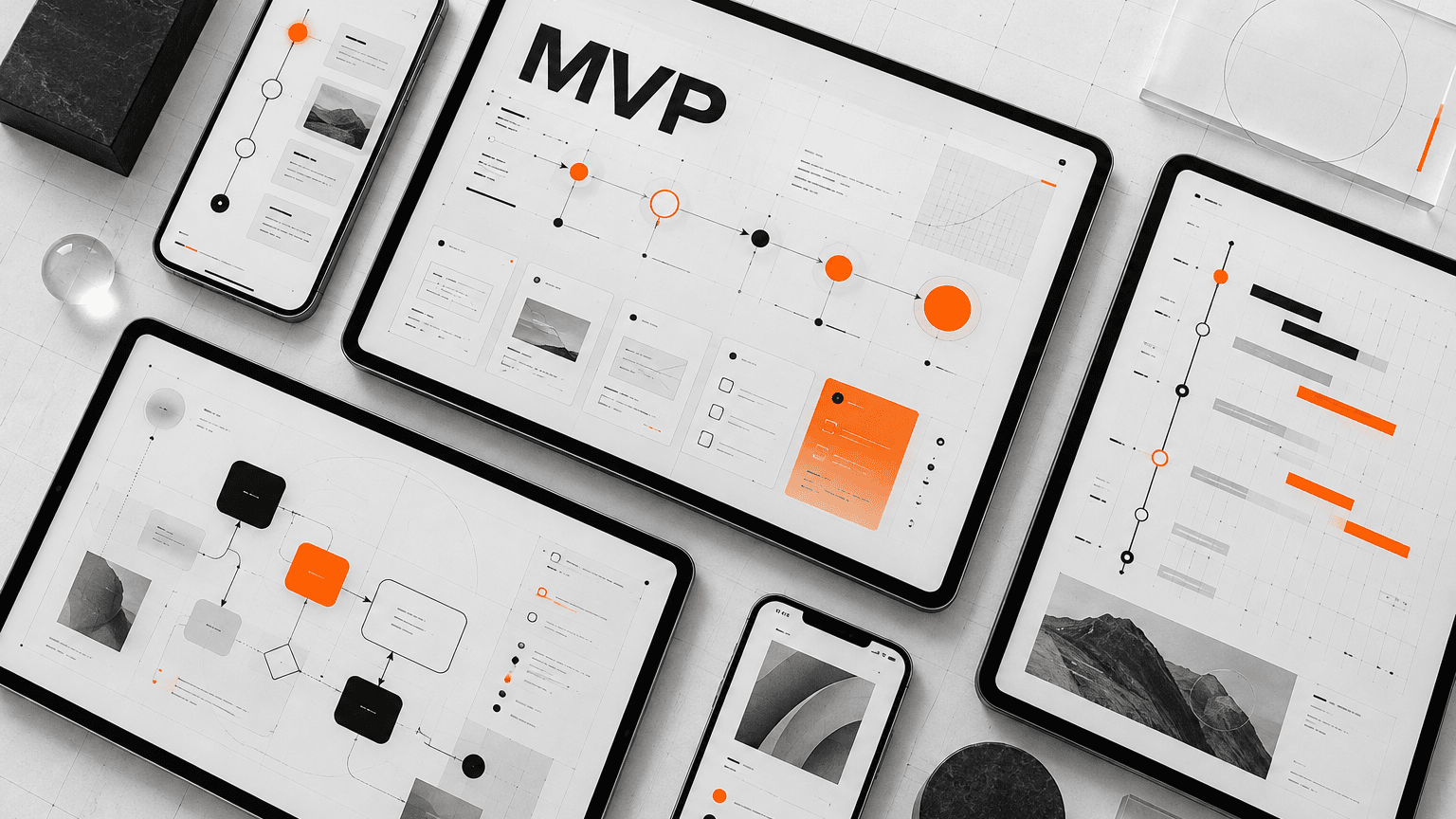
TL;DR: A product design agency for startups should help a founder cut scope, validate the riskiest user flow, and turn a product idea into a clear prototype, MVP, or launch-ready interface. The right agency brings research, UX, UI, product strategy, design systems, and developer handoff without forcing you to hire a full internal team too early.
- Hire an agency when the product workload is bigger than one designer, but the company is not ready for a full design department.
- Ask how the team decides what to cut from the MVP before asking to see visual concepts.
- Choose a sprint for a narrow decision, a project for a defined MVP, and a retainer when the product will keep changing after launch.
- Look for proof that the agency can work with founders, engineers, investors, and early customers in the same motion.
- DesignX fits startups that need senior product design tied to brand, launch assets, and ongoing product iteration.
If you are searching for a product design agency for startups, you are probably past the napkin-sketch stage but not far enough along to waste three months on the wrong product bet. You need someone who can turn the idea into something users, investors, and engineers can react to.
The mistake founders make is hiring for screens before they hire for judgment. Pretty interface work is easy to buy. Scope discipline is harder. A good startup product design agency asks uncomfortable questions before Figma opens: who is the first user, what action proves value, what can be removed, what must be tested, and what does engineering need to build with confidence?
DesignX works with product and brand teams that need senior design output without the drag of hiring a full internal team. Our team brings experience from Apple, Shopify, eBay, Bodybuilding.com, Klein Tools, Oura Ring, HP, and Panasonic. That mix matters for startups because product, brand, website, pitch, and onboarding often have to move together.
What a product design agency for startups should do
A startup-focused product design agency does more than create polished UI. It helps the founder and product team make sharper decisions while time, runway, and attention are constrained.
Atlassian defines an MVP as the smallest product version that lets a team validate ideas and learn from customers with limited effort. That definition sounds simple until you sit down to decide what belongs in version one. Founders bring ambition. Engineers bring constraints. Investors bring pressure. Users bring confusion. Product design turns that tension into a smaller, clearer path.
A credible agency should be able to own or support these pieces:
- Product discovery: user assumptions, customer pain, jobs to be done, constraints, and decision risks.
- MVP scoping: the few flows that need to work first, plus the features that can wait.
- UX architecture: user flows, information architecture, edge cases, empty states, and onboarding paths.
- Interface design: high-fidelity product screens, states, responsive behavior, and interaction patterns.
- Prototype testing: clickable prototypes that let the team test clarity before writing production code.
- Design system setup: reusable components, tokens, patterns, and rules that help engineers ship without guessing.
- Developer handoff: annotated Figma files, component specs, responsive notes, and direct design-to-engineering support.
- Launch support: website, pitch visuals, brand touchpoints, product walkthroughs, and post-launch iteration.
The best agencies make the product feel smaller and more buildable. They do not inflate the roadmap to make the engagement look more valuable.
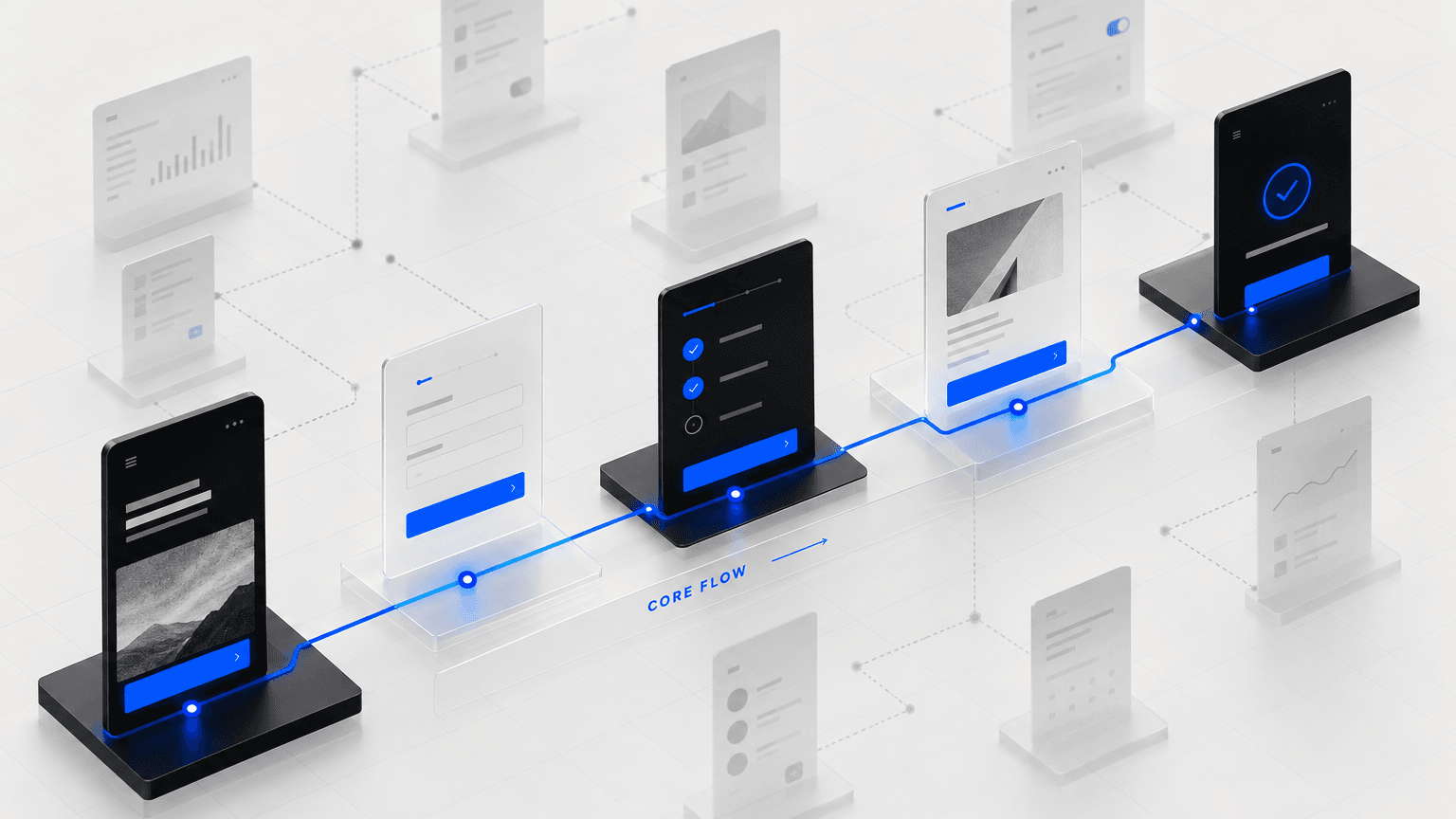
When an agency beats hiring one product designer
Early-stage startups can sometimes get by with one strong product designer. Unusual Ventures notes that a single designer may be enough in the early stage, while heavier workloads can justify agency help for defined periods. That matches what we see in founder conversations.
A single designer works when the product has a narrow surface area, the founder or PM can handle product strategy, and engineering already knows how to build from design files. An agency makes more sense when the work spans research, UX, UI, brand, website, deck, design system, and launch collateral at the same time.
| Option | Best fit | Risk |
|---|---|---|
| Freelancer | A narrow UI task, a landing page, or extra hands for production work. | Limited strategy, limited continuity, and skill gaps around research or systems. |
| In-house designer | A funded team with enough product work to keep one senior designer focused. | Slow hiring, limited breadth, and a high cost before the workload is proven. |
| Product design agency | A founder or product team that needs senior range across MVP, UX, UI, brand, handoff, and launch. | Weak agencies can over-scope, over-design, or hand off work without technical clarity. |
| Fractional design retainer | A startup that needs ongoing senior design support after the first MVP or launch push. | Poor fit if the company only needs one fixed deliverable and no iteration. |
The agency decision is less about headcount and more about compression. If you need product strategy, interface design, brand polish, design systems, and launch assets inside one quarter, a single hire may become the bottleneck.
For a broader hiring lens, read our guide on how to hire a design agency. If you are debating a longer-term team model, our fractional design team vs full-time comparison shows when a retainer beats a hire.
Start with MVP scope before visual direction
Startup product design lives or dies by what the team refuses to build yet. The agency should help you cut, sequence, and test. If the first workshop turns into a wish list, the project is already drifting.
GV describes the design sprint as a five-day process for answering business questions through design, prototyping, and customer testing. The useful part for startup founders is not the exact calendar. It is the discipline of forcing a team to pick one hard question, build a realistic prototype, and get outside feedback before making expensive commitments.
For a startup, that hard question might be:
- Can a user understand the product without a sales call?
- Can a buyer finish the core workflow without training?
- Can the product show value before the user hits a paywall?
- Can an investor see the product wedge in a two-minute demo?
- Can engineering build the first version without inventing missing states?
Those questions need different deliverables. One needs onboarding design. One needs a prototype. One needs a product narrative. One needs a design system and developer handoff. A strong product design agency helps you pick the right output instead of selling the same package to every founder.
DesignX usually frames this as a sprint path: define the product promise, map the core user journey, design the smallest credible experience, test the story, then decide whether to build, raise, or keep iterating. Our product design sprint process guide breaks down that operating model, and our MVP design for startups guide goes deeper on first-version scope.
How to judge a startup product design agency before signing
Portfolio taste matters, but early-stage product work needs evidence beyond polished Dribbble shots. The agency has to think like a product partner, not a screen vendor.
Use these criteria in calls and proposal reviews.
1. They push back on MVP scope
Ask the agency how they decide what to cut from version one. Weak agencies accept the brief and make it prettier. Strong agencies ask what the first user must do to feel value, then they remove anything that delays that moment.
2. They can explain the first user journey
Good product designers can talk through the path from first impression to first value. They should name the onboarding steps, setup friction, account states, permission moments, empty states, and success moments that shape adoption.
3. They understand technical constraints
Startups do not have unlimited engineering capacity. Ask how the agency works with front-end teams, component libraries, responsive rules, API constraints, and release plans. If they hand off static screens without state logic, engineering will pay for the missing thinking.
4. They bring startup-speed communication
Founders need fast feedback loops. Ask who will be on the project, how often you will review work, how decisions get made, and how the agency handles async comments. A polished sales team means little if the actual design team moves like a corporate committee.
5. They connect product, brand, and launch
Early products rarely live inside the app alone. The landing page, investor deck, onboarding flow, demo script, and product UI all need to tell the same story. Agencies that can only design screens may leave you with a product that looks good in Figma but sells poorly in the market.
6. They show outcome-shaped case studies
Look for before-and-after decisions, launch constraints, adoption metrics, conversion lift, usability findings, or engineering wins. DesignX work with Klein Tools, for example, connected catalog experience design to a 23% lift in dealer adoption. That kind of proof tells you how the team thinks when design has to move a business result.
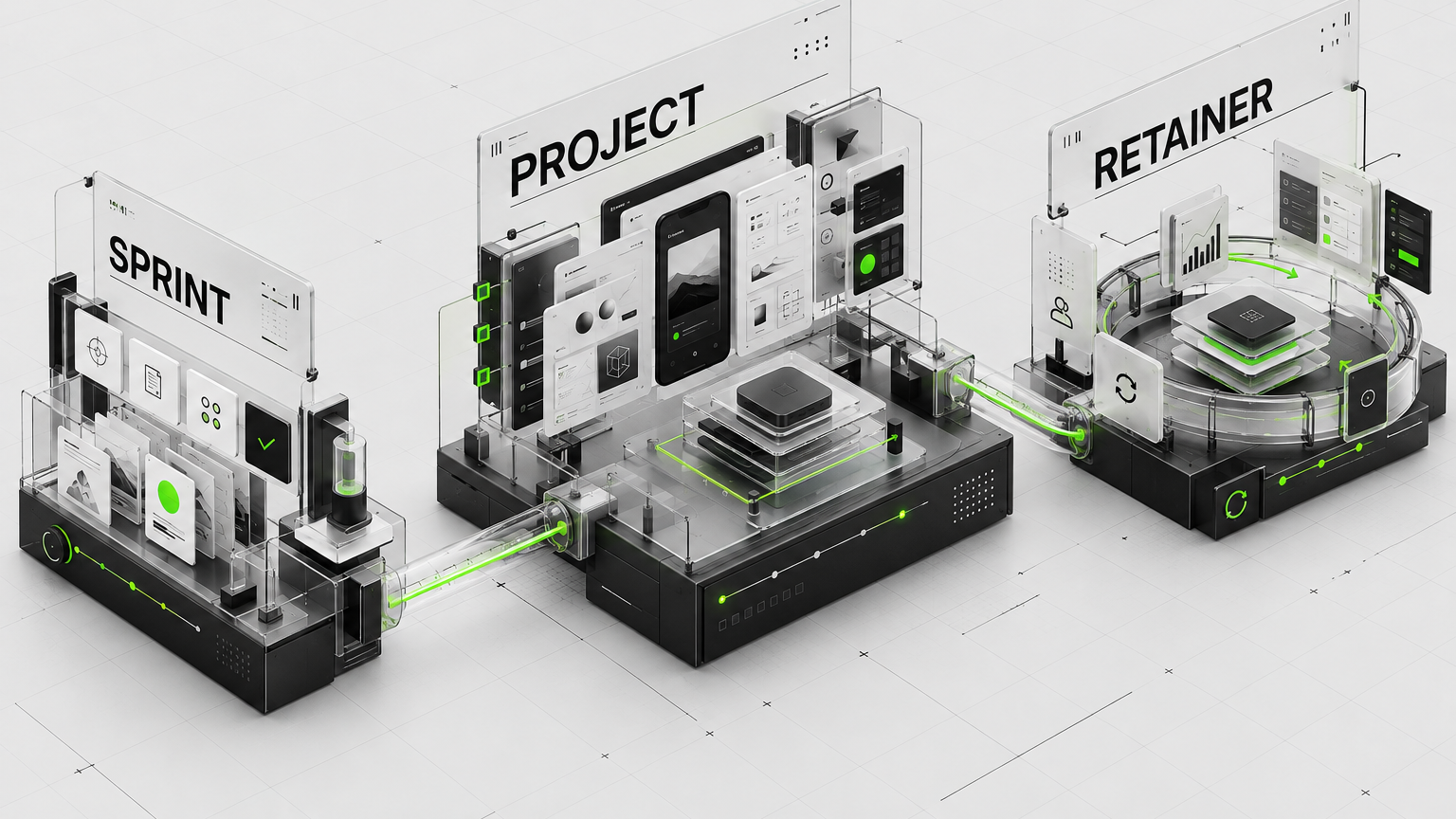
Sprint, project, or retainer: choose the right shape
Most startups do not need a vague design engagement. They need the right engagement shape for the decision in front of them.
| Engagement shape | Use it when | DesignX fit |
|---|---|---|
| Product sprint | You need to validate a core flow, prototype an investor demo, or align the team before build. | Best for 2 to 4 week decisions around MVP scope, onboarding, UX direction, or launch story. |
| Defined MVP project | You know the product surface and need a complete design package for build. | Best for $15k to $25k scoped design projects with clear deliverables and handoff. |
| Fractional design retainer | The product, website, campaigns, and launch assets will keep changing after the first release. | Best for $9.7k/month senior design support across product, brand, web, and growth needs. |
| Full design-and-build | You need the same partner to design and implement the first product version. | Useful when engineering capacity is missing, but it requires tighter technical scoping up front. |
A sprint is the safest first move when the team has uncertainty. A project is better when the scope is already clear. A retainer works when the startup needs continuous senior design without building a full department.
This is also where pricing conversations become more honest. A startup should not compare a $5k design-only MVP package against a senior team building product UX, design systems, brand, launch pages, and handoff. They solve different problems. Our design agency pricing guide gives more context on scope and budget. The right question is: what decision or outcome does this spend need to create?
What competitors say and what they miss
The current search results for startup design agencies repeat the same advice: compare portfolios, check startup experience, review pricing, ask about process, and look for SaaS or MVP work. That advice is useful, but it can stay too vendor-focused.
Founders need a buyer guide that starts from the product risk. The agency is only the vehicle. The real decision is whether you need help with scope, user flow, investor clarity, engineering handoff, launch polish, or ongoing iteration.
Several competitor pages also lean into lists of agencies. Lists help with discovery, but they rarely tell a founder how to brief the work, what to cut, which deliverable to buy, or how to avoid building the wrong first version. This page takes the founder-side view: define the product decision first, then select the partner model.
How DesignX approaches startup product design
DesignX sits between product design, brand strategy, web, and launch execution. That mix is useful for startups because the first product experience has to do more than function. It has to make the company look credible enough for customers, investors, partners, and hires to believe. The same principle shows up in our startup branding checklist: early design decisions shape trust long before a team has market scale.
Our process usually starts with a focused audit or sprint. We map the customer, the product promise, the key workflows, the market position, and the moments where users need proof. Then we design the smallest product experience that can carry the business goal without bloating the roadmap.
For early teams, that may mean an MVP prototype and launch website. For funded teams, it may mean a redesigned onboarding path, clearer product UI, stronger design system, and a monthly retainer to keep shipping. For founders raising capital, it may mean product screens, brand system, and pitch visuals that tell one story instead of three disconnected stories.
The common thread is senior judgment. Startup design work moves too fast for junior trial and error. You need someone who can make tradeoffs, explain them, and keep the product moving toward a market signal.
Questions to ask in your agency call
Use these questions before you sign. The answers will show whether the agency can help you reduce risk or only make the product look more finished.
- Which user flow would you design first, and why?
- How do you decide what gets cut from the MVP?
- What do you need from engineering before design starts?
- How do you test whether the prototype makes sense to first-time users?
- Who will design the work, and what seniority do they have?
- How do you document states, edge cases, and responsive behavior for developers?
- Can you support the launch website, brand assets, or pitch narrative if the product story changes?
- What happens after the first version ships?
If the agency struggles with these questions, the risk is not taste. The risk is product waste.
Bottom line
The right product design agency for startups gives you more than a set of screens. It gives you a clearer product bet, a tighter first release, a stronger story for customers and investors, and a design system your team can keep building on.
If you need a senior team to shape an MVP, refine a product flow, or support the next launch cycle, DesignX can help with a focused sprint or fractional design retainer. Review DesignX pricing and engagement options →
Frequently Asked Questions
What does a product design agency for startups do?
A product design agency for startups helps founders turn a product idea into a usable, testable, and buildable experience. The work can include discovery, MVP scoping, user flows, wireframes, high-fidelity UI, prototypes, design systems, developer handoff, launch websites, and post-launch iteration. The best agencies also help founders decide what to remove from the first release.
When should a startup hire a product design agency?
Hire an agency when the product needs senior design range faster than you can hire it internally. Common triggers include preparing an MVP for build, raising capital with a credible prototype, redesigning onboarding, creating a launch website, or supporting a small team that lacks product design leadership. If the need is one narrow UI task, a freelancer may be enough.
How much does startup product design cost?
Costs depend on scope, team seniority, and whether the work includes research, design systems, brand, website, or engineering support. DesignX usually frames scoped projects around $15k to $25k and fractional design retainers around $9.7k/month. Lower-cost packages may work for small screen sets, but founders should check whether strategy, states, responsive behavior, and handoff are included.
Should a startup choose a design sprint or a full MVP project?
Choose a sprint when the biggest need is clarity: validating a product idea, aligning stakeholders, testing a user flow, or creating an investor-ready prototype. Choose a full MVP project when the team already knows the product surface and needs a complete design package for engineering. Many startups start with a sprint and move into a project or retainer after the core direction is proven.
Is a product design agency better than an in-house designer?
An in-house designer can be better once the company has enough ongoing product work and the hiring timeline makes sense. An agency is better when the startup needs a senior team across product strategy, UX, UI, brand, launch assets, and handoff before it can justify multiple hires. The agency should compress learning and execution, not replace product leadership forever.
What should I look for in a startup product design agency portfolio?
Look for product complexity, clear before-and-after decisions, user flow thinking, component quality, developer handoff, and outcomes beyond visual polish. A strong portfolio shows how the team handled constraints, tradeoffs, user feedback, and launch pressure. For startups, category experience also matters because fintech, healthcare, AI, ecommerce, and B2B SaaS products carry different trust and workflow patterns.
Can DesignX help with both product design and startup branding?
Yes. DesignX is built for the overlap between product, brand, UX, web, and launch execution. That is useful when a startup needs the app experience, marketing site, investor visuals, and design system to feel like one company. We can support a focused sprint, a scoped MVP design project, or an ongoing fractional design retainer.