
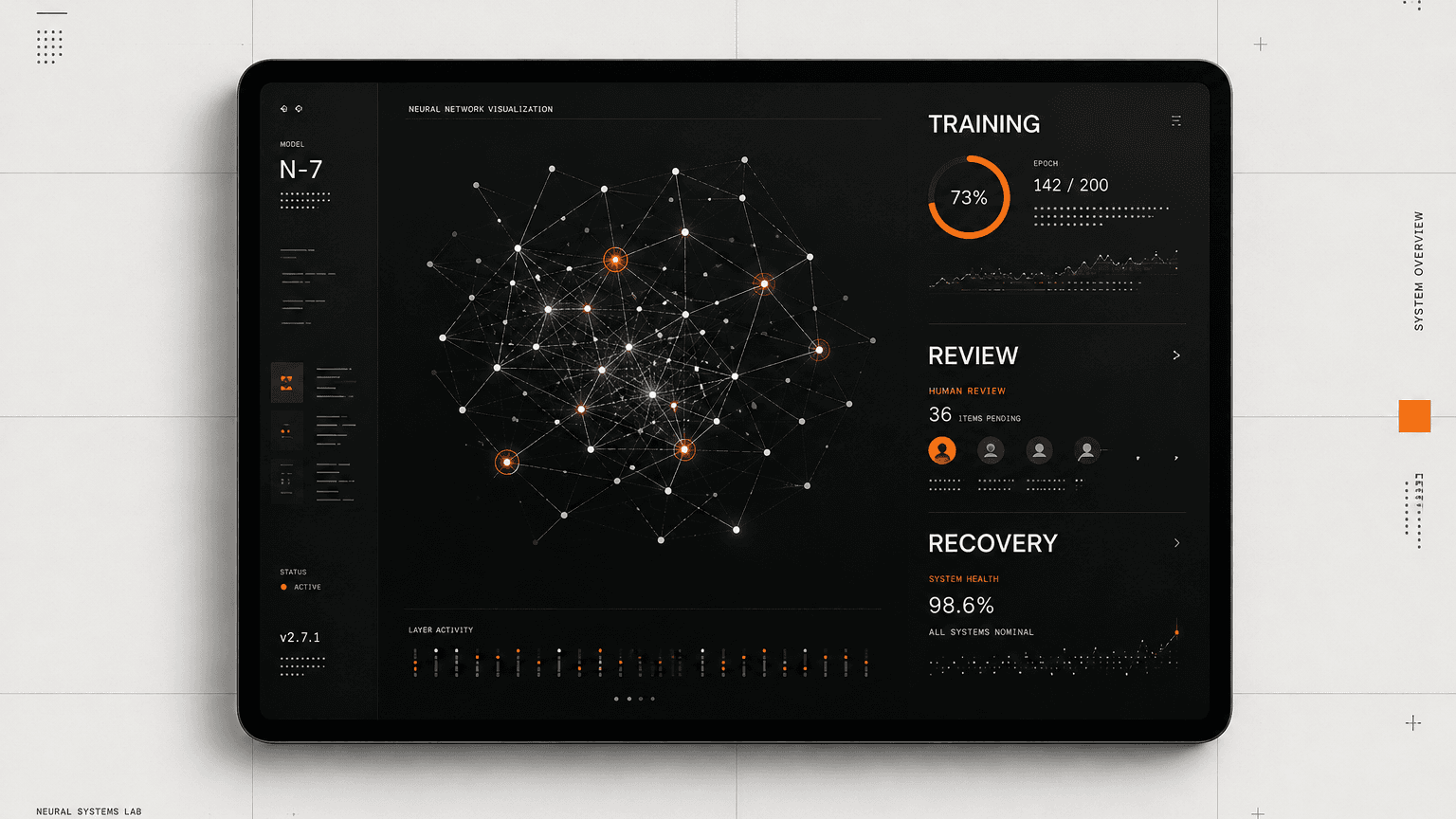
AI product design agency buyers should look for a team that can define how the product behaves when the model is wrong, uncertain, or unable to finish a task. DesignX brings senior product designers into that work before screens harden, then connects the interaction model to prototypes and build handoff.
Buyer summary
- Ask for an AI behavior map before reviewing visual concepts.
- Test failure recovery, human review, and user control in the prototype.
- Require proof from shipped workflows, not a gallery of AI-themed screens.
- Clarify who owns research, model constraints, design systems, and build handoff.
An AI interface changes while someone uses it. Outputs can vary, confidence can fall, and a model can produce a plausible answer that is wrong. A standard product workflow can miss those conditions because the team reviews the happy path and treats model behavior as an engineering detail.
Google’s People + AI Guidebook centers user control, calibrated trust, feedback, and error management. Microsoft makes a similar point in its HAX Toolkit: teams should identify common failures and prototype recovery paths. Those are product-design responsibilities, not polish added near launch.
What an AI product design agency should own
A capable AI product design agency turns model capability into a usable service. The team should connect user goals, product rules, data constraints, and interface states before engineers commit to a brittle front end.
The remit covers five connected jobs:
- Product framing: define the user decision, the model’s role, and the point where a person must stay in control.
- AI interaction design: shape prompts, inputs, streaming states, sources, confidence cues, edits, approvals, and reversals.
- Risk and recovery: map weak outputs, empty results, refusal, latency, stale data, and unsafe actions.
- Evaluation UX: give users and internal teams a way to judge output quality with observable criteria.
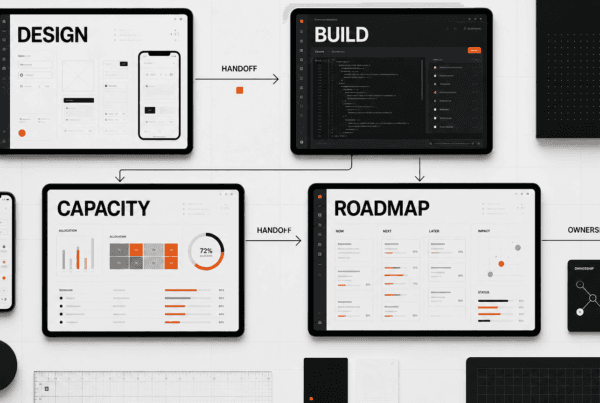
- Build handoff: document states, rules, data needs, and acceptance tests so engineering can ship the intended behavior.
A conventional SaaS UI/UX design agency can handle navigation, hierarchy, and workflows. AI product work adds variable behavior, system boundaries, and recovery. Buyers should confirm that a partner can handle both layers.
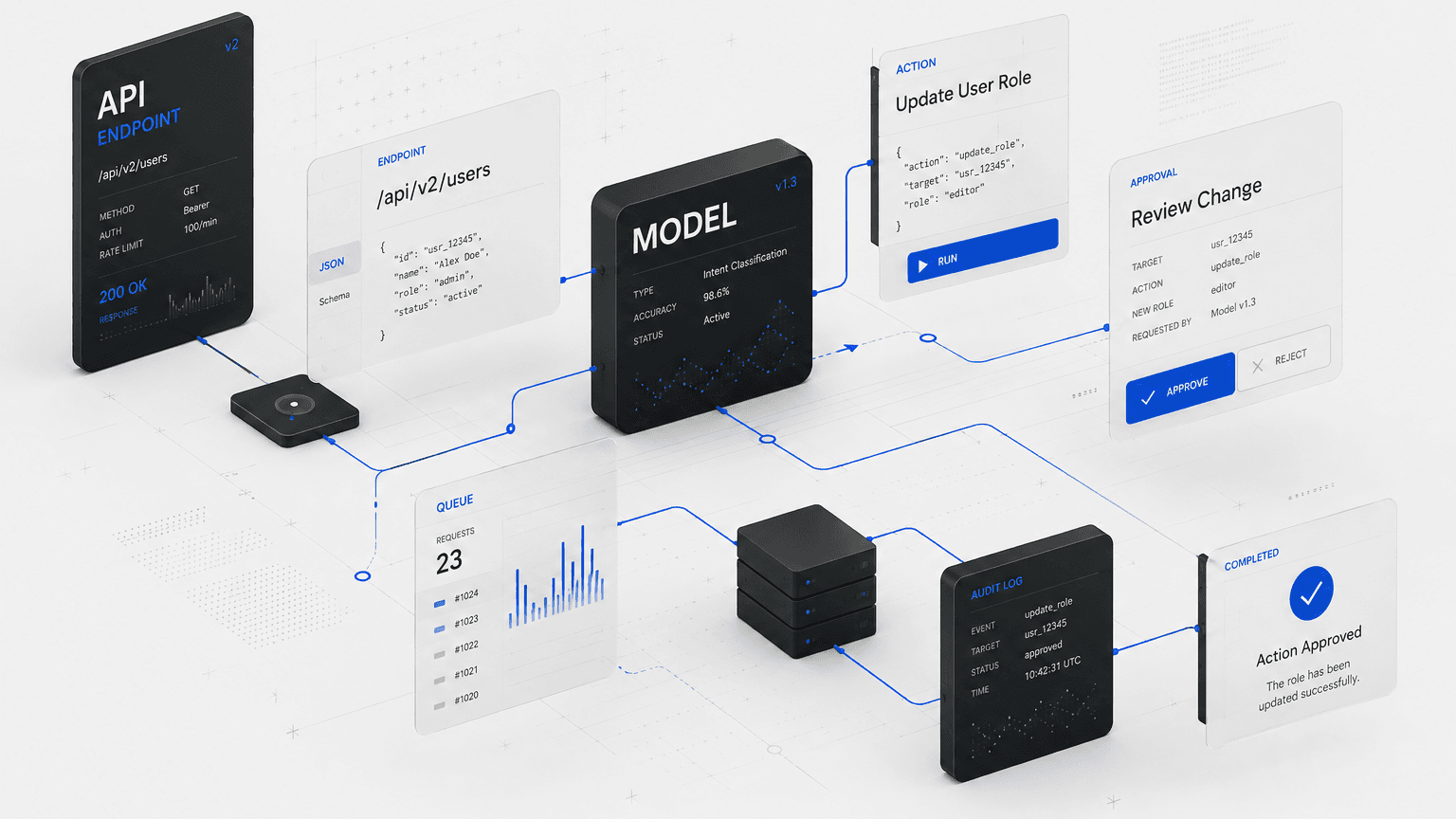
Where standard product design breaks on AI features
Polished screens can hide a weak interaction model. A demo may work with a prepared prompt while real users enter vague requests, missing context, conflicting data, or sensitive information. The designer has to make those conditions visible and recoverable.
Confidence is a product decision
A percentage badge does not create trust. Users need enough context to judge the output: the source, the assumptions, the parts the model could not verify, and the action they can take next. The right pattern depends on the cost of a wrong decision.
The NIST AI Risk Management Framework treats trustworthiness as work that belongs across design, development, use, and evaluation. Its Govern, Map, Measure, and Manage functions give product teams a useful prompt: define the risk, decide how to observe it, and give someone authority to act.
Correction needs a designed path
Users will edit, reject, retry, narrow, and override AI output. Each action teaches the system or changes the task. The interface should show what changed and preserve the user’s intent. A blank retry button leaves too much hidden.
For more pattern detail, read DesignX’s guide to UX for AI-powered products. The buyer question on this page is narrower: can the agency translate those patterns into your model, risk profile, and release plan?
The DesignX AI Interaction Risk Brief
DesignX starts AI product work with a short artifact that the product, design, data, and engineering leads can challenge together. We call it the AI Interaction Risk Brief. It prevents the team from approving a screen before anyone has agreed on the system’s behavior.
| Brief field | Decision it forces | Evidence to review |
|---|---|---|
| User decision | What choice or task does the person own? | Research notes, workflow data, support themes |
| Model action | What can the model suggest, change, or execute? | Capability tests, latency, model and data limits |
| Failure cost | What happens when the output is weak or wrong? | Risk review, compliance needs, business impact |
| Human control | Where can a person inspect, edit, approve, or stop? | Prototype tests and stakeholder signoff |
| Quality signal | How will the team and user judge a good result? | Evaluation criteria, feedback events, release checks |
The brief should fit on one working page. The discussion behind it can take longer. Teams often discover that the proposed feature has no agreed quality measure, or that a model action needs an approval step. Finding that gap before build saves more than refining a dashboard after launch.
How to evaluate an AI product design agency
Use the first sales call to test the agency’s operating model. Ask for examples that connect a product constraint to an interface decision. A strong answer names the user, the model behavior, the failure path, and the shipped result.
Questions worth asking
- How will you learn where users accept automation and where they want control?
- How do you prototype variable outputs before the production model is ready?
- How will you document refusal, low-confidence, latency, and empty-result states?
- Who defines evaluation criteria, and how do those criteria enter design reviews?
- What do engineers receive beyond Figma files?
- Which project shows your team changing an AI workflow after user evidence?
Compare the response with the agency’s case studies. DesignX has senior-team experience across Apple, Shopify, eBay, Bodybuilding.com, and product work for brands including Klein Tools and Oura Ring. We use that operating background to connect interface craft with the handoff decisions that determine whether a product ships.
Red flags in the proposal
- The process starts with visual directions before model and data constraints.
- The team treats a chatbot as the default interface for each AI feature.
- The prototype contains one prepared answer and no weak-output states.
- The proposal promises trust without naming user control or source visibility.
- The handoff ends at components, with no behavior rules or acceptance checks.
Generic agency rankings do not reveal these gaps. They can help you find names, but your product’s risk and build model should decide the shortlist.
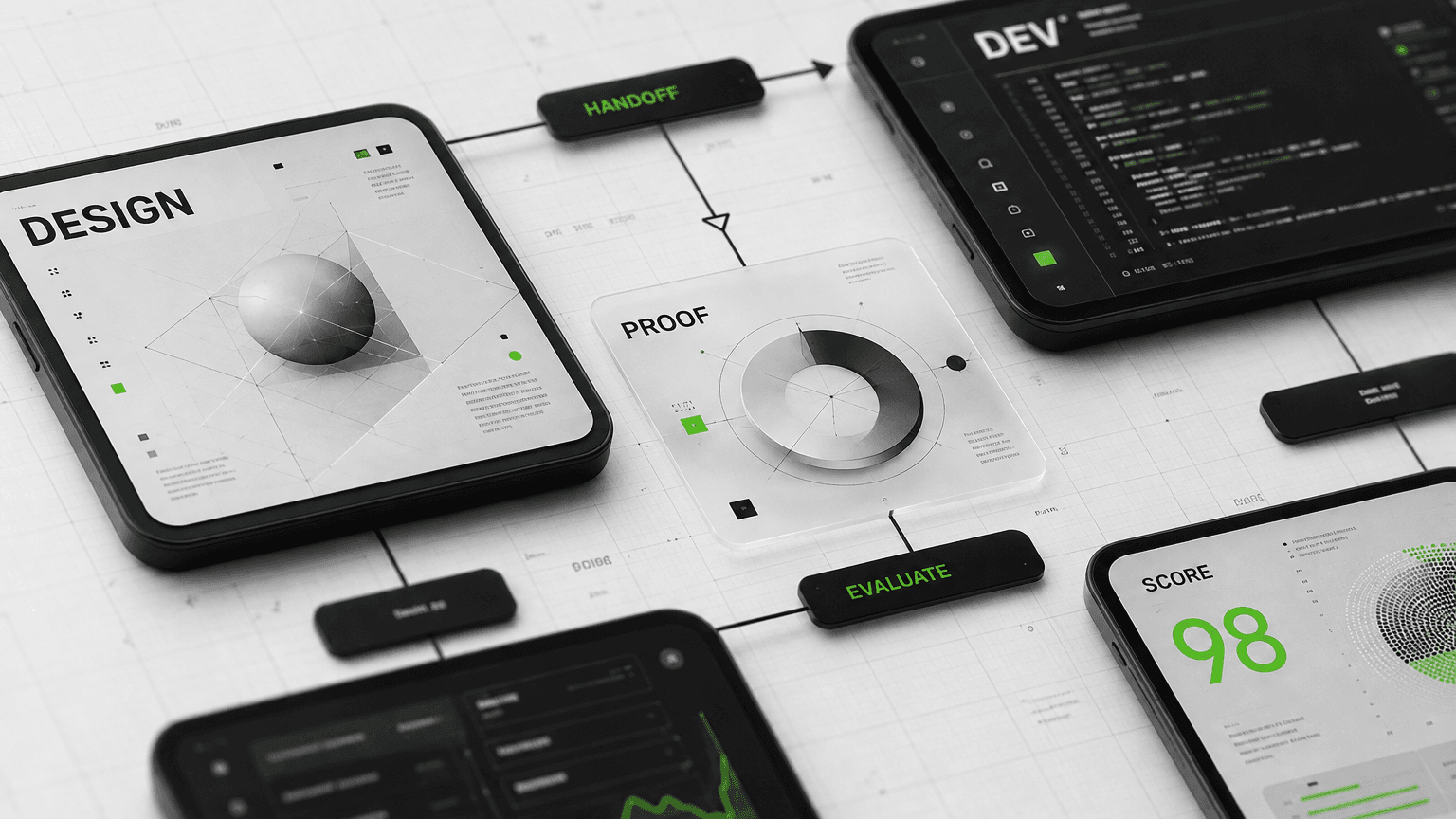
Deliverables that make AI product design buildable
A buyer should leave the engagement with more than a prototype. The package needs enough detail for product and engineering teams to reproduce the approved behavior.
- AI behavior map with actors, system actions, inputs, outputs, and boundaries
- Research findings tied to control, delegation, trust, and correction
- Flow prototypes that cover strong output, weak output, refusal, and recovery
- Interface system for prompts, sources, edits, status, review, and approvals
- Evaluation criteria and events for product analytics or quality review
- Annotated handoff with state logic, data needs, and acceptance checks
The exact mix depends on stage. A concept team may need a risk brief and testable prototype. A funded product with a working model may need research, an interface system, and build support. A team nearing launch may need a focused review of failure states and quality signals.
If launch planning is the larger problem, see our guide to choosing a design agency for an app launch. If staffing is the question, compare the buyer criteria for hiring senior product designers through an agency.
AI product design agency pricing and fit
Scope should follow product risk and evidence needs. A bounded prototype costs less than a multi-role workflow with regulated data, source traceability, role permissions, and build support. Ask each agency to separate discovery, prototype, design system, and implementation work so you can compare like with like.
DesignX publishes project pricing in the $15,000 to $25,000 range and fractional design support at $9,700 per month. An AI product engagement may fit one model or require a custom scope after the interaction-risk review. Use the live DesignX pricing section as the starting point.
DesignX fits product leaders who want senior designers working across product strategy, UX/UI, prototyping, and build handoff. Teams seeking model training, data engineering, or a research lab without product-design ownership need a different lead partner or a paired technical team. Our guide to choosing an AI design company explains the broader agency category.
Frequently asked questions
What does an AI product design agency do?
An AI product design agency defines how people interact with model-driven features. Its work should cover user research, model and data constraints, variable outputs, human review, correction paths, interface systems, prototypes, and build handoff.
How is AI product design different from standard UX design?
AI product design accounts for outputs that can vary, fail, or arrive with uncertain quality. The designer must give users context and control, then document recovery and evaluation states that a fixed interface flow may not require.
When should we hire an AI product design agency?
Hire one before engineering commits to the core interaction model, or when an existing AI feature has weak adoption, low trust, poor correction paths, or support issues. Early design work can expose missing product rules before they become code.
What should an AI product design prototype include?
The prototype should include strong and weak outputs, loading and latency, source or context visibility, edits, retries, approvals, refusal, and recovery. It should test the user’s decision and control, not one prepared demo response.
How do we compare AI product design agencies?
Compare shipped AI-product proof, research depth, failure-state design, evaluation methods, senior-team access, and implementation ownership. Ask each agency to explain one decision where model behavior changed the interface or release plan.
Does DesignX build AI products or only design them?
DesignX provides product strategy, UX/UI design, prototyping, design systems, and design-to-development handoff, with build support scoped to the engagement. Model training and data engineering should be defined with the client’s technical team or a specialist partner.
Choose the partner before the interface hardens
Bring DesignX the AI workflow, product constraints, and build plan. We will map the interaction risk, define the right design scope, and show where senior product design can remove uncertainty before development.