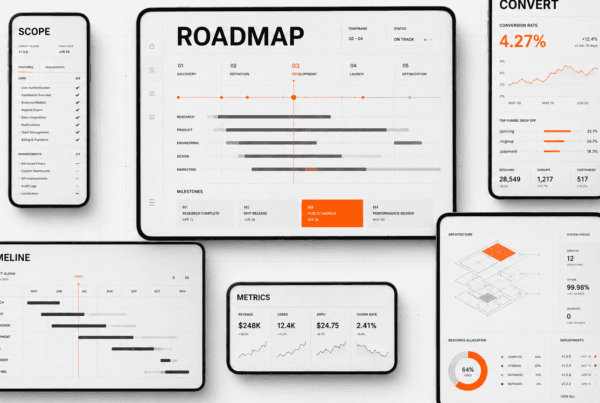

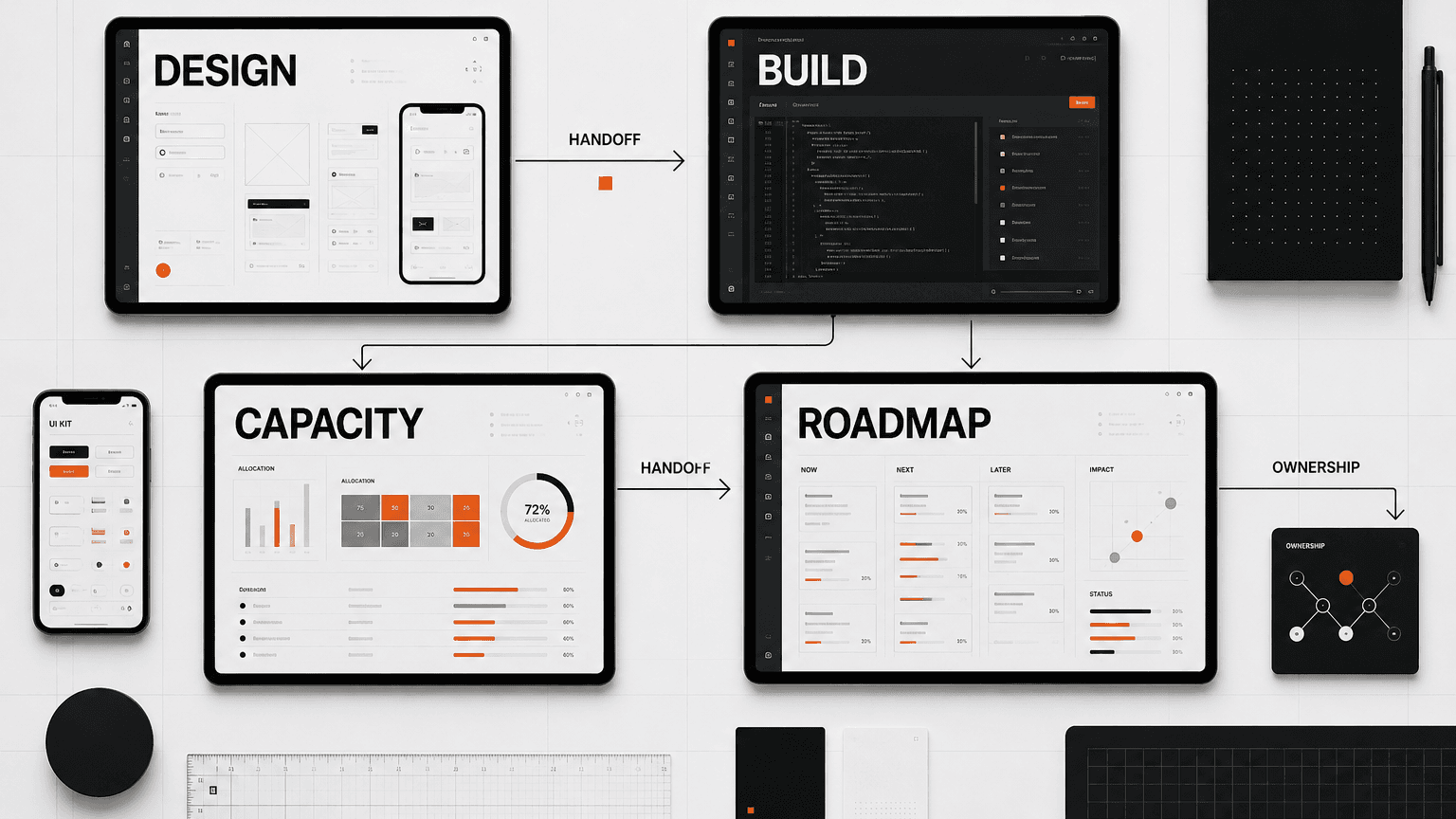
A UX design retainer agency reserves senior design capacity for your product team each month. The right partner owns a defined set of product or conversion outcomes, works inside your roadmap, and ships usable work on a steady cadence.
DesignX runs this model with senior designers across product UX, interface design, brand, web, and implementation support. The value comes from continuity: the team keeps context between releases, sees patterns across your product, and helps you make the next decision without starting a new agency search.
Use this buyer summary before you sign:
- Pay for named capacity and decision ownership, not a vague promise of “ongoing support.”
- Match the commercial model to your workload: hours, deliverables, reserved capacity, or outcome milestones.
- Define the queue, response time, rollover policy, engineering handoff, and cancellation terms in writing.
- Expect shipped flows, tested prototypes, and design-system progress during the first 30 days.
- Choose a project or full-time hire when the work does not suit a monthly partnership.
What Does a UX Design Retainer Agency Do?
A UX retainer agency works as an external product-design team on a repeating monthly agreement. Your company gets access to a stable group of designers without opening a full-time role or scoping a new project for each feature.
The work can include:
- user research and usability testing
- onboarding, dashboard, account, and billing flows
- wireframes, prototypes, and high-fidelity UI design
- design-system components and usage rules
- landing pages and product-marketing journeys
- developer handoff, design QA, and release support
- UX audits tied to product or conversion metrics
- brand and interface work that must stay consistent
The agency should join the tools where product decisions happen. That may include Figma, Slack, Linear, Jira, Notion, analytics dashboards, support notes, and recorded sales calls. Access alone does not create value. A senior team has to turn those inputs into a ranked backlog and make tradeoffs visible.
This differs from buying a stream of design requests. Request throughput helps when your briefs are sound and the work carries little product risk. A retainer earns its fee when you need judgment across research, UX, UI, product strategy, and implementation.
Four UX Design Retainer Models
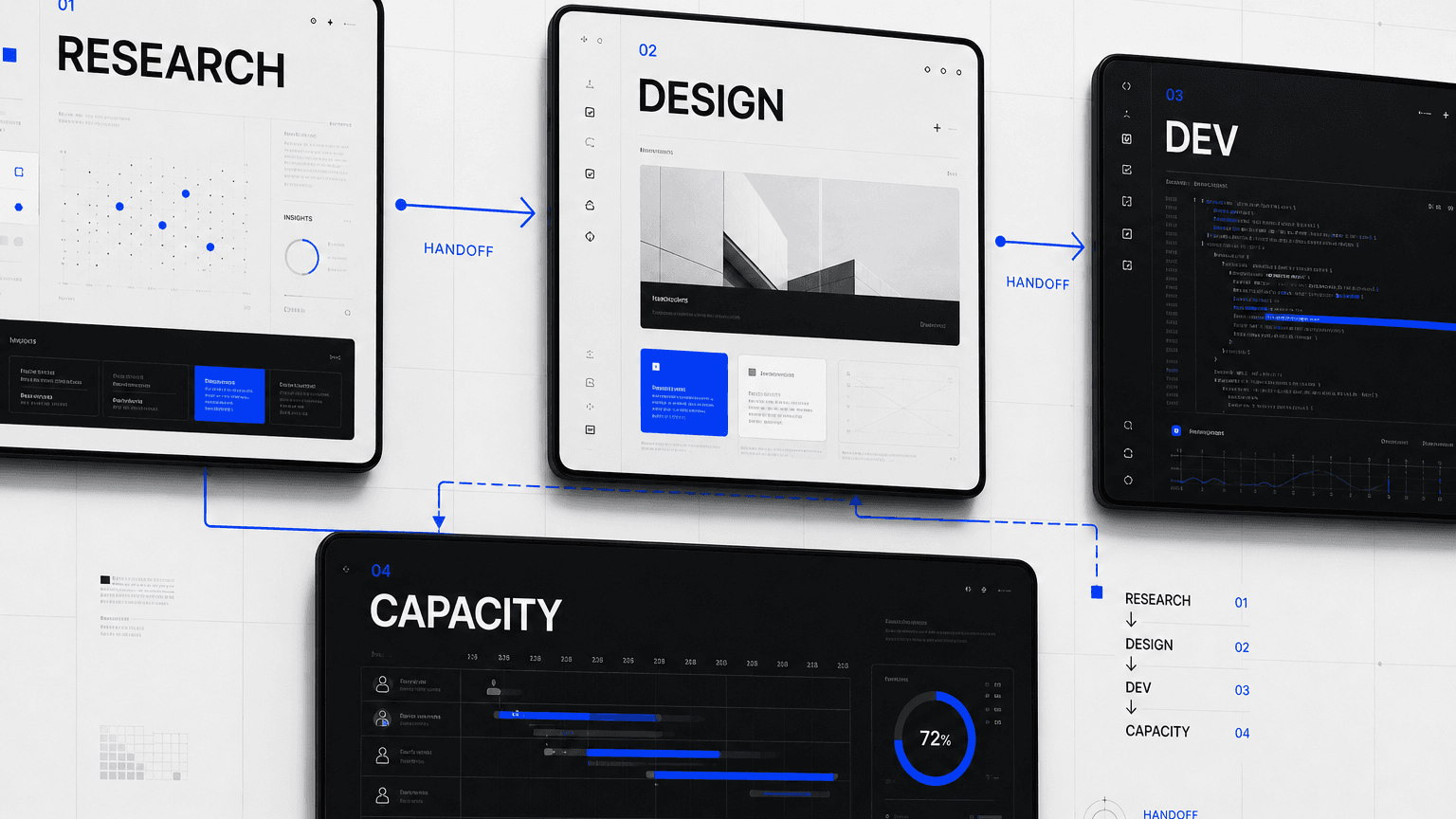
Agencies use the word “retainer” for several different commercial models. Compare the unit you are buying before you compare the monthly fee.
| Retainer model | What you buy | Best fit | Main risk |
|---|---|---|---|
| Hour block | A set number of design hours | Small, predictable work with tight briefs | Time tracking replaces product decisions; unused hours may expire |
| Deliverable package | A set count of flows, pages, or sprints | Repeating work with stable scope | Teams argue about what counts as one deliverable |
| Reserved capacity | A named share of a senior team | SaaS and product teams with a live roadmap | Weak prioritization can fill the month with low-value work |
| Outcome lane | Capacity tied to one business problem and milestones | Activation, conversion, onboarding, or redesign work | Both sides need clean measurement and a decision owner |
DesignX favors reserved senior capacity with outcome milestones. You may need a dashboard flow, a pricing page, and a design-system repair in the same month. The work can change while the business target stays fixed.
An hour block creates budget control, but it can punish speed. A deliverable package gives both sides a visible finish line, but product work rarely breaks into equal pieces. Reserved capacity gives you room to adjust the backlog. Outcome lanes create the strongest connection to business value when your data and ownership are ready.
What a UX Design Retainer Agency Costs
Published agency ranges vary because each firm includes a different mix of seniority, research, strategy, production, and engineering support.
925 Studios reports a typical range of $5,000 to $20,000 per month for ongoing UX support. Foundey lists a broader UI/UX retainer range of $3,000 to $20,000 per month, with $7,000 to $15,000 as its band for continuous product design. DesignX retainers start at $9,700 per month for senior strategy, UX, UI, and implementation support.
Those ranges only help when the scope is visible. A $4,000 plan for production graphics and a $12,000 senior product partnership solve different problems.
Use our UI/UX design agency pricing guide for a wider view across audits, redesigns, projects, subscriptions, and retainers. Then compare each retainer on these cost drivers:
- Team composition: Who does the work, and how much senior attention is reserved?
- Research depth: Does the fee cover interviews, analytics review, usability testing, and synthesis?
- Product complexity: How many roles, states, permissions, devices, and edge cases sit inside the roadmap?
- Handoff depth: Will the team support engineering, component logic, release QA, and revisions in code?
- Response time: Does your plan reserve room for launch pressure and urgent product decisions?
- Scope flexibility: Can you move capacity between product, website, brand, and sales surfaces?
Price also needs an in-house benchmark. The U.S. Bureau of Labor Statistics reports a May 2024 median wage of $98,090 for web and digital interface designers. BLS also reports that benefits represented 30.1% of private-industry compensation costs in March 2026. Salary leaves out recruiting, management time, software, equipment, and the limits of hiring one skill profile.
A retainer can cost less than a hire, but the better reason to choose one is range. A senior external team can move from research to interface work to launch QA without asking one employee to cover every discipline.
When a UX Design Retainer Is the Right Fit
A retainer fits when your team creates meaningful design work each week and the sequence changes as customers, sales, support, and engineering produce new evidence.
Strong fit signals include:
- Your SaaS roadmap ships onboarding, dashboard, settings, or billing work each month.
- Product managers and engineers need a senior design partner, but you lack enough work for a full internal team.
- Marketing pages and product UI have started to drift into separate visual systems.
- A launch, redesign, or acquisition push will create follow-up work after the first release.
- Your team has a clear decision owner who can rank work and approve tradeoffs.
- You can name one or two business measures that the design work should affect.
A retainer also helps after a focused audit or redesign sprint. The first project repairs the foundation. Monthly capacity then applies what the team learned across the next set of flows and pages. Our guide to pricing a 30-day SaaS design partner sprint explains where that first burst can fit.
Choose Another Model When the Work Calls for It
A monthly agreement creates waste when the workload has no steady rhythm or your team cannot make decisions.
| Situation | Better model | Reason |
|---|---|---|
| One defined redesign with a fixed launch | Project or sprint | Scope and finish line are visible |
| A few production tasks each quarter | Freelancer or subscription | Low-risk output does not need a senior team on reserve |
| Daily product leadership and deep company ownership | Full-time design lead | The role belongs inside the company |
| No product owner, roadmap, or feedback access | Pause and fix ownership | An agency cannot rank work without a client decision-maker |
| Large backlog with no business priority | UX audit or strategy sprint | Diagnosis should come before monthly production |
Read design agency vs freelancer vs subscription for a closer comparison of service models. If the choice has narrowed to external capacity or payroll, use the fractional design team vs full-time guide.
Contract Terms That Protect the Retainer
Good contracts remove recurring arguments. They define how the relationship works when priorities change, work takes longer than expected, or your roadmap stalls.
Ask the agency to put these terms in plain language:
- Capacity unit: hours, deliverables, team allocation, or outcome milestones
- Named team: roles, seniority, and the person who owns your account
- Queue rules: how many items can stay active and who can change priority
- Rollover policy: what happens to unused capacity at month end
- Response standard: expected communication and turnaround for normal and urgent work
- Revision boundary: how feedback rounds work and when a change becomes new scope
- IP and files: ownership of Figma files, research, prototypes, components, and source assets
- Cancellation: minimum term, notice period, pause rights, and offboarding support
Avoid “unlimited design” language without queue rules. One active request at a time can cap output even if the request count has no limit. Avoid a set number of hours without seeing how meetings, project management, and revisions consume that block.
The contract should also explain how the agency handles product data, customer recordings, credentials, and confidential research. Fintech, healthcare, and enterprise teams need that conversation before access begins.
How to Evaluate a UX Design Retainer Agency
Portfolio quality gives you one signal. The sales process tells you how the team will think once the agreement starts.
Ask these questions:
- Which business or product measure would you baseline first?
- Who will work on our account during a normal month?
- How do you rank product, website, and design-system work when all three feel urgent?
- What happens when one flow requires more research than the monthly plan assumed?
- How do you involve engineers before handoff?
- Which meetings count against capacity?
- Can you show a month where priorities changed and explain how the team responded?
- What should we expect to have shipped by day 30?
A strong agency will ask about activation, sales friction, support volume, release plans, engineering limits, and the people who approve work. A weak one will ask for a list of screens and move straight to visual references.
Our guide to hiring a UI/UX design agency covers portfolio review, team access, process, and proof in more depth. For a product with unclear friction, start with a SaaS UX audit before you reserve months of production capacity.
What the First 30 Days Should Produce
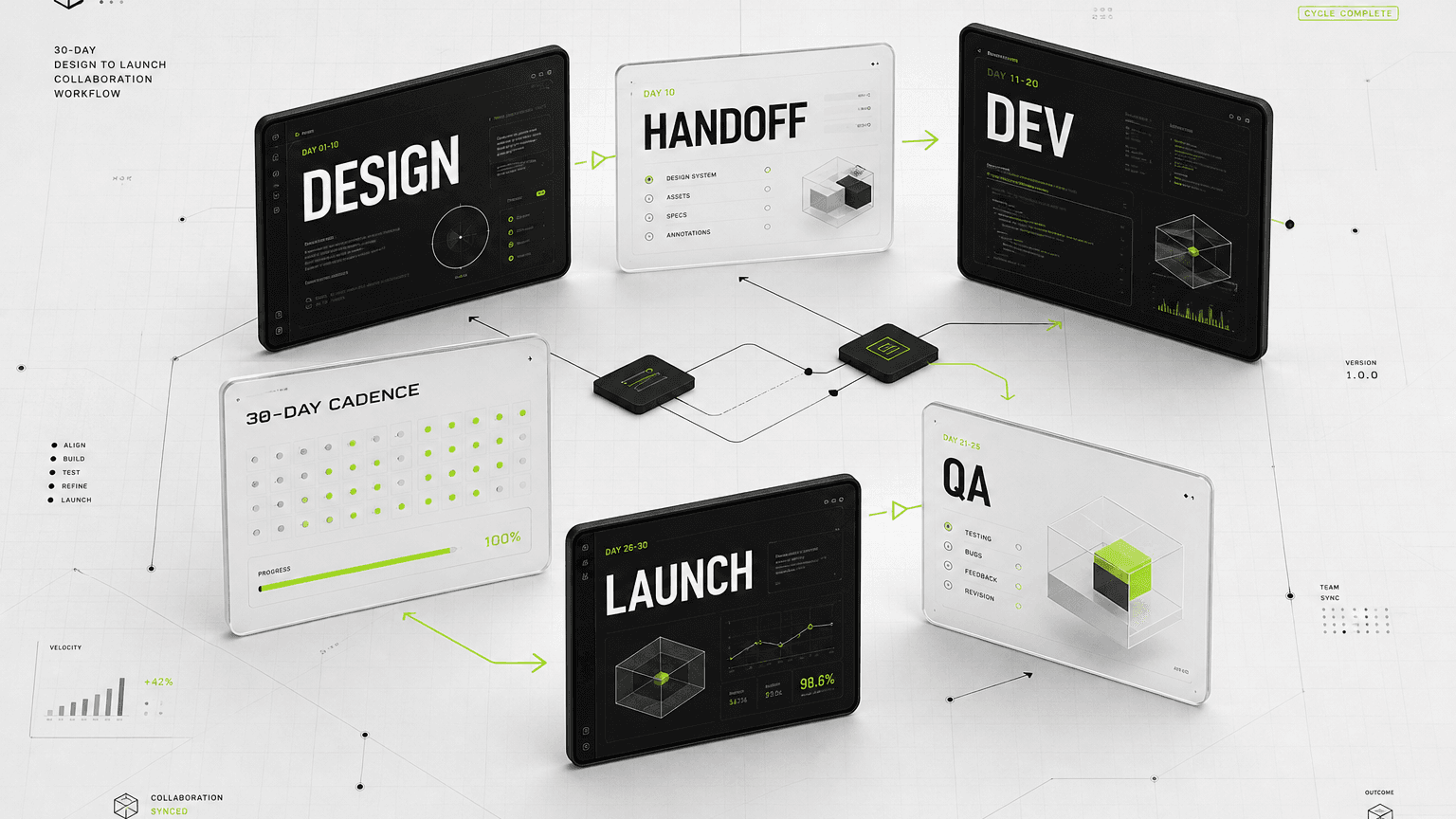
The first month should prove the operating relationship and move a real product surface.
Week 1: Baseline and backlog
The agency reviews analytics, support notes, current Figma files, brand rules, roadmap pressure, and engineering constraints. Both teams choose one primary outcome and rank the first backlog.
Week 2: First shippable slice
The team maps a flow, creates a prototype, and brings engineers into the decision before polishing every state. You should see working artifacts, open questions, and a clear review owner.
Week 3: Evidence and production UI
The agency tests the risky part with customers, close proxies, analytics, or internal subject experts. Designers turn the chosen direction into production UI and component changes.
Week 4: Handoff and readout
The team supports engineering, checks the release, records decisions, and presents the next ranked lane. The readout should show what shipped, what changed, what the team learned, and how next month’s capacity will be used.
If the month ends with a deck and no usable product work, the retainer needs repair.
How DesignX Runs Senior UX Retainers
DesignX uses senior designers across UX, UI, brand, web, and strategy. The team has experience connected to Apple, Shopify, eBay, Bodybuilding.com, Oura Ring, HP, Panasonic, and Klein Tools.
Our retainer works best for teams that have real product or conversion pressure and want one partner across the surfaces customers see. We connect the website promise, product journey, sales proof, and interface system so each release strengthens the same company.
Projects often start with a focused audit or redesign. The retainer then protects momentum through product flows, landing pages, design-system work, prototypes, and implementation support. DesignX retainers start at $9,700 per month.
See DesignX pricing and engagement options, or book a 15-minute call to compare a project, sprint, retainer, or full-time hire for your roadmap.
Frequently Asked Questions
What is included in a UX design retainer?
A UX design retainer can include research, user flows, wireframes, prototypes, UI design, design-system work, usability testing, landing pages, developer handoff, and release QA. The contract should name the capacity unit and the work types covered. Buyers should also confirm who owns prioritization, how many requests can stay active, and whether meetings reduce production capacity.
How much does a UX design retainer agency cost?
Published market ranges run from about $3,000 to $20,000 per month, with embedded teams priced above that band. DesignX retainers start at $9,700 per month. The fee changes with team seniority, research depth, product complexity, response time, and implementation support, so compare the people and working model behind each price.
Is a UX retainer better than a fixed-price project?
A retainer works better for a live roadmap with design work each week. A fixed-price project works better for one defined problem with a stable scope and launch date. Many teams use both: a project repairs the foundation, then a retainer handles follow-up flows, experiments, design-system work, and release support.
Do unused design retainer hours roll over?
The agency decides its rollover policy, so the contract needs a direct answer. Some firms let a limited number of hours move into the next month, while others reserve capacity that expires at month end. Capacity retainers may avoid hours and commit to a team allocation or outcome lane instead. Ask how meetings, revisions, and blocked client feedback affect the monthly balance.
How long should a UX design retainer last?
Three months gives both teams enough time to build context, ship work, support a release, and review early results. A shorter pilot can test communication and craft, but one month may not show the effect of a complex product change. The contract should include a clear review point, notice period, and offboarding process.
What is the difference between a design subscription and an agency retainer?
A design subscription tends to sell request throughput for a flat monthly fee, with one or two active tasks at a time. An agency retainer reserves hours, deliverables, team capacity, or outcome ownership. Subscriptions fit steady production work. Retainers fit product decisions that need research, senior UX judgment, cross-functional coordination, and implementation support.
Should we hire a UX retainer agency or a full-time product designer?
Choose an agency when you need several design disciplines, fast access to senior talent, and capacity that can change with the roadmap. Choose a full-time designer when daily product ownership, company context, and internal team leadership matter more than skill range. Some companies use an agency while recruiting, then keep the agency for specialist work after the hire starts.