
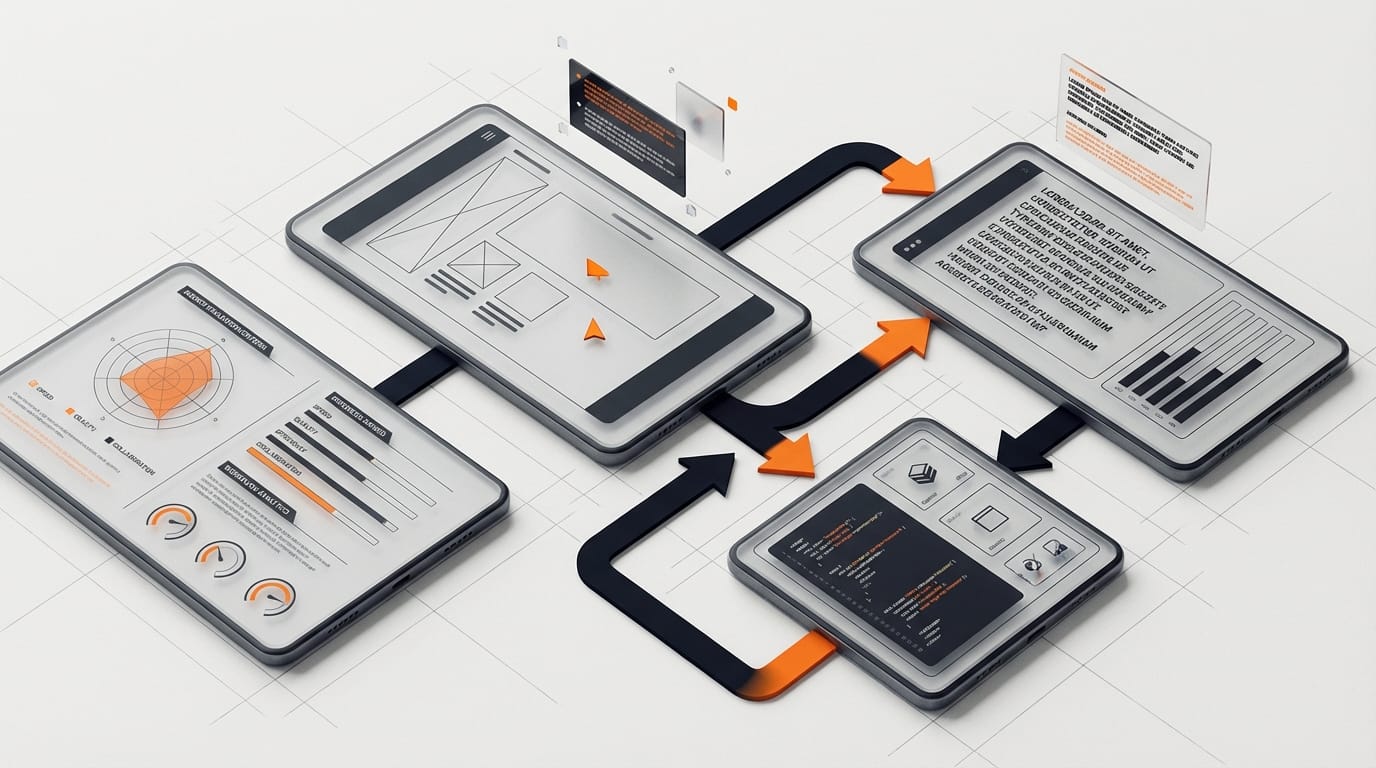
Companies often regret hiring design agencies when choosing based only on portfolio aesthetics and price. The agency’s process, communication style, and ownership model are crucial factors.
Most companies that hire a design agency and regret it made the same mistake: they chose based on portfolio aesthetics and price, then discovered too late that the agency’s process, communication style, and ownership model were completely wrong for their needs.
This guide is written from the other side of that table. At DesignX, we’ve won clients who came to us burned by previous agencies, and we’ve also lost projects to agencies who won on price and delivered something that never shipped. Here’s what actually matters.
The Portfolio Trap
Portfolios show you what an agency wants you to see. They’re curated. The three stunning hero screens in a case study may be concepts that never shipped, or they may represent two weeks of work out of a nine-month engagement gone sideways.
When you review a portfolio, ask one question for each piece: what was the measurable outcome?
If an agency can’t answer that, you’re looking at decoration, not design.
At DesignX, every case study in our portfolio can be mapped to a business result. The Klein Tools product catalog redesign led to 23% higher dealer adoption. The Oura Ring launch identity helped them establish premium positioning in a crowded health tech market. Those numbers exist because we track them. Not every agency does.
What “Senior Team” Actually Means
Almost every agency says their work is done by senior designers. few of them mean the same thing by it.

The typical agency model: a senior designer pitches you, closes the deal, does the initial strategy, then hands the execution to a junior or mid-level designer with occasional reviews. You pay senior rates. You get mid-level work.
To find out if this is what you’re signing up for, ask directly: “Who specifically will be doing the design work on our account, and can I speak with them before signing?”
Good agencies answer this without hesitation. They’ll introduce you to the person. If you get a vague answer about their “team,” that’s your signal.
Process Beats Talent (Most of the Time)
A talented designer without a clear process will produce inconsistent work. A well-structured design process with a solid-but-not-exceptional team will produce consistent, predictable outcomes.

The process you’re looking for includes:
- A discovery phase where they ask you uncomfortable questions about your users, your goals, and what’s failed before
- A defined decision-making framework (who approves what, by when)
- Clear revision cadence, not unlimited revisions that drag forever
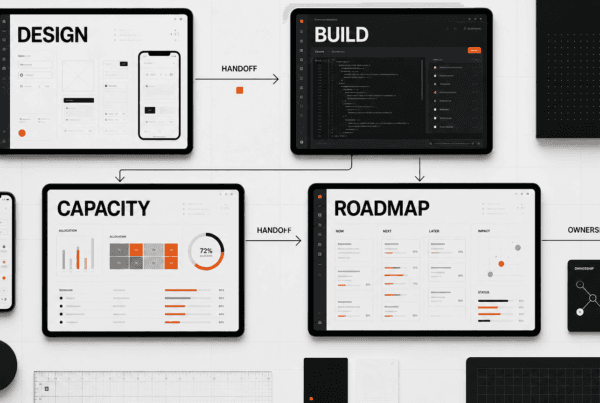
- Handoff documentation that engineers can actually use
If an agency can’t describe their process in plain terms before you hire them, they either don’t have one or they’re hiding something.
The Ownership Question
When the engagement ends, who owns the design files?
Some agencies retain source files unless specifically negotiated. Some license design systems and charge recurring fees to access them. Some deliver Figma files that only work with proprietary plugins they control.
Before signing, get answers to:
- Do you receive all source files at the end of the project?
- Are there any tools, licenses, or subscriptions required to continue using the deliverables?
- Can your internal team (or a future agency) pick up where they left off?
This sounds like legal fine print. It matters more than you think when you’re three months in and need to change direction quickly.
Scope Creep Is Almost Always the Client’s Fault
Agencies get blamed for scope creep. The reality is that most scope creep happens because clients change their mind mid-project, bring in new stakeholders who want different things, or don’t define success clearly at the start.
A good agency will push back on undefined scope at the beginning. If an agency agrees to everything in the initial brief without asking clarifying questions, that’s not a sign of flexibility. That’s a sign they’ll charge you for changes later.
Before you start, define:
- What does done look like? (Specific deliverables, not vague goals)
- Who has final sign-off authority on your side?
- What happens if priorities shift? (Change order process)
Red Flags That Are Easy to Miss
A few patterns that predict a bad engagement:
They win on price. Design is not a commodity. If an agency’s pitch is that they’re significantly cheaper than competitors, the difference is going somewhere. Usually it’s junior execution, offshore teams, or cut corners on research.
They don’t push back on your brief. If you send a brief and the agency just says yes to everything, they’re not thinking critically about your problem. Good agencies ask hard questions. They tell you when your idea has a flaw. That friction is part of what you’re paying for.
Case studies lack business context. As noted above: beautiful work without outcomes is decoration. Ask what happened after launch.
They want to redesign everything. If the first recommendation from an agency is a full rebrand or complete redesign, slow down. Sometimes that’s the right answer. More often it’s scope inflation. Start with the highest-impact changes and prove value before rebuilding from scratch.
What a Good Agency Engagement Looks Like
When things go well, you barely notice the process. Decisions get made, files appear when promised, engineers don’t complain about handoffs, and the product ships on time.
The specifics that make that happen:
- Weekly check-ins with concrete status, not vague progress updates
- A shared project tool where you can see work in real time
- A single point of contact on the agency side who actually knows the project
- Honest conversations when something isn’t working, before it becomes a crisis
That last one is more rare than it should be. Agencies that tell you early when there’s a problem are the ones worth keeping.
How to Actually Compare Agencies
Use a simple scoring matrix. Weight the factors that matter most to your project.
| Factor | Weight |
|---|---|
| Relevant category experience | 25% |
| Who executes the work (seniority) | 25% |
| Process clarity | 20% |
| Communication quality in sales process | 15% |
| Price/value fit | 15% |
The way an agency behaves during the sales process is usually how they’ll behave during the project. Slow to respond before you’ve signed? That won’t improve once they have your money.
FAQ
How much does it cost to hire a UI/UX design agency?
Project-based work for meaningful UX engagements typically runs $15,000 to $150,000 depending on scope and seniority. Monthly retainers for ongoing design work range from $5,000 to $25,000 per month. Anything significantly below those ranges usually means junior execution, offshore delivery, or both.
How long does a typical agency engagement take?
A focused redesign of a single product flow takes 6 to 12 weeks. A full product or brand overhaul runs 3 to 6 months. Discovery and strategy phases alone are typically 2 to 4 weeks for a well-run agency.
Should I hire a specialized agency or a full-service one?
For most product companies, a specialized UX/UI or brand agency will outperform a generalist full-service agency on the design work. Full-service agencies spread talent across too many disciplines. Specialists go deeper. The exception is when you need design and development tightly integrated, where a single agency doing both can reduce coordination costs significantly.
What deliverables should I expect from a design agency?
At minimum: research insights, information architecture, wireframes, high-fidelity mockups, a design system or component library, prototype, and developer-ready files with annotated specs. Case studies, brand guidelines, and content strategy are often added depending on scope.
How do I know if the agency is a good fit before signing?
Ask for a paid discovery sprint. A legitimate agency will offer a bounded, lower-commitment engagement where you work together on a real part of your project. That 2-4 week test tells you more about fit than any number of sales meetings.
The Short Version
Hire for process and outcomes, not aesthetics. Confirm who actually does the work. Get the ownership terms in writing. Pay attention to how the agency behaves before you sign.
If you’re evaluating design agencies for a product or brand project and want a straight conversation about whether we’re the right fit for your situation, reach out here. We’ll tell you honestly if we’re not.