
How to price a 30 day SaaS design partner sprint: start with the business decision the sprint must unlock, then price the scope around seniority, research, prototype fidelity, user testing, and handoff depth.
For most founder-led SaaS teams, a focused 30 day sprint should land between $15,000 and $35,000. A lightweight audit may sit below that range. A senior, research-backed sprint with production-ready UX/UI can move above it.
- Use fixed fee pricing when the outcome and delivery window are clear.
- Charge more when the sprint includes customer interviews, prototype testing, high-fidelity UI, or executive-ready decision docs.
- Do not price by screen count alone. A login flow and a billing workflow are not equal in business risk.
- Anchor the price against delay. A slow redesign, a wrong feature bet, or a bad onboarding flow can cost more than the sprint.
DesignX works with founder-led teams that need senior design judgment without a long agency runway. Our team has worked across SaaS, ecommerce, industrial, health, and consumer products, including Klein Tools, Oura Ring, HP, and Bodybuilding.com. That experience matters because pricing a sprint is less about filling 30 days and more about choosing the right constraint.
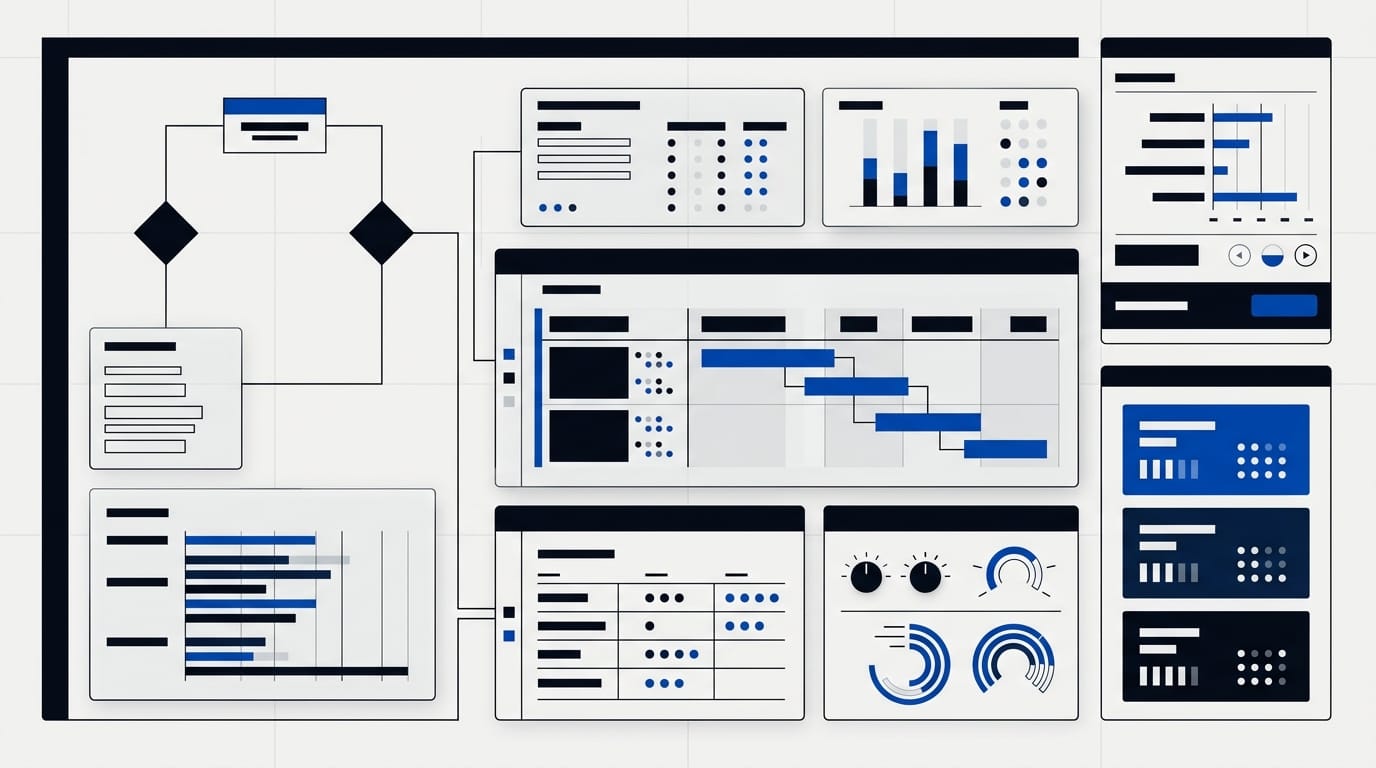
How to price a 30 day SaaS design partner sprint without guessing
The cleanest pricing method is a fixed fee built from five inputs: the sprint problem, the seniority required, the research load, the design output, and the handoff expectation.
If the sprint is meant to answer “why are trial users not activating,” the work may include analytics review, onboarding audit, prototype redesign, and user tests. If the sprint is meant to redesign a pricing page for enterprise buyers, the work may include messaging hierarchy, page UX, proof placement, stakeholder reviews, and handoff specs. Both are SaaS design partner sprints. They should not cost the same.
A good pricing conversation starts with four questions:
- What business metric should this sprint affect?
- Which product surface or journey is inside the 30 day box?
- What evidence do we need before the team commits to build?
- What must engineering, marketing, or product receive at handoff?
Those answers protect both sides. The founder gets cost clarity. The design partner gets scope clarity. The project has a sharper chance of producing a decision instead of a prettier deck.
Market context: what similar design work costs in 2026
The market gives you useful guardrails, but not a perfect answer. Clutch’s 2026 UX pricing guide reports that UX agency projects commonly fall in the $10,000 to $49,999 band, with an average reviewed project cost above $84,000. That is for broader UX projects, not only 30 day sprints, but it explains why senior SaaS work rarely prices like a small freelance task.
Traditional design sprint firms sit in a similar premium bracket. Design Sprint Ltd lists a complete 5-day sprint budget around $25,000 to $30,000, including preparation, prototype, user tests, videos, IP, and NDA. A 30 day design partner sprint is longer than a classic 5-day sprint, but often narrower in scope than a full redesign.
Internal hiring is not free either. The U.S. Bureau of Labor Statistics reports a 2024 median annual wage of $98,090 for web and digital interface designers. Once you add recruiting time, management load, benefits, and ramp, a one-month senior sprint can be a rational bridge before committing to a full-time product design hire.
A practical pricing range for founder-led SaaS teams
Use this as a working range, then adjust for your actual risk, speed, and deliverables.
| Sprint type | Typical price | What it should include | Best fit |
|---|---|---|---|
| Diagnostic sprint | $7,500 to $15,000 | UX audit, analytics review, heuristic notes, prioritized roadmap | Teams that know something is broken but need proof before redesign |
| Focused UX sprint | $15,000 to $25,000 | Journey mapping, wireframes, high-fidelity screens for one core flow, review cycles | Teams fixing onboarding, activation, pricing, demo, or dashboard friction |
| Research-backed sprint | $25,000 to $35,000 | Everything above plus interview plan, prototype testing, synthesis, decision memo | Teams making a product bet where wrong assumptions are expensive |
| Senior design partner sprint | $35,000 to $50,000+ | Product strategy, UX/UI, stakeholder facilitation, design system alignment, engineering handoff | Growth-stage SaaS teams where leadership needs a premium partner, not task execution |
DesignX’s broader project work often falls in the $15,000 to $25,000 range, with fractional design retainers near $9.7k per month. A 30 day SaaS sprint should not blindly copy those numbers. It should use them as a floor for senior involvement, then add or subtract based on research and handoff depth.
If your sprint includes only an audit and recommendations, keep the price lean. If it includes live product design, tested prototypes, decision support, and files your team can build from, price it as high-value senior work.
What should be included in the 30 day scope?
A design partner sprint should have a weekly shape. Without that shape, 30 days becomes a polite container for meetings.
Week 1: diagnose and narrow the bet
The first week should answer what the team is actually trying to fix. That may include stakeholder interviews, funnel review, product walkthroughs, competitor review, support-ticket patterns, and a short list of high-risk assumptions.
The output should be a one-page sprint brief: problem, audience, included surfaces, excluded surfaces, metric target, review owners, and decision deadline. If that brief feels hard to write, the sprint is not ready to price.
Week 2: design the direction
The second week turns the brief into structure. This is where the design partner maps the journey, rewrites key moments, builds wireframes, and shows enough design fidelity for the founder to judge direction.
This is also where weak fixed fees break. If the proposal says “design improvements” but never names the flow, the page count, the prototype depth, or the review process, the team will fight about scope later.
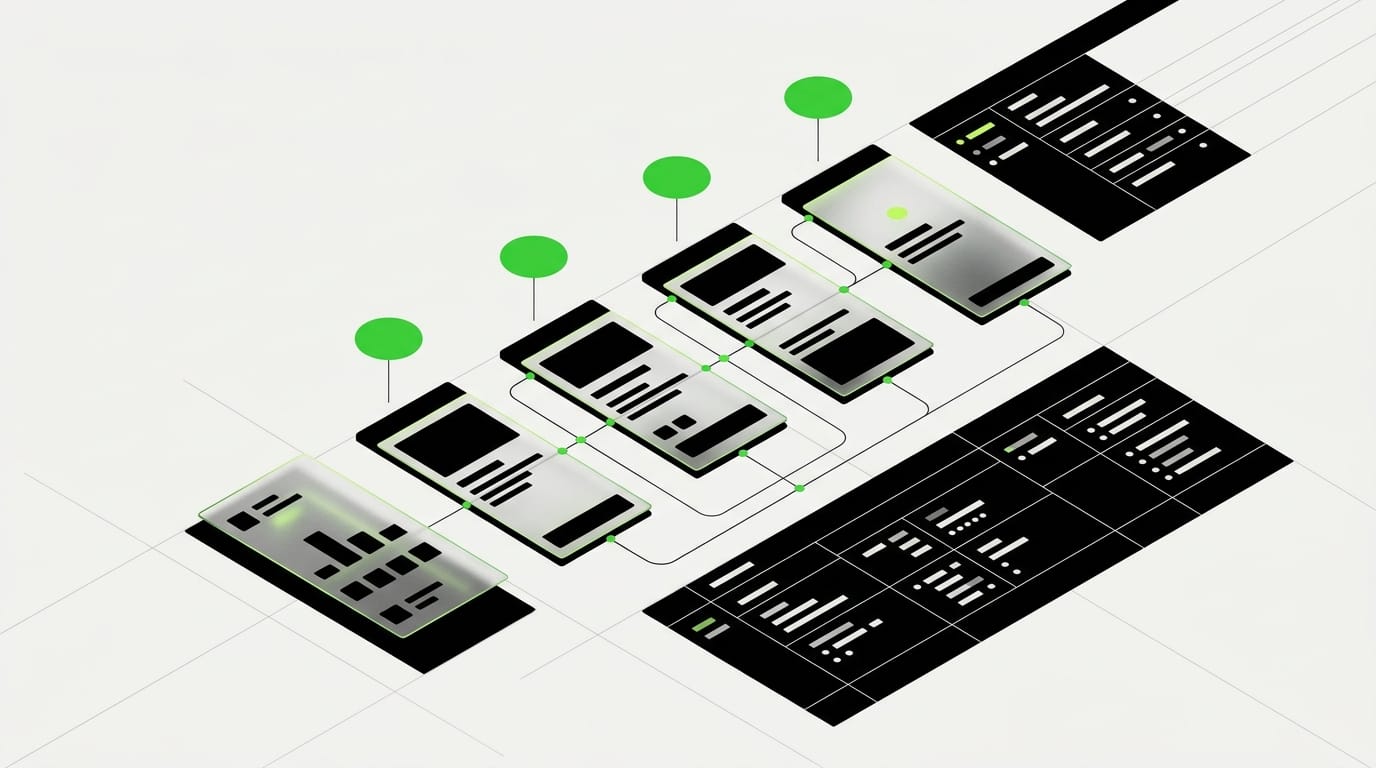
Week 3: test, refine, and make the decision visible
User testing is not always required, but it is often where the sprint earns its fee. Nielsen Norman Group’s classic guidance on testing with five users is useful here: small, focused tests can reveal patterns before a team spends months building the wrong thing.
For SaaS, this does not need to become a research theater. Five conversations with the right users can expose unclear pricing logic, weak onboarding steps, dashboard noise, missing proof, or a CTA that asks for too much commitment too early.
Week 4: handoff with enough detail to ship
The last week should not be a rushed presentation. It should turn design work into usable operating material: Figma files, annotated flows, component notes, copy rationale, risk list, build order, and next-step recommendations.
This is where a premium sprint separates itself from a cheap one. The buyer is not just paying for screens. They are paying to reduce ambiguity for the next team that touches the work.
Pricing variables that should increase the fee
Not every 30 day sprint needs a premium price. These variables are the reason some do.
- Senior stakeholder facilitation. If the sprint must align founders, product, sales, customer success, and engineering, price the judgment required to manage decisions.
- Research recruiting. Customer interviews, incentives, scheduling, and synthesis take real time.
- High-fidelity prototype work. SaaS buyers react differently to polished flows than to loose wireframes.
- Design system alignment. Working inside an existing product system is slower than making isolated mockups.
- Complex user roles. Admins, managers, end users, buyers, and implementation teams may each need different flows.
- Regulated or trust-heavy products. Fintech, health, security, and enterprise SaaS require more review discipline.
- Engineering handoff. Specs, states, edge cases, and build sequencing change the work from concept to production support.
For related context, DesignX has written about UX audit services for SaaS, SaaS pricing page design, and agency versus in-house design teams. Those decisions are often the same ones hiding under a sprint pricing conversation.
Pricing variables that should reduce the fee
Some constraints make a sprint easier to price lower without hurting the work.
- The team already has customer research and clean analytics.
- The sprint covers one flow, not the whole product.
- Stakeholders can review work within 24 hours.
- The output is a decision memo and concept prototype, not production UI.
- The product has a simple user model and few edge cases.
Founders should ask for a lower scope, not a discount on the same scope. A smaller sprint can still be excellent if it protects the right decision.
Fixed fee, hourly, or retainer?
For a true 30 day sprint, fixed fee is usually the best pricing model. It gives the founder a budget number and gives the design partner a reason to keep the scope tight.
Hourly pricing is better when discovery is messy or the company cannot define the problem yet. Retainers are better when the team needs ongoing product design support after the first sprint. That is often the path for SaaS companies that start with a focused sprint, prove the working relationship, then move into a fractional design model.
One warning: fixed fee does not mean unlimited access. The proposal should say how many review cycles are included, who gives feedback, how fast feedback is due, and what counts as a new scope request.
How to write the proposal so pricing feels fair
A founder should be able to read the proposal and understand the price without a sales call. Use plain sections:
- Problem statement: the business issue the sprint will address.
- Included scope: flows, pages, product areas, interviews, and review sessions.
- Excluded scope: development, brand identity, extra product areas, ongoing support.
- Weekly plan: what happens each week and what decisions are due.
- Deliverables: files, prototypes, research notes, decision memo, specs.
- Client responsibilities: access, data, stakeholder reviews, customer recruiting help.
- Price and payment terms: fixed fee, deposit, final payment, and change-order rules.
This structure helps a serious buyer compare proposals correctly. It also prevents the common mistake of choosing the cheapest option, then discovering that testing, copy, states, or handoff notes were never included.
When the sprint is worth more than the invoice
The best case for a 30 day sprint is not “we will make the product look better.” It is a sharper business argument.
If the sprint helps a SaaS team fix trial activation, clarify pricing, shorten demo friction, or give engineering a validated build direction, the fee is a small part of the value. The hidden cost is delay. A quarter spent debating a product decision can cost more than a month of senior outside help.
This is why DesignX’s sprint versus traditional agency comparison frames the decision around time, risk, and accountability. A sprint is not cheaper because it is shorter. It is valuable when the time box forces a better decision.
How to price a 30 day SaaS design partner sprint at DesignX quality
If you want the short version, price the sprint in four layers:
- Base strategy and UX layer: $10,000 to $15,000 for diagnosis, mapping, and direction.
- Design production layer: add $5,000 to $15,000 for high-fidelity UI across the selected flow.
- Research and validation layer: add $5,000 to $10,000 for recruiting support, user tests, and synthesis.
- Handoff and advisory layer: add $5,000 to $10,000 for specs, build sequencing, and stakeholder decision support.
That gives you a practical quote band of $15,000 to $35,000 for many SaaS teams, and $35,000 to $50,000+ for higher-stakes product decisions. If the quote is far below that, ask what senior work has been removed. If it is far above that, ask what risk the partner is taking off your plate.
For more buying guidance, read DesignX’s guide on how to hire a UI/UX design agency and our breakdown of in-house design versus agency cost.
Frequently Asked Questions
What is a fair price for a 30 day SaaS design partner sprint?
A fair price usually sits between $15,000 and $35,000 when the sprint includes senior product strategy, UX/UI design, stakeholder reviews, and a clean handoff. A lighter audit or concept sprint may cost less, while a sprint with research recruiting, complex product flows, and production-ready UI can cost more. The price should be tied to the business decision the sprint will unlock, not the number of screens alone.
Should a SaaS design partner sprint be fixed fee or hourly?
Most founder-led teams are better served by a fixed fee because the sprint has a short time box and a defined outcome. Hourly work can make sense when the problem is open-ended, but it often moves pricing risk back to the founder. If you use a fixed fee, write the scope around decisions, deliverables, review cadence, and handoff depth so both sides know what is included.
What should be included in a 30 day SaaS design sprint proposal?
A strong proposal should include the sprint goal, included product surfaces, key decisions, weekly rhythm, design deliverables, user testing plan, stakeholder responsibilities, and what the team receives at handoff. It should also name what is excluded, such as front-end development, unlimited revisions, or ongoing product management. The best proposals make the tradeoffs visible before work starts.
How many user tests should be included in the sprint price?
For most SaaS sprint scopes, five moderated tests are enough to reveal the largest friction patterns in one primary flow. More tests may be useful when the product serves multiple buyer types, regulated users, or both admin and end-user roles. The budget should account for recruiting, incentives, scripting, moderation, synthesis, and the design changes that come from the findings.
When is a 30 day sprint too small for the problem?
A 30 day sprint is too small when the team expects a full platform redesign, brand system, engineering build, migration plan, and research program in one package. It is also too small when decision makers cannot review work weekly. Use a sprint for a focused product bet, then expand into a larger engagement once the team has proof and alignment.
Final take
How to price a 30 day SaaS design partner sprint comes down to one rule: price the risk removed, not the calendar days filled. A cheap sprint that avoids the hard decision is expensive. A focused sprint that gives the team evidence, alignment, and build-ready direction can pay for itself by preventing one wrong product bet.
Ready to price a focused SaaS sprint around the decision your team needs to make next? Let’s talk →
Related DesignX reading: SaaS UI/UX design agency guide and product design sprint process adds context for teams comparing agency, sprint, and subscription paths.