
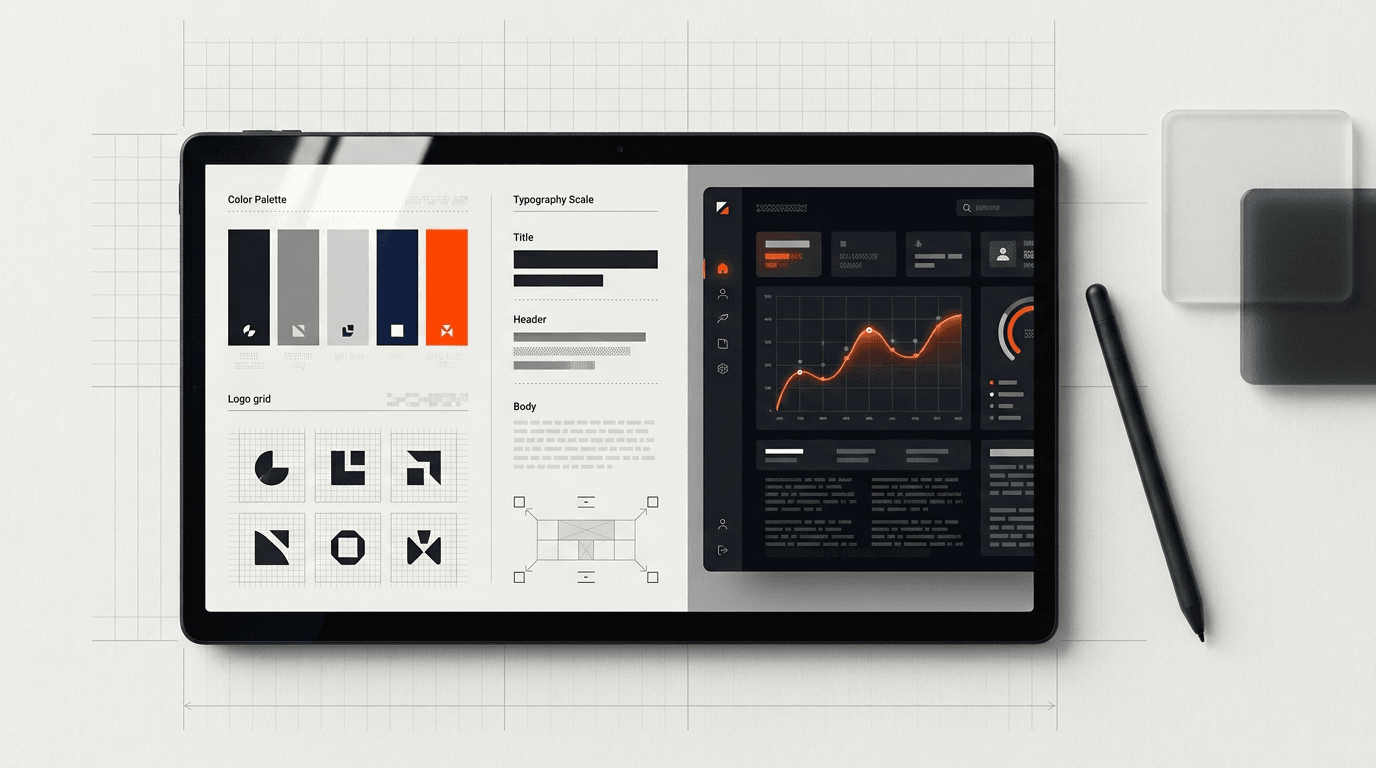
Short answer: A branding and UI UX agency should connect market positioning, visual identity, product workflows, interface design, and the design system in one operating model. The right partner makes the brand recognizable through how the product works, not only through its logo and color palette.
DesignX brings senior brand and product designers into the same workstream. Our team has experience across Apple, Shopify, eBay, Bodybuilding.com, Oura Ring, HP, Panasonic, and Klein Tools, where a product catalog redesign helped increase dealer adoption by 23%.
- Hire one team when brand, website, and product experience need to change together.
- Ask to see how brand decisions become interface rules, components, and interaction patterns.
- Judge the agency by research quality, senior access, case-study depth, and handoff discipline.
- Define decision owners before kickoff so brand and product work do not split into competing tracks.
- Budget for a usable system, not a collection of polished presentation files.
A branding and UI UX agency is useful when customers meet your company through a website, an app, a dashboard, or all of them in the same week. If the brand team defines one promise while the product team builds a different experience, customers notice the gap.
The buying decision looks simple from the outside: find a studio with branding and UI/UX in its service list. That filter is too weak. Plenty of agencies can make a logo, a website, and a set of screens. Fewer can turn positioning into product behavior, then give your team a system it can keep using after launch.
What a branding and UI UX agency should own
A combined agency should own the thread that runs from business strategy to the interface a customer uses. That thread includes audience research, positioning, verbal direction, identity, information architecture, interaction design, interface design, prototyping, testing, and design-system rules.
The Interaction Design Foundation defines branding in UX as creating a cohesive identity that carries through user touchpoints. That definition matters because a digital brand lives inside decisions such as button language, account setup, error recovery, upgrade prompts, and support flows. A brand can promise calm expertise and still feel chaotic if the product buries users in unclear choices.
A capable partner should be able to answer four questions without hand-waving:
- What should customers believe about this company? The answer comes from market, customer, and competitor research.
- How should the product behave to support that belief? The team translates the promise into journeys, content, interaction rules, and service moments.
- How should the interface express it? Typography, color, motion, layout, imagery, and component behavior carry the identity into the product.
- How will the client team keep it coherent? Tokens, components, documentation, governance, and design QA protect the work after handoff.
If the agency cannot connect those layers, you are buying adjacent services rather than one system.
When one brand and UX/UI partner makes sense
A single partner works best when the brand and product have become business constraints at the same time. Common signals include a funding round, a move upmarket, a product rebuild, a merger, or a category change that the current identity cannot explain.
Founders often discover the problem during sales. The website tells an enterprise story, the demo feels like an early startup, and the product uses language that the sales team stopped using months ago. Each touchpoint may look competent on its own. Together, they make the company harder to trust.
One integrated team can reduce the number of interpretation layers between strategy and execution. The brand lead hears the same customer interviews as the UX lead. The product designer knows why a visual choice exists. The website team can reuse the same message hierarchy, visual rules, and component logic.
This model also fits teams that need a rebrand and a product redesign in the same planning window. Our rebrand timeline and process guide shows why sequencing matters. A new identity should inform the product system before engineering locks new components into production.
Branding and UI UX agency versus separate specialists
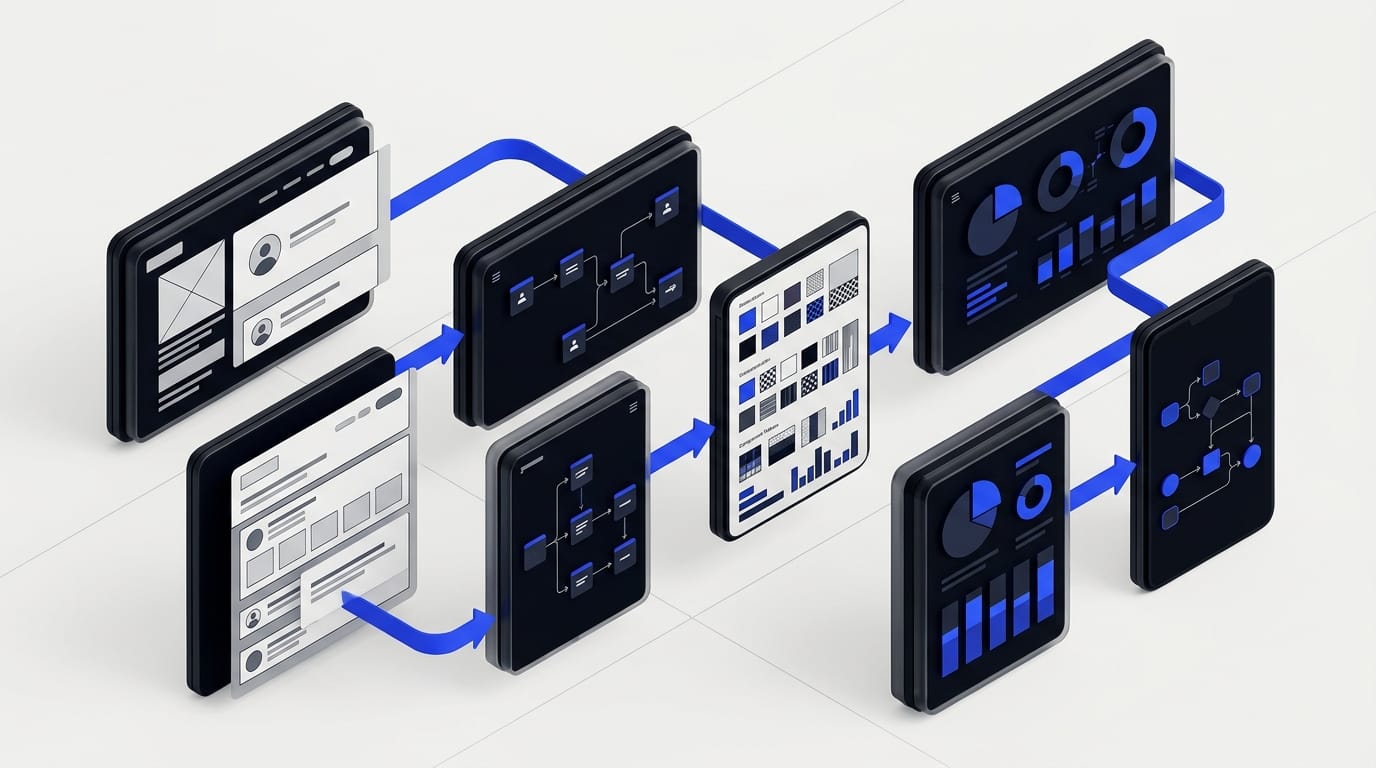
No delivery model wins in every situation. The right choice depends on how much the work overlaps, who can make decisions, and whether your team can manage handoffs.
| Delivery model | Best fit | Main advantage | Primary risk |
|---|---|---|---|
| Integrated branding and UI UX agency | Rebrands, product redesigns, launches, and company-wide digital change | One research base and one design language across touchpoints | Weak agencies may spread senior talent too thin |
| Separate brand and product agencies | Large programs with strong internal creative leadership | Deep specialist benches for each discipline | Your team owns translation, timing, and conflict resolution |
| Freelancer network | Bounded scopes with a hands-on design leader inside the company | Flexible staffing and direct access to individual specialists | Continuity and documentation depend on the client |
| In-house team | Continuous product work with stable priorities and enough hiring runway | Deep context and daily access | Hiring speed, coverage gaps, and fixed payroll |
If you already have a strong head of design, separate specialists can work. That leader must control the brief, approve shared principles, and resolve conflicts. Without that owner, two good agencies can produce a fractured result because each team solves a different problem.
For a broader view of staffing choices, compare a design agency with an in-house design team and review the tradeoffs in our agency, freelancer, and subscription comparison.
How brand strategy should show up in UX and UI
Brand strategy earns its place when users can feel it during a task. A financial product that positions itself around control should show fees before commitment, use plain account states, and make permissions easy to review. A B2B platform built around speed should shorten repeat workflows and make progress visible. A healthcare product built around care should give users calm language, clear recovery paths, and accessible controls.
The visual identity still matters. It sets recognition and tone. The product team then needs to turn that identity into usable rules:
- Type scales that work in marketing headlines, dense tables, forms, and mobile navigation.
- Color roles that preserve brand character while meeting contrast requirements.
- Voice principles that guide onboarding, empty states, alerts, sales pages, and support messages.
- Motion rules that express energy without slowing tasks or ignoring reduced-motion settings.
- Component states for loading, error, success, permission, disabled, and destructive actions.
- Image and icon systems that work across campaigns, product education, and account areas.
W3C recommends WCAG 2.2 as the latest accessibility standard for web content. Brand expression has to work inside those constraints. An agency should be able to preserve character while designing for keyboard use, screen readers, readable contrast, clear focus states, and error recovery.
This is where a design system becomes brand infrastructure. UXPin’s brand consistency guidance connects visual language, interaction patterns, and reusable components. The system gives designers and engineers a shared reference, which helps the product keep its identity as teams add features.
Eight questions to ask before hiring the agency
Portfolio polish tells you what the agency can present. These questions reveal how it thinks and whether it can support the work after the reveal.
- Who will do the work each week? Ask which senior people join research, critique, client reviews, and handoff. A decorated founder who disappears after the pitch adds little to the project.
- How do brand and UX research share evidence? Look for one research plan that covers buyers, users, market position, product tasks, and decision context.
- Can you show a brand decision inside a product flow? Ask for a case study where positioning changed navigation, content, onboarding, or component behavior.
- How do you test the identity in real interfaces? A logo board cannot prove that a typeface works in a data table or that a palette supports accessible states.
- What does the final system contain? Confirm the agency will deliver source files, components, tokens, usage rules, content guidance, prototypes, and handoff documentation that match your scope.
- How do you work with engineering? Ask about technical discovery, feasibility checks, design QA, component acceptance, and support during implementation.
- How do you handle disagreements? Strong teams return to user evidence, business goals, and agreed principles rather than defending personal taste.
- How will we measure the result? Pick metrics tied to the job: activation, task success, conversion, support volume, sales-cycle clarity, adoption, or brand recall.
Ask for the artifacts behind the case study, not only the final images. You should see how the team framed the problem, discarded weak directions, tested assumptions, and helped engineers ship the work.
Red flags in a combined agency pitch
The most common warning sign is a service list with no operating model. Branding, research, UI, Webflow, apps, development, and marketing appear on one page, but the agency cannot explain who connects those disciplines or which decisions travel between them.
Other red flags deserve attention:
- The pitch treats branding as a logo package and UX as wireframes.
- The agency shows screens without the problem, constraints, or business result.
- Junior designers run the work after senior leaders close the sale.
- The timeline jumps into visual design before research and product scope are settled.
- The team promises accessibility but cannot explain its review or testing process.
- The design system ends at a Figma library with no engineering alignment.
- The proposal has no decision map, feedback cadence, or change-control process.
- Every case study uses the same visual style, regardless of audience or category.
A useful proposal names the decisions the agency will own, the decisions your team must own, and the evidence each side will use. Scope detail matters more than a long deliverables list.
What the engagement should produce
A strong engagement leaves your team with a market position, a recognizable identity, product flows that support the promise, and a system people can extend. Deliverables should fit the business stage, but the work often includes discovery findings, positioning, message direction, visual identity, priority journeys, prototypes, interface designs, and reusable components.
Teams planning a focused engagement can use our design brief template for clients to define goals, users, scope, constraints, and approval roles before the agency starts. If the product work needs a fixed learning cycle, the product design sprint process shows how a senior team can move from risk to tested direction without pretending the whole product fits into one week.
Pricing depends on scope, research depth, number of product surfaces, and implementation support. DesignX projects often fall between $15,000 and $25,000, while fractional design retainers start around $9,700 per month. Our UI/UX design agency pricing guide explains the cost drivers and contract models in more detail.
Why DesignX combines brand and product design
DesignX works with companies that cannot afford a gap between what the brand promises and what the product delivers. We use senior designers across strategy, identity, UX/UI, web design, and product systems. That structure gives founders and product leaders one accountable team while keeping the work grounded in each discipline.
Our team background includes Apple, Shopify, eBay, Bodybuilding.com, Oura Ring, HP, Panasonic, and Klein Tools. For Klein Tools, design work on a complex product catalog spanning more than 40,000 SKUs helped increase dealer adoption by 23%. The lesson applies to software too: design has to make a complex offer easier to understand and use.
A branding and UI UX agency should give your company one clear experience from first impression through daily product use. If you are planning a rebrand, website rebuild, or product redesign, talk with DesignX about the project.
Frequently asked questions
What is a branding and UI UX agency?
A branding and UI UX agency combines brand strategy, visual identity, user research, interaction design, interface design, and design-system work. The goal is to make the company’s market position visible in both marketing and product experiences. A qualified agency can show how a brand principle changes real workflows, content, components, and engineering decisions.
Should branding come before UX design?
Brand and UX discovery should overlap when both parts of the business are changing. Positioning and audience work can guide product priorities, while user research can expose promises the brand cannot support. Teams should settle the core strategy before final visual identity and high-fidelity interface design, then test both together in representative screens and journeys.
Can one agency handle a rebrand, website, and product redesign?
One agency can handle all three when it has experienced leads for brand, UX, UI, web, and implementation. Ask for an integrated plan, named team members, shared research, and a decision map. The scope should also stage the work so early brand and product choices inform the website and design system before build work begins.
How much does a branding and UX/UI agency cost?
Cost depends on research depth, identity scope, number of product flows, design-system coverage, and engineering support. DesignX projects often range from $15,000 to $25,000, with fractional design retainers around $9,700 per month. Large rebrand and product programs can cost more because they involve more stakeholders, testing, documentation, and implementation support.
How long does an integrated brand and UX project take?
A focused project may take six to twelve weeks. Larger programs often run in stages over several months. Research, stakeholder access, product complexity, and approval speed affect the schedule. Ask the agency to show decision milestones rather than one final delivery date, since late feedback on positioning can force expensive changes across identity and product work.
What should a branding and UI UX agency deliver?
The agency should deliver the artifacts required to make and maintain decisions. Depending on scope, that may include research findings, positioning, message guidance, visual identity, user journeys, wireframes, prototypes, interface files, tokens, component libraries, accessibility notes, developer documentation, and design QA. Your contract should name file ownership, tools, handoff support, and revision boundaries.