
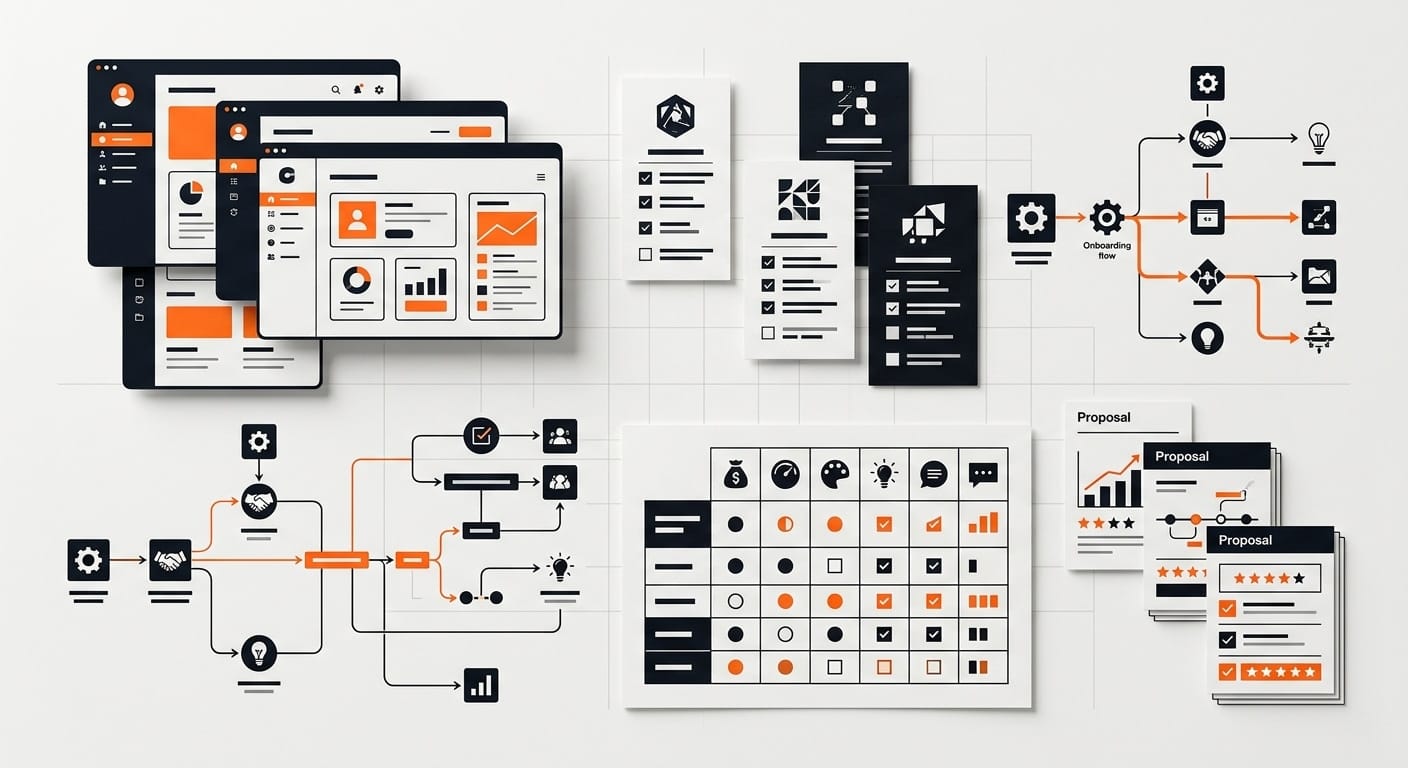
A SaaS UI UX design agency helps SaaS teams turn product friction into clearer onboarding, cleaner dashboards, stronger conversion paths, and build-ready product design. The right partner should bring product strategy, research, UI craft, and handoff discipline into one engagement.
That sounds simple. It is not. SaaS design work breaks when an agency treats a product like a collection of pretty screens instead of a behavior system with roles, permissions, data states, pricing pressure, and retention risk.
- Choose a SaaS specialist when the work affects activation, retention, dashboard clarity, feature adoption, or sales confidence.
- Ask for process proof, not just portfolio polish. You need to see research, scope control, design-system thinking, and handoff examples.
- Expect premium pricing for senior work. Clutch’s 2026 guide shows many UX agency projects in the $10,000 to $49,999 range, with average reviewed projects much higher.
- Avoid cannibalization in your search. A UX audit, SaaS website redesign, product sprint, and full product design agency engagement solve different problems.
DesignX works with founder-led and growth-stage teams that need senior design judgment without building a full internal team first. Our team has experience across product UX, brand, ecommerce, and enterprise-scale systems, including Klein Tools, Oura Ring, HP, and Bodybuilding.com. The point is not name-dropping. It is that SaaS teams need designers who can handle ambiguity, business pressure, and product detail at the same time.
What a SaaS UI UX design agency should own
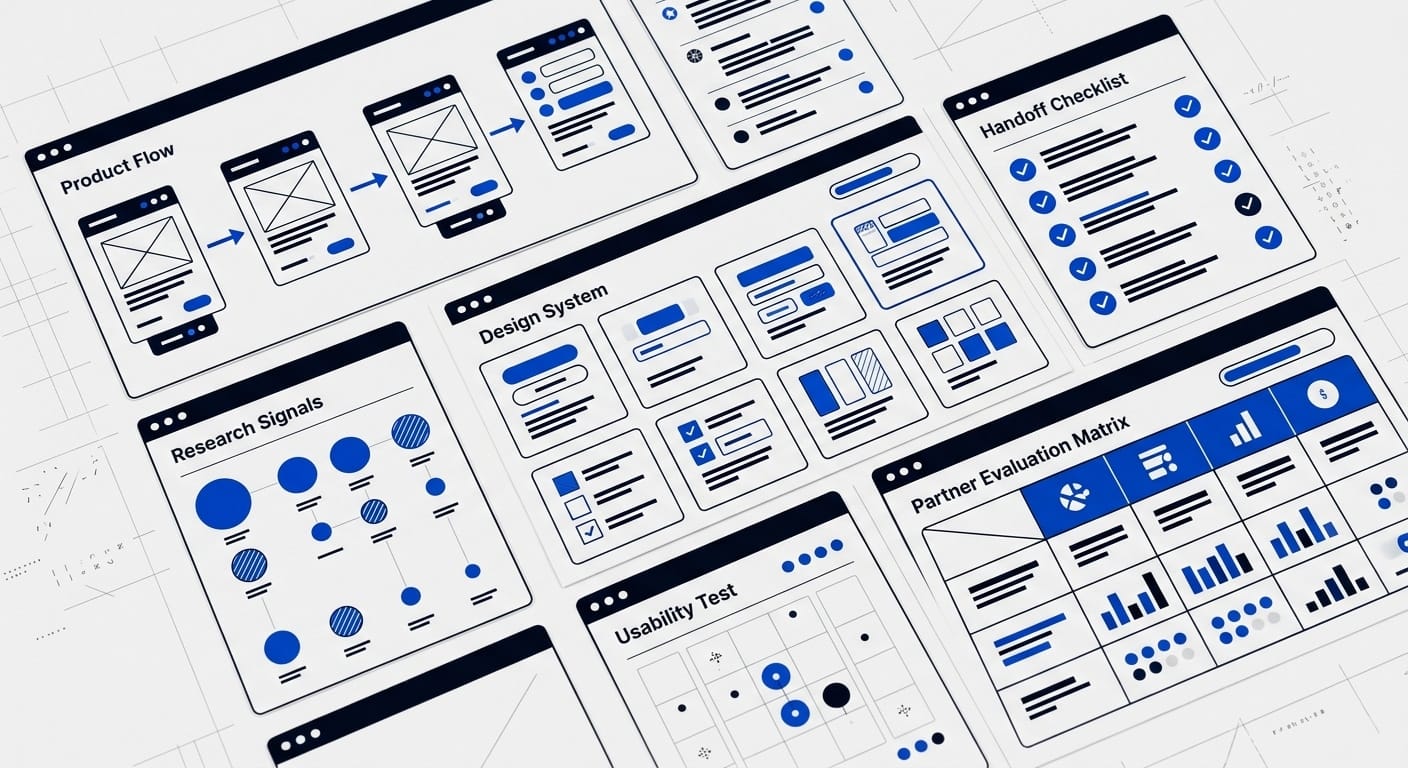
A SaaS UI UX design agency should own the path from product problem to usable design decision. That means the agency should not disappear into Figma for three weeks, then return with screens that look expensive but fail under real product conditions.
The scope should usually include some mix of these areas:
- Product diagnosis: what is broken, who feels it, and which metric is affected.
- User journey mapping: how buyers, admins, power users, and new users move through the product.
- UX structure: flows, navigation, states, hierarchy, and decision paths.
- UI design: high-fidelity product screens, component patterns, and visual hierarchy.
- Design-system alignment: reusable components, tokens, states, and rules your team can keep using.
- Validation: prototype reviews, user testing, or stakeholder decision sessions.
- Engineering handoff: specs, edge cases, annotations, build order, and QA support.
If the agency only talks about “modern UI,” you are probably buying surface work. SaaS teams need deeper help: what should a first-time user do next, why did a trial user stall, which states need design, and how should the product explain value before the user gives up?
When to hire a SaaS UI UX design agency
Timing matters. Hire too early and the agency may design around assumptions. Hire too late and the product has already absorbed months of avoidable complexity.
The strongest hiring signals are practical:
- New users sign up but do not reach the “aha” moment.
- Sales demos require too much manual explanation.
- Support tickets cluster around the same feature or workflow.
- Your dashboard has grown into a control panel only power users understand.
- Enterprise buyers ask for polish, accessibility, permissions, or clearer admin flows.
- The product team keeps redesigning the same surface because nobody has solved the structure.
For a narrow problem, start with a UX audit service for SaaS. That path fits when you need evidence, severity ranking, and a prioritized action plan before committing to a redesign. For a broader go-to-market problem, a SaaS website redesign may be the better first move because the issue is not inside the app yet. It is in the sales path.
For a product bet with a short deadline, a product design sprint process can create fast alignment. For a longer build, you want an agency relationship that can carry the work from research through design-system updates and handoff.
How to compare SaaS UI UX design agency options
Most agency pages look similar at a glance. They show client logos, glossy product screens, awards, and claims about speed. Your job as the buyer is to translate those claims into operational proof.
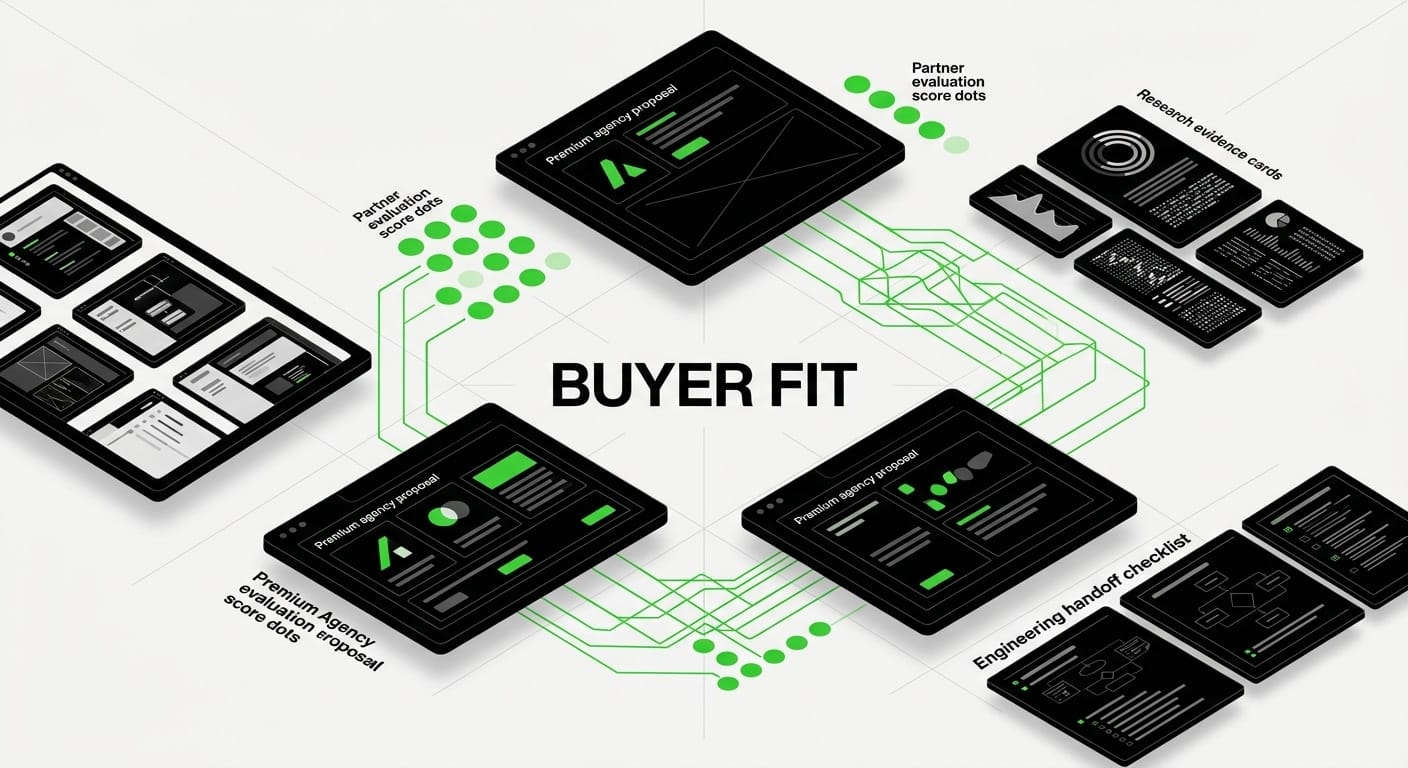
Use this buyer scorecard before you sign:
| Evaluation area | What to ask | Red flag |
|---|---|---|
| SaaS fit | Which SaaS flows have you designed: onboarding, dashboards, billing, admin, reporting, collaboration, permissions? | Only marketing sites and mood boards. |
| Research | How will you learn where users get stuck? | No plan beyond stakeholder opinions. |
| Business metric | Which metric should this work affect? | The proposal never mentions activation, conversion, adoption, support load, or retention. |
| Design system | Will you create or extend reusable components? | One-off screens with no rules for future work. |
| Handoff | What will engineering receive? | Figma files only, with no states, notes, or build order. |
| Accessibility | Which WCAG target will the product follow? | Accessibility treated as a final polish pass. |
| Team seniority | Who actually works on the product week to week? | Senior people sell it, junior people carry it. |
That last point is where buyers get burned. A SaaS product has edge cases: empty states, error states, permission rules, billing logic, integration failures, onboarding branches, and data-heavy screens. Junior execution can make all of that look neat while still leaving the product hard to use.
What the best proposals include
A strong proposal from a SaaS UI UX design agency should be boring in the right places. It should make scope, cadence, and responsibility plain enough that your product, engineering, and leadership teams can all understand the deal.
Look for these parts:
- Problem statement: the product or revenue issue the work is meant to change.
- Included surfaces: which flows, screens, roles, and states are inside scope.
- Excluded scope: what is not included, such as development, brand identity, analytics setup, or extra product areas.
- Weekly plan: discovery, design direction, iteration, validation, and handoff timing.
- Decision owners: who gives feedback and how fast decisions are due.
- Deliverables: Figma files, prototypes, system notes, UX rationale, specs, QA notes, and next-step roadmap.
- Price and payment terms: fixed fee, retainer, deposit, milestone plan, or change-order rules.
Clutch’s 2026 UX pricing guide reports that reviewed UX projects often sit in the $10,000 to $49,999 range and that the average reviewed project cost is above $80,000. That does not mean your SaaS project must cost that much. It means serious agency work has a floor, especially when research, senior strategy, and product handoff are included.
The U.S. Bureau of Labor Statistics reports a 2024 median wage of $98,090 for web and digital interface designers. That helps frame the buy-versus-hire choice. A senior agency engagement can be expensive, but a mis-hire, slow ramp, or wrong product bet can cost more.
Commercial scope: audit, sprint, redesign, or retainer?
Do not ask agencies for a generic quote. Ask which buying motion fits the problem.
UX audit
Use an audit when the product is live and you need to know where users stall. A good audit ties UX friction to activation, conversion, support volume, feature adoption, or retention. DesignX’s SaaS UX audit guide breaks down the scope and cost range for that path.
Design sprint
Use a sprint when the team needs a focused answer fast. This works well for onboarding, a new feature, pricing experience, dashboard rework, or investor-demo readiness. Nielsen Norman Group’s classic guidance on testing with five users is useful here because small tests can reveal patterns before a team burns a full quarter.
Product redesign
Use a redesign when the underlying structure is wrong. That might mean the IA is broken, the design system cannot scale, different roles need different views, or the product no longer matches the business model. This is where a design system component library becomes more than a visual kit. It becomes a shared operating layer for future product work.
Fractional design retainer
Use a retainer when your team needs ongoing senior design support but is not ready to hire full-time. This fits SaaS companies that have a steady product roadmap, recurring growth experiments, and leadership that wants design judgment close to the business. If you are choosing between models, DesignX’s agency versus in-house design team guide is a helpful companion piece.
Accessibility, product analytics, and enterprise readiness
SaaS buyers, especially enterprise buyers, look past aesthetics. They care about adoption, trust, and operational risk.
Accessibility is part of that risk. W3C’s WCAG overview explains that WCAG 2.2 includes 13 guidelines organized under four principles. Your agency should translate the standard into plain product work: visible focus states, keyboard paths, contrast, readable forms, error handling, and clear labels.
Product analytics matter too. Pendo’s product benchmarks are based on aggregated data from more than 6,800 applications across 2,500 customers. That kind of benchmarking reminds teams that SaaS design is measurable. If an agency cannot talk about product behavior, it is not ready to guide product UX.
For conversion-heavy SaaS pages, pair product work with conversion rate optimization UX. The product and the website often share the same trust gaps: unclear value, weak proof, too much friction, and a CTA that asks for commitment before the user sees enough reason.
Cannibalization check: where this guide fits
This article is a buyer-selection guide for teams searching for a SaaS UI UX design agency. It is not a generic dashboard design article, and it is not a rewrite of existing DesignX SaaS content.
- UX Audit Service for SaaS answers what an audit includes and when to buy one.
- SaaS Website Redesign focuses on managing a website redesign project without losing momentum.
- Product Design Sprint Process explains a sprint workflow for founder-led teams.
- How to Hire a UI/UX Design Agency covers broad agency hiring beyond SaaS.
This page should rank for commercial SaaS agency intent. The supporting pages answer adjacent buying questions and should pass authority into this page through internal links, not compete with it.
Questions to ask before you sign
Use these questions in the sales call. The answers will tell you whether the agency thinks like a product partner or a production vendor.
- Which SaaS metric should this engagement affect?
- Which user roles and product states are inside scope?
- How will you review analytics, support tickets, or customer feedback?
- What research is included, and what would cost extra?
- Who will be on the working team after the contract is signed?
- How do you handle accessibility and design-system rules?
- What will engineering receive at handoff?
- What happens if discovery shows we need a smaller or larger scope?
- Can you show an example of a messy product problem you simplified?
Strong agencies answer directly. Weak ones drift into portfolio talk.
Frequently Asked Questions
What does a SaaS UI UX design agency do?
A SaaS UI UX design agency plans and designs the product experiences that affect activation, adoption, retention, and sales confidence. The work can include product strategy, user research, dashboard UX, onboarding flows, feature design, design systems, pricing-page UX, and engineering handoff. The best partner connects those design decisions to a business metric, not just a set of screens.
How much does it cost to hire a SaaS UI UX design agency?
For serious SaaS work, expect a focused audit or sprint to start around $8,000 to $25,000, with larger product redesigns often moving into the $25,000 to $100,000 range. Clutch’s 2026 UX pricing guide shows UX agency projects commonly in the $10,000 to $49,999 band, which is a useful market anchor. The final number depends on product depth, research, design-system work, user testing, and how much handoff support your engineering team needs.
Should a SaaS startup hire a specialist agency or a general design agency?
Hire a SaaS specialist when the work touches activation, dashboards, onboarding, enterprise roles, product analytics, or a sales-led buying path. A general agency can handle brand or marketing pages, but product UX needs sharper judgment about flows, states, data density, and user roles. If the agency cannot explain how design choices will change product behavior, keep looking.
How do I compare SaaS UI UX design agency proposals?
Compare proposals by decision quality, not page count. A strong proposal names the product surfaces, research plan, weekly review rhythm, deliverables, excluded scope, handoff format, and the metric the work should influence. If one proposal is cheaper, ask which parts were removed: research, senior strategy, design-system alignment, testing, or implementation support.
When is a UX audit enough instead of a full SaaS redesign?
A UX audit is enough when the product has a specific friction point, such as low activation, confusing onboarding, or support tickets around one flow. A full redesign makes more sense when the product structure is wrong, the design system is inconsistent, or several roles need different journeys. Good agencies will not sell a full redesign before they can explain why an audit, sprint, or phased roadmap is too small.
Final take
Choosing a SaaS UI UX design agency is a business decision before it is a design decision. The right partner should help your team clarify product friction, choose the right scope, make hard tradeoffs visible, and hand engineering work that can actually ship.
If you are comparing agencies for a SaaS redesign, audit, sprint, or ongoing product design support, do not start with the prettiest portfolio. Start with the product risk you need removed.
Ready to choose a senior SaaS design partner for the next product decision on your roadmap? Let’s talk →