
Direct answer: Choose a B2B dashboard design agency that can explain your users’ decisions, data rules, permission model, and engineering constraints before it shows you visual concepts.
DesignX works with senior designers across product UX, design systems, brand, and implementation support. That mix matters when a dashboard must serve several roles without turning into a wall of charts.
- Ask for proof of work on dense data and role-based workflows.
- Review research, prototyping, design-system, and handoff deliverables.
- Score the team on decision quality, not portfolio polish alone.
- Use a paid discovery sprint when the scope or partner fit remains uncertain.
A B2B dashboard design agency should help your team decide what each user needs to see, what action follows each signal, and how the interface behaves when data arrives late or a user lacks permission. Visual design comes after those decisions.
That standard rules out many attractive portfolios. A dashboard can look polished in a case-study image and fail in production because the agency never resolved table density, empty states, audit logs, role conflicts, or the path from an alert to the next task.
This guide gives you a scorecard for choosing a partner. It also shows when you need a dashboard specialist, an embedded subscription designer, an enterprise consultancy, or a senior cross-functional agency.
What a B2B dashboard design agency should own
A dashboard agency should own more than UI screens. The team should turn business rules and user evidence into an interface that your engineers can build and your customers can trust.
The scope often includes eight workstreams:
- Product discovery: goals, user roles, workflows, data sources, and technical limits.
- UX research: interviews, analytics review, support themes, and usability tests.
- Information architecture: navigation, object models, hierarchy, and drill-down paths.
- Data visualization: metric definitions, chart choices, comparison context, and alert states.
- Interaction design: filtering, sorting, bulk actions, search, saved views, and exports.
- Design systems: reusable components, states, tokens, and accessibility rules.
- Engineering handoff: prototypes, specifications, acceptance criteria, and review support.
- Post-launch iteration: behavior review, issue triage, and design-system maintenance.
The exact mix depends on your product. A reporting portal for account managers has different risks from a real-time logistics console or an AI recommendation workspace. The agency should name those differences during discovery.
For more on the interface itself, read our SaaS dashboard design best practices. If the challenge spans the full product, our guide to B2B UX design covers the wider system.
Choose the agency model that fits the work
Agency labels hide big differences in staffing, process, and accountability. Use the table below to compare the operating model before you compare portfolios.
| Partner model | Best fit | Main tradeoff | Question to ask |
|---|---|---|---|
| Dashboard specialist | Data-heavy or regulated products | Narrower brand and marketing range | Show us a live multi-role product, not a concept shot. |
| Subscription studio | Steady product backlog with internal direction | One designer may lack research or systems depth | Who handles research, data logic, and QA? |
| Enterprise consultancy | Large programs with governance and compliance | Higher cost and more process | Which senior people stay on our account? |
| Senior cross-functional agency | Product, design system, brand, and launch work | Needs a focused brief to protect scope | How will product and brand decisions stay connected? |
DesignX fits the fourth model. We bring senior product designers into work that may also touch the design system, marketing site, onboarding, and brand. Teams use that structure when the dashboard carries the product promise and cannot feel disconnected from the rest of the customer experience.
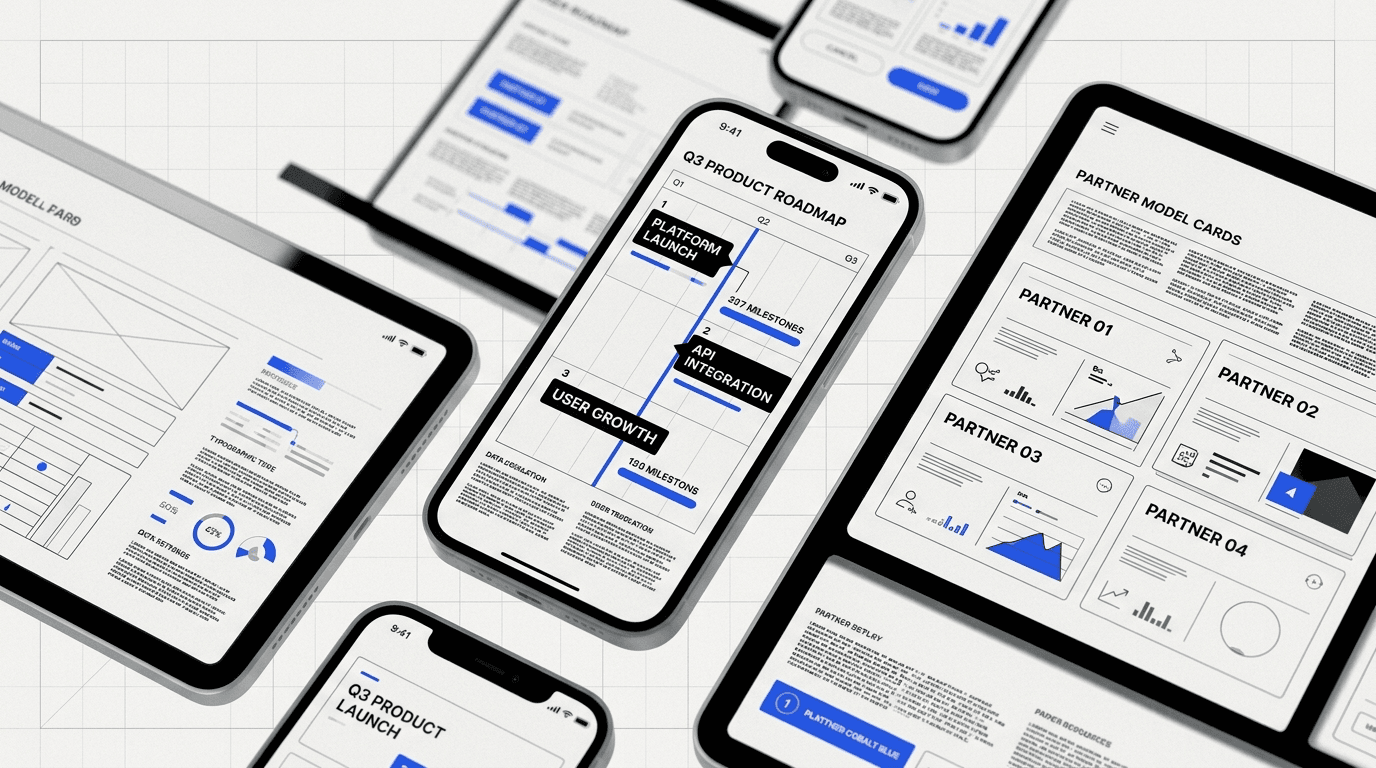
The B2B dashboard design agency scorecard
Score each agency from one to five across the eight criteria below. Ask for evidence on any score above three. A case-study headline does not count as evidence.
1. Can the team explain the decisions behind the dashboard?
Ask the agency to name the decisions each role makes and the information needed at that moment. Operators may need exceptions and bulk actions. Managers may need trends and team capacity. Executives may need fewer metrics with better context.
A weak team starts with widgets. A strong team starts with jobs, choices, and consequences.
2. Does the agency understand your data and business rules?
Dashboard design depends on metric definitions, latency, source reliability, permissions, and edge cases. Ask who will work with product and engineering to settle those rules.
Test the team with a real example: “Revenue changed after a late data sync. How should the user see that?” The answer should cover freshness, confidence, correction, and audit history. A new chart type will not solve the trust problem.
3. Can the team handle role-based views and permissions?
B2B products often serve admins, operators, analysts, account owners, and customers. Each role needs a different balance of visibility and control.
Ask for the permission model, view matrix, and state inventory. The agency should show what changes when a user cannot view a record, can view but not edit it, or needs approval before an action.
4. Does the research plan fit the product risk?
Research should answer a decision in the project. The team might interview high-value accounts, inspect support tickets, review product analytics, or test a risky workflow.
Nielsen Norman Group reports an average 31% problem-discovery rate per test user and estimates that five participants can uncover 85% of usability problems in an initial study. The lesson for a buyer is practical: ask for small test rounds during the work instead of one large test near handoff.
5. Will the design system survive production?
Dashboard components carry more states than a marketing site. Tables need loading, empty, error, permission, selected, disabled, and bulk-action states. Charts need no-data, partial-data, stale-data, and comparison states.
Review the agency’s component inventory and documentation. Ask how designers and engineers will update components after launch. Our guide to enterprise design-system governance shows the ownership model we recommend.
6. Does the team design for accessibility from the start?
Color cannot carry status alone. Keyboard users need to reach controls and data. Screen readers need labels, headings, and meaningful table structure.
W3C says WCAG 2.2 contains 13 guidelines across four principles and adds nine success criteria. Ask the agency which WCAG level it will target, how it will test components, and who owns fixes before release.
7. Can engineers build from the handoff?
Ask an engineer to review the agency proposal. The handoff should include responsive behavior, component states, data rules, validation, interaction notes, and acceptance criteria.
Request one sample from a past project with client details removed. You will learn more from a state specification or annotated prototype than from twenty portfolio thumbnails.
8. Will the agency measure the result after launch?
The team should agree on baseline measures before design starts. Useful measures include task success, time on task, error rate, feature adoption, support volume, and account retention. Pick the measures that match the workflow.
DesignX worked on a catalog experience for Klein Tools with more than 40,000 SKUs. The redesign contributed to a 23% lift in dealer adoption. That result came from making a complex product set easier to find and use, the same outcome a B2B dashboard should pursue.
Demand this dashboard design process
A mature dashboard engagement moves through evidence, structure, interaction, systems, and build review. The steps can overlap, but the agency should not skip the decisions inside them.
- Frame the business target. Name the user behavior and business result the project must change.
- Map roles and workflows. Document decisions, tasks, permissions, and handoffs.
- Audit the current product. Review analytics, support issues, interface debt, and technical constraints.
- Prototype the riskiest flow. Test hierarchy and interaction before polishing the full dashboard.
- Build the component system. Define reusable patterns with all required states.
- Validate with users and engineers. Test comprehension, task completion, feasibility, and accessibility.
- Support implementation. Review builds, resolve gaps, and protect interaction intent.
- Measure and iterate. Compare post-launch behavior with the baseline and repair weak points.
If your team cannot define the problem yet, start with a SaaS UX audit or paid discovery sprint. That smaller buy gives you a sharper brief and exposes how the agency thinks before you approve a larger redesign.
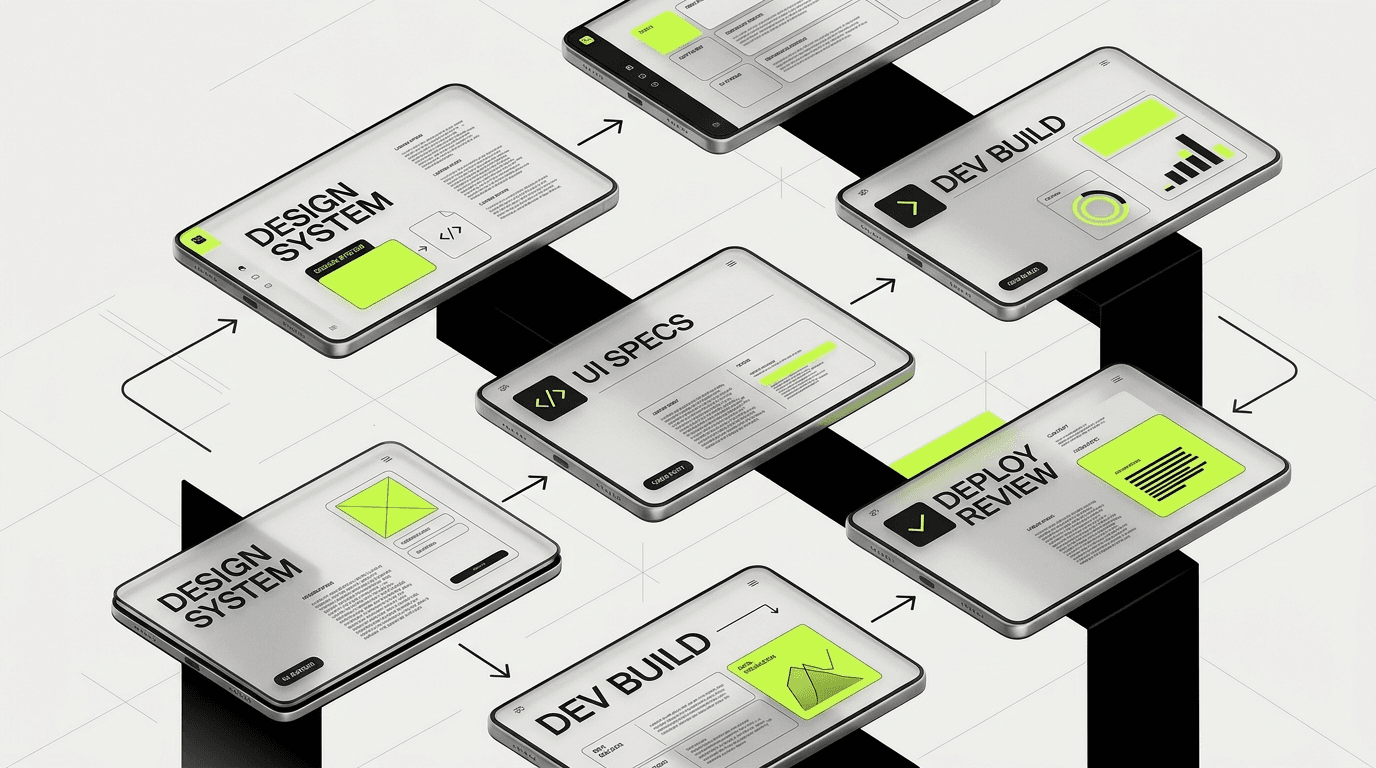
B2B dashboard design agency cost and timeline
Published rates give you a rough market frame, not a project budget. Fuselab’s 2026 comparison of twelve agencies lists hourly rates from $25 to $199 and project minimums from $5,000 to $50,000. The same guide estimates 8 to 12 weeks for a focused dashboard MVP and 4 to 9 months for a multi-role enterprise platform.
Your budget will move with four factors:
- Number of roles, workflows, and permission states
- Data complexity, latency, integrations, and compliance needs
- Research, testing, design-system, and engineering-support depth
- New product work versus redesigning a live system with legacy constraints
Compare total scope and senior attention before comparing hourly rates. Our UI/UX design agency pricing guide explains how project, sprint, and retainer models change the economics.
Red flags when hiring a B2B dashboard design agency
- The portfolio shows only static hero shots. Ask for dense tables, filters, permissions, and failure states.
- The proposal counts screens before mapping workflows. Screen count hides interaction and state complexity.
- The team cannot name who handles research or systems work. One UI designer may receive a problem that needs several disciplines.
- The agency avoids your engineers until handoff. Late feasibility reviews create rework.
- The process has no usability test. Stakeholder approval cannot replace user evidence.
- The agency promises a full redesign before an audit. It may be selling scope before it understands the problem.
- The team treats accessibility as a final checklist. Component and interaction choices need accessibility input early.
- The proposal ends at Figma delivery. Production review and post-launch learning protect the value of the work.
When DesignX is the right dashboard design partner
DesignX is a strong fit for B2B teams that need senior product design tied to a larger customer experience. Your dashboard may need a new information architecture, a production design system, stronger onboarding, and a marketing story that matches the product.
Our team includes people with experience at Apple, Shopify, eBay, and Bodybuilding.com. We work across UX/UI, brand, web, and strategy, then stay close to engineering during handoff. Review our B2B SaaS dashboard case study or our guide to choosing a SaaS UI/UX design agency for more context.
DesignX will be a weaker fit if you need a low-cost production designer to clear tickets or a narrow data-engineering contractor. Our work makes sense when senior judgment, cross-functional consistency, and the cost of getting the dashboard wrong justify the investment.
Frequently asked questions
What makes a B2B dashboard design agency different from a general UI/UX agency?
A B2B dashboard agency should understand dense data, role-based permissions, complex workflows, metric definitions, and production states. A general agency may have strong visual skills but little experience with tables, filters, audit history, data latency, or engineering constraints. Ask for live product evidence before you assume the distinction is real.
How do I choose a product design team for a dashboard-heavy product?
Score the team on data fluency, user research, role and permission modeling, design systems, accessibility, engineering handoff, and post-launch measurement. Review one detailed case study and one real process artifact. A paid discovery sprint can confirm fit when the larger scope remains uncertain.
What deliverables should I expect from a dashboard design project?
Expect a research summary, role and workflow maps, information architecture, prototypes, usability findings, high-fidelity screens, a component library, state documentation, and engineering acceptance criteria. Larger projects may also include content guidance, accessibility reports, analytics plans, and build reviews.
How much does a B2B dashboard design agency cost?
Published agency rates span a wide range. One 2026 comparison lists $25 to $199 per hour and project minimums from $5,000 to $50,000. A focused sprint costs less than a multi-role enterprise redesign with research, integrations, accessibility, and implementation support.
How long does a dashboard design project take?
A focused MVP may take 8 to 12 weeks, while a multi-role enterprise platform may take 4 to 9 months. Data access, stakeholder availability, user recruitment, design-system maturity, and engineering constraints can change the schedule. Ask the agency to show assumptions behind its estimate.
Should I hire an agency or build the dashboard design team in-house?
Hire in-house when dashboard work stays core to the roadmap and demands steady weekly design capacity. Hire an agency when you need specialist judgment, a focused redesign, or a design system your internal team can maintain. Some teams use an agency for discovery and the first release, then transfer ownership inside.
Choose the partner who can explain the hard parts
The right B2B dashboard design agency will talk about users, data, permissions, system states, and engineering before it talks about style. Use the scorecard above to compare evidence, not presentation skill.
If your dashboard has outgrown its first version, talk with DesignX. We can audit the current product, isolate the highest-risk workflow, and shape a scope that your team can defend before you fund a full redesign.