
A digital experience design agency connects customer research, journey design, UX/UI, content, design systems, and implementation so every digital touchpoint works as one experience. The right partner should improve how customers complete a task and give your internal team a system it can maintain after launch.
DesignX approaches this work with senior designers who have experience across Apple, Shopify, eBay, Bodybuilding.com, and complex product ecosystems such as Klein Tools.
- Hire for an end-to-end customer journey, not a stack of isolated screens.
- Require research evidence, measurable outcomes, and named ownership.
- Review accessibility, performance, content, and implementation before visual polish.
- Choose a team whose deliverables your product and engineering teams can use.
Companies usually search for a digital experience design agency after the customer journey has split across a marketing site, product, mobile app, support flow, and internal systems. Each surface may look acceptable on its own. Customers still repeat information, lose context between channels, and hit dead ends that no single team owns.
A digital experience project should fix that operating problem. Good interface design matters, but the agency also needs to understand the service behind the screen, the technology constraints, and the team that will own the next release.
What a digital experience design agency does
A digital experience design agency studies how customers move through a business, then designs the interfaces, content, systems, and handoffs that support that journey. The scope can span a website, product, app, portal, commerce flow, support experience, and the tools employees use behind the scenes.
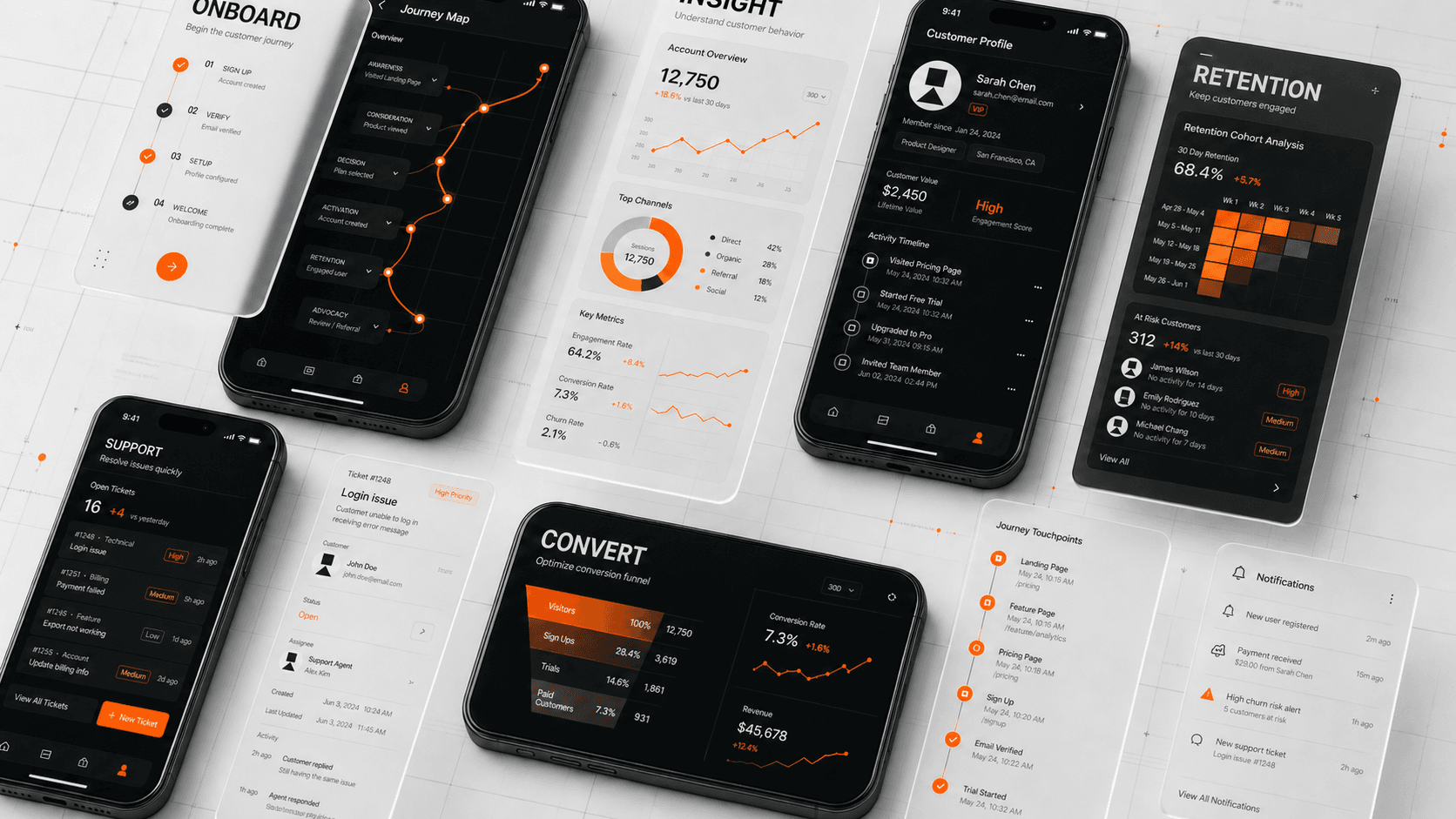
NN/g defines a journey map as a visualization of the process a person follows to accomplish a goal. Its five common elements include the actor, scenario, phases, actions and emotions, and opportunities. That map becomes useful when an agency connects it to decisions about navigation, content, interface behavior, and ownership.
The work also extends below the visible interface. NN/g describes a service blueprint as a view of the frontstage actions, backstage work, and support processes that create the customer experience. That distinction matters when a polished checkout still fails because inventory, account permissions, or support policies break the flow.
How this differs from nearby agency categories
| Partner type | Primary job | Typical boundary |
|---|---|---|
| Web design agency | Design and build a marketing or commerce site | Often ends at the website |
| UX consultancy | Research, testing, and product recommendations | May stop before production design or build |
| Digital marketing agency | Acquire and nurture demand | Often optimizes campaigns and content |
| Digital experience design agency | Connect the customer journey across touchpoints | Spans strategy, interfaces, systems, and handoff |
Some agencies cover more than one category. A combined branding and UI/UX agency, for example, can connect market positioning to the product experience. Buyers should evaluate the actual team, process, and deliverables instead of relying on the label.
When to hire a digital experience design agency
The strongest trigger is a journey that crosses team boundaries. Marketing owns acquisition, product owns the app, engineering owns the platform, and support absorbs the failures. Each group improves its own surface while customers experience the gaps between them.
Agency support makes sense when you see two or more of these conditions:
- Customers repeat the same information across sales, onboarding, and support.
- The website promise does not match the product experience.
- Mobile, web, and employee tools use different interaction patterns.
- Conversion data shows a drop, but the team cannot agree on the cause.
- Design debt slows releases and creates accessibility risk.
- A redesign has executive attention but no shared definition of success.
A narrower website redesign agency may be a better fit when the problem stays inside one site. A digital experience engagement earns its cost when the journey, operating model, and interface system need attention together.
The six workstreams a serious engagement should cover
| Workstream | Questions it answers | Useful outputs |
|---|---|---|
| Research and strategy | Who is struggling, with what task, and why now? | Interview findings, analytics review, opportunity brief |
| Journey and service design | Where does context break across channels and teams? | Journey map, service blueprint, ownership map |
| Information and interaction design | How should customers find, understand, and complete the task? | Flows, navigation model, prototypes, usability findings |
| Visual and content system | How should the experience communicate and behave? | UI direction, content patterns, responsive states |
| Design system and accessibility | How will teams ship consistent, inclusive interfaces? | Components, tokens, documentation, accessibility criteria |
| Implementation and measurement | Who builds it, how will quality hold, and what changes after launch? | Handoff, acceptance criteria, analytics plan, release support |
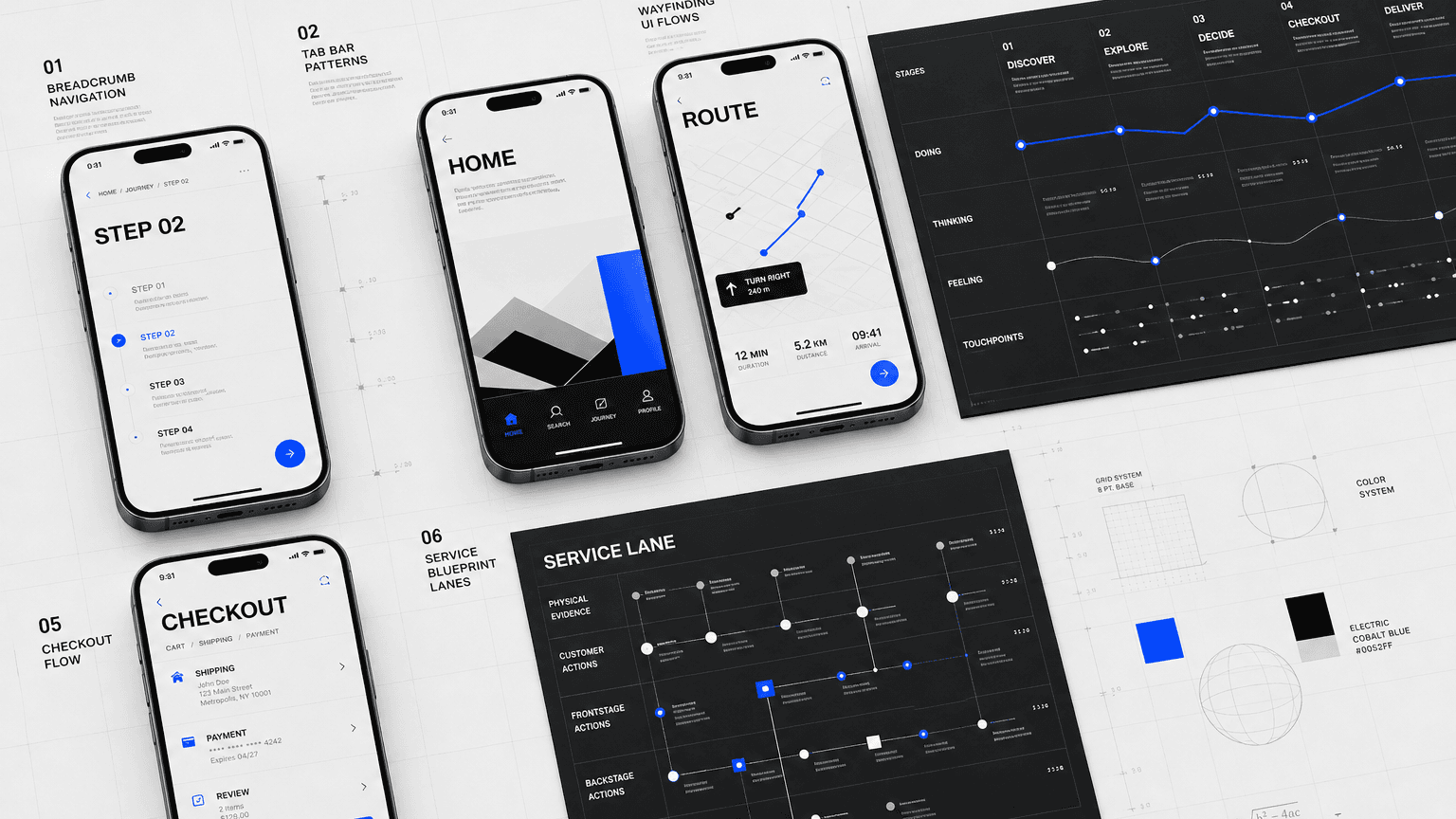
Research should lead to production decisions. A useful product design sprint narrows risk before a team commits to months of build work. The agency should show which evidence changed the flow, which assumption remains open, and what the next test will prove.
Demand measurable quality, not a prettier interface
Buyers often receive a proposal that promises a modern, intuitive, effortless experience. Those words create no acceptance criteria. Ask the agency to define quality in terms your team can test.
For a web experience, Google’s Core Web Vitals provide three field metrics: Largest Contentful Paint, Interaction to Next Paint, and Cumulative Layout Shift. The published good thresholds are 2.5 seconds, 200 milliseconds, and 0.1 at the 75th percentile. These metrics do not replace user research, but they stop visual ambition from hiding slow or unstable delivery.
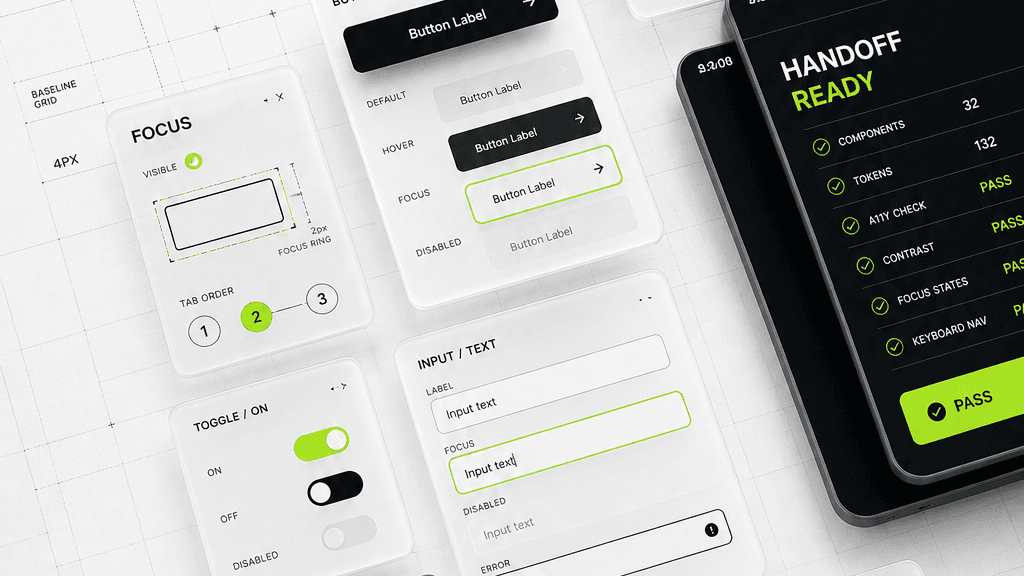
Accessibility also belongs in the brief. W3C recommends WCAG 2.2 for current accessibility work. Ask which success criteria apply, how the team tests components and flows, and who owns fixes before launch. A late compliance sweep costs more and catches less than accessible interaction design from the start.
Business metrics should trace back to the journey. For Klein Tools, DesignX connected catalog structure and digital usability to dealer behavior, contributing to a documented 23% increase in dealer adoption. The useful lesson is the connection between a specific user task, a design intervention, and a measurable outcome.
How to choose a digital experience design agency
Start with one customer journey and ask each agency to explain how it would reduce uncertainty before designing the full solution. Strong partners will discuss evidence, constraints, team access, and decision rights. Weak partners jump to style references and page counts.
- Ask who will do the work. Confirm the seniority and weekly involvement of the strategist, researcher, designer, technical lead, and project owner.
- Request a journey-level case study. Look for a clear problem, the evidence gathered, the design choices, and the result. A gallery of screens proves visual craft, not systems thinking.
- Define the production boundary. Clarify whether the agency supplies research, content, design, code, quality assurance, launch support, or a subset.
- Review the testing plan. Ask when customers see prototypes, how accessibility enters the process, and which performance criteria guide implementation.
- Inspect the handoff. Your team should receive reusable components, states, behavior notes, content rules, and named acceptance criteria.
- Agree on decisions. Name one client decision-maker, the agency lead, and the people who can resolve technical or policy constraints.
- Connect scope to outcomes. Each major deliverable should support a behavior or business result that the team can observe.
The broader design agency hiring guide covers references, proposals, and commercial terms. For digital experience work, add one standard: the agency must show how a decision moves from research to interface, then into shipped software.
Red flags in a digital experience proposal
- The proposal lists screens or pages without naming the customer journey.
- Research appears as a workshop with no access to customers or product data.
- The agency promises conversion gains before it sees a baseline.
- Accessibility and performance appear only in a quality-assurance phase.
- Design-system work ends with a component file and no documentation or ownership.
- The team that pitches disappears after kickoff.
- Handoff means exporting files instead of resolving implementation questions.
A credible proposal names assumptions and limits. It should explain what the agency can verify during discovery, what depends on customer access, and which technical questions could change cost or timeline.
Budget and timeline expectations
Digital experience engagements vary because the term can describe a focused journey redesign or a multi-channel transformation. Scope the first phase around a decision. A useful starting engagement might audit one journey, test a new flow, and build the system needed for the first release. A larger program may include multiple products, content migration, implementation, and change management.
DesignX projects commonly fall in the $15,000 to $25,000 range, while ongoing senior design support can use a monthly engagement. Those figures describe DesignX’s operating model, not a universal market average. The final cost depends on research access, channel count, technical complexity, content volume, and whether the agency delivers production code.
Compare proposals by the decision risk they remove. A lower price can hide missing research, incomplete states, or a handoff your engineering team must rebuild. A higher price needs to earn its place through senior involvement, implementation depth, and evidence.
Where DesignX fits
DesignX fits teams that need senior design leadership across brand, UX/UI, product, and web execution without hiring a large agency layer. We work best when a company has a meaningful customer journey, access to the people and data behind it, and a team ready to ship the result.
Our work connects the promise customers see to the product they use. That includes the journey, responsive interface, component system, content behavior, and collaboration with the people who will build and operate it.
Bring one broken journey
Show us where customers lose context, confidence, or momentum. We will help you define the smallest design engagement that can expose the cause and move the experience forward.
FAQs About Digital Experience Design Agencies
What does a digital experience design agency do?
A digital experience design agency researches customer journeys and designs the interfaces, content, systems, and handoffs that support them. Its scope can include websites, apps, products, portals, commerce, service flows, design systems, accessibility, and implementation support.
How is digital experience design different from UX design?
UX design often focuses on how a person uses a product or interface. Digital experience design connects that interaction to the wider journey across channels, brand promises, content, employee processes, technology, and the teams responsible for delivery.
How much does a digital experience design agency cost?
Cost depends on the journey, channel count, research access, technical complexity, and implementation scope. DesignX projects commonly fall in the $15,000 to $25,000 range, while broader multi-channel programs or code delivery can require a larger budget.
How long does a digital experience design project take?
A focused discovery and prototype can take several weeks. A full redesign that spans research, multiple channels, a design system, content, and implementation can take several months. The agency should separate decision milestones from production milestones.
What deliverables should the agency provide?
Useful deliverables include research findings, journey maps, service blueprints, flows, prototypes, UI designs, component specifications, accessibility criteria, content rules, analytics requirements, and implementation acceptance criteria. The exact set should match the team that will ship and maintain the work.
When should a company hire a digital experience design agency?
Hire one when customers cross several digital touchpoints and internal teams cannot fix the gaps alone. Common triggers include a website and product mismatch, fragmented onboarding, inconsistent interfaces, slow releases, accessibility debt, or a redesign with no shared outcome.