
Hiring a design agency is one of those decisions that sounds straightforward until you actually do it. The wrong partner burns budget, misses deadlines, and delivers work that needs to be redone. The right partner becomes an extension of your team and drives measurable business outcomes. This guide covers exactly how to hire a design agency without the headaches we have seen clients experience.
How to Hire a Design Agency: Quick Summary
To hire a design agency that delivers results:
- Review their portfolio for work that matches your complexity level, not just visual style
- Ask about their process: discovery, iteration cycles, and how they handle feedback
- Request references from similar projects and actually call them
- Evaluate proposals on approach and team experience, not just price
- Red flags include vague timelines, no questions about your business, and junior-heavy teams
What to Look for When You Hire a Design Agency
Portfolio Depth Over Visual Polish
Anyone can make a pretty mockup. The real question is whether the agency has solved problems like yours. Look for case studies that explain the business challenge, the approach, and the outcome. A portfolio full of splash pages and marketing sites might look impressive, but if you need enterprise UX for a 40,000-SKU product catalog, that visual polish will not help you.
When we redesigned the Klein Tools digital catalog, the challenge was not making it look good. It was organizing 40,000+ products so contractors could find what they needed in under three clicks. That project required information architecture expertise, not just aesthetic sense. Check if your potential partner has solved similar complexity before.
Process That Matches Your Needs
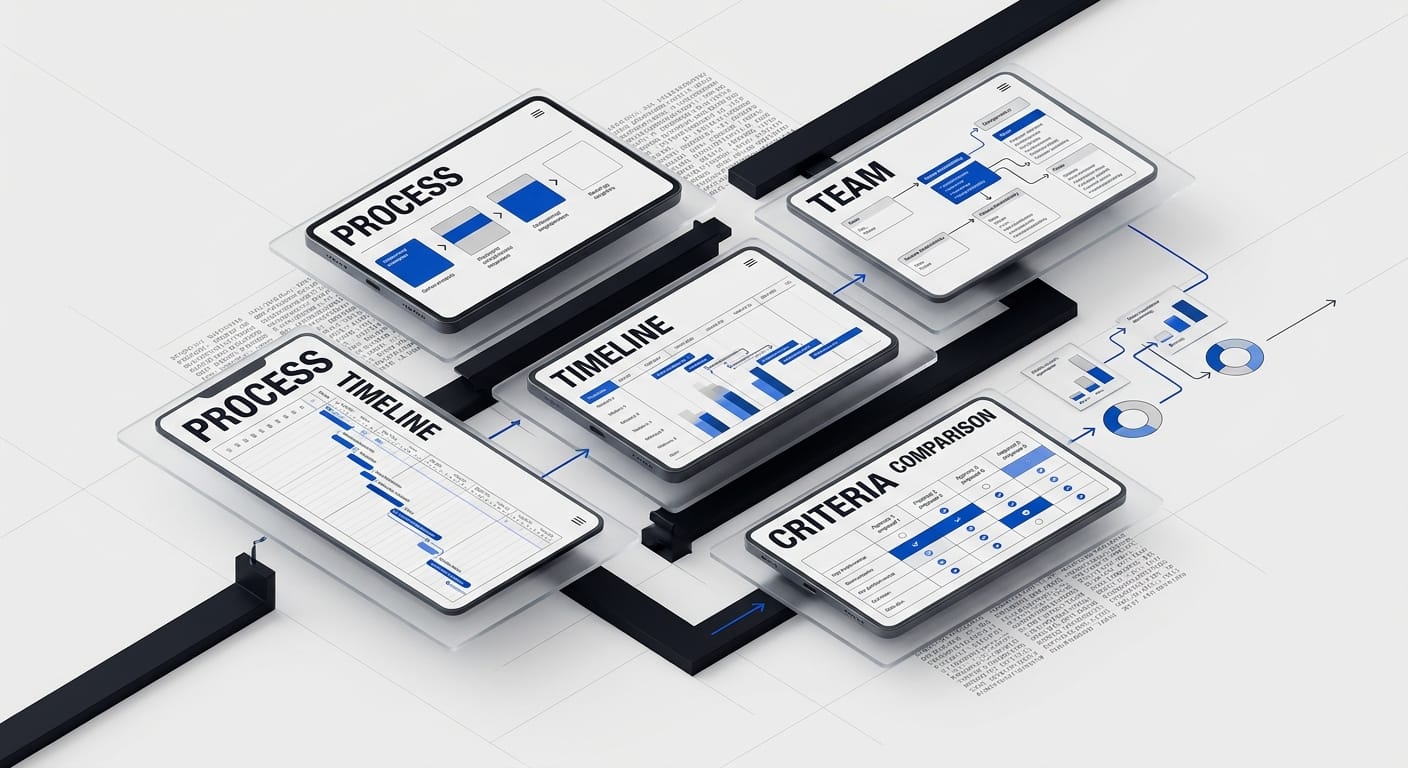
Every agency claims to be “collaborative” and “iterative.” Ask them to walk you through a recent project week by week. What did discovery look like? How many design concepts did they present? How many rounds of revision were included? What happened when the client pushed back on direction?
A defined process protects both sides. It sets expectations for deliverables, feedback timelines, and decision points. If an agency cannot describe their process in specifics, they are winging it. You do not want to pay for someone else’s learning curve.
Communication Patterns
The best design work happens through rapid feedback loops. Ask prospective agencies how they structure communication. Do you get a dedicated point of contact? How quickly do they respond to questions? What tools do they use for feedback and approvals?
At DesignX, we use Slack for quick questions, Figma for design reviews, and Notion for project documentation. Clients know exactly where to find updates and how to leave feedback. If an agency suggests email chains and weekly status calls, expect slower progress and more miscommunication.
Team Composition Matters
Ask who will actually work on your project. Some agencies sell you on senior talent, then staff junior designers once the contract is signed. This is common and costly.
Get clarity on the team structure. How many years of experience does each member have? What is their background? Have they worked in your industry before? A senior designer who spent five years at Apple or Shopify brings different capabilities than a junior designer two years out of school.
Our team includes designers with backgrounds from Apple, Shopify, eBay, and Bodybuilding.com. When we staff a project, the senior designers do the work. We do not bait and switch.
Red Flags to Watch For
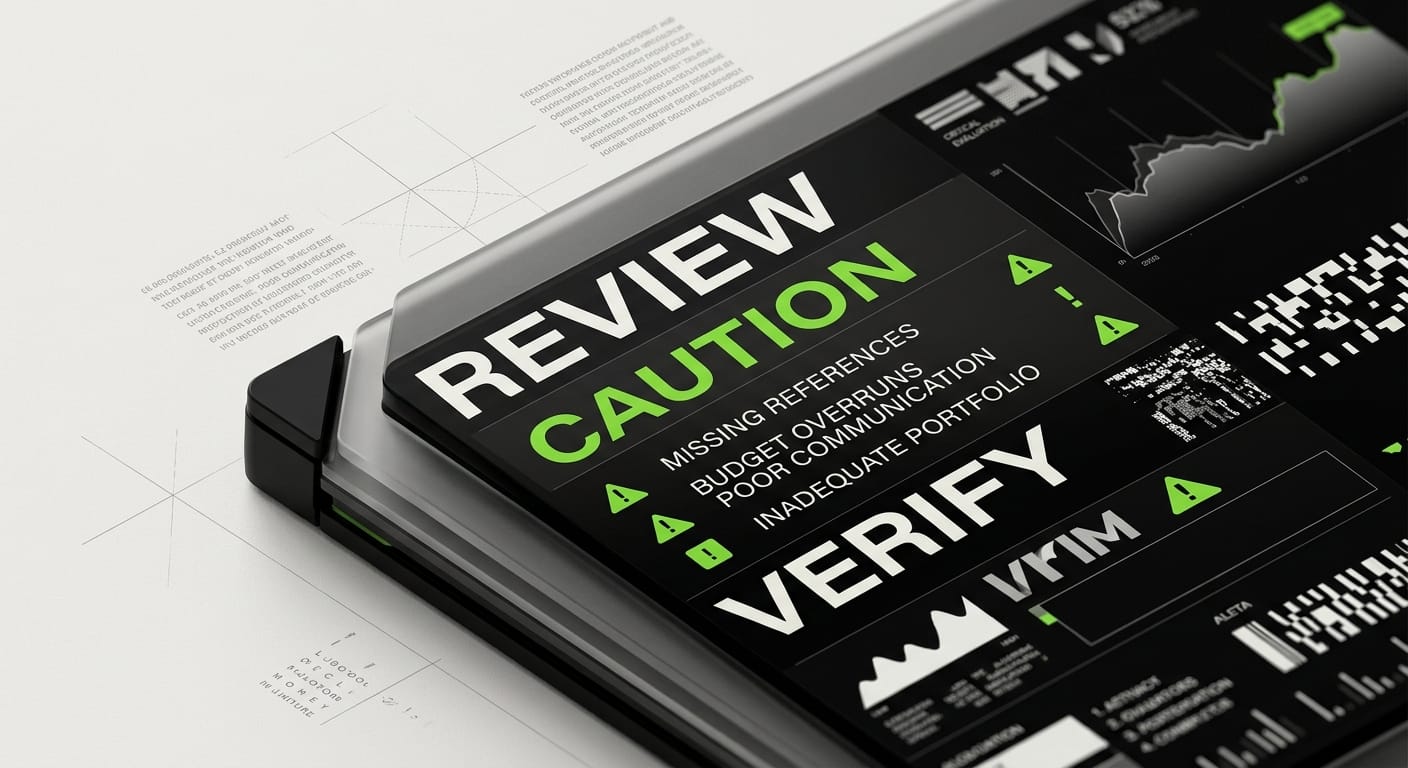
After fifteen years in this business, we have heard every horror story. Here are the warning signs that predict a bad engagement:
1. They Lead With Price
If the first question is “what is your budget?” instead of “what are you trying to achieve?” they are selling hours, not outcomes. Price matters, but it should come after understanding the scope and complexity of your project.
2. No Questions About Your Business
A good discovery call is 70% them asking questions and 30% you explaining goals. If an agency jumps straight to solutions without understanding your users, constraints, and success metrics, they will design for themselves, not for your customers.
3. Vague Timelines and Deliverables
“It usually takes a few weeks” is not a timeline. “We will do some research and then start design” is not a process. Get specific milestones, deliverables at each stage, and what happens if dates slip.
4. Portfolio Gaps in Your Area
If you need healthcare UX and their portfolio is all e-commerce, that is a risk. Design principles transfer, but domain knowledge does not. HIPAA compliance, patient workflows, and clinical validation have specific requirements that generalist agencies often miss. Healthcare app design requires understanding patient psychology and regulatory constraints that differ from consumer apps.
5. No Maintenance or Handoff Plan
Design is not done at launch. Ask how they handle post-launch iterations, bug fixes, and design system updates. If they disappear after delivery, you will be stuck with files you cannot modify or extend.
How to Hire a Design Agency: Questions to Ask in the Discovery Call
Use this list to evaluate potential partners when you find a design partner for your next project:
- What does your typical engagement look like from start to finish? Listen for structure, milestones, and clarity. Vague answers suggest poor project management.
- Who will be working on my project? Get names, roles, and experience levels. If they cannot tell you, they are outsourcing or staffing reactively.
- How do you handle feedback and revisions? Look for defined rounds, clear feedback mechanisms, and collaborative tools. “We will figure it out” is a red flag.
- What happens if we need to pivot mid-project? Scope changes happen. A good agency has a process for handling them without derailing the timeline or exploding the budget.
- Can you share a case study with similar complexity to our project? Similar budget, similar industry, or similar technical constraints. This proves they can handle your specific challenge.
- How do you measure success? Design should drive business outcomes. If they cannot articulate how they track results, they are focused on deliverables, not impact.
How to Evaluate Proposals
When proposals come in, compare them on these dimensions:
Approach and Methodology
The best proposals explain how they will solve your problem, not just what they will deliver. Look for evidence of strategic thinking: user research plans, competitive analysis, or UX audits. A proposal that lists “homepage design, about page design, contact page design” without explaining the strategy behind those choices is a vendor, not a partner.
Team and Timeline
Who is doing the work and when will it happen? A proposal should include a staffing plan and project schedule. Be wary of proposals that promise fast turnaround without explaining how they will achieve it.
Investment and Value
Price is what you pay. Value is what you get. A $30k proposal that solves your core business problem is cheaper than a $15k proposal that misses the mark and needs to be redone. Look for clear deliverables, revision rounds, and what is included versus what costs extra.
Our design agency pricing guide breaks down what drives costs and how to budget realistically for different project types.
Cultural Fit
This is harder to quantify but equally important. Did they understand your goals? Did they ask smart questions? Do their values align with yours? The best work happens when client and agency trust each other.
Making the Final Decision
Once you have evaluated proposals, check references. Ask past clients about communication, deadline management, and how the agency handled challenges. A fifteen-minute call reveals more than any portfolio.
Trust your instincts. If something feels off in the sales process, it will not get better during the project. The best agency relationships feel like partnerships from day one.
For complex projects, consider starting with a smaller engagement. A design sprint or strategy workshop lets you evaluate working style before committing to a full rebrand or product build.
Frequently Asked Questions
How much does it cost to hire a design agency?
Project costs vary widely based on scope and complexity. A basic website redesign might start around $15,000, while comprehensive brand systems or enterprise SaaS platforms can range from $50,000 to $150,000 or more. The key is matching your budget to your business goals. A cheaper agency that misses the mark costs more than a premium partner who gets it right the first time. Most established agencies have minimum engagement levels that reflect their team quality and process rigor.
How long does a typical design agency engagement take?
Timelines depend on project complexity. A focused brand identity project might take 6-8 weeks. A full website redesign with custom UX could run 12-16 weeks. Enterprise SaaS platforms with complex user workflows often require 4-6 months. Rush timelines usually compromise quality. Good agencies will tell you what is realistic rather than promise impossible deadlines to win your business.
Should I hire a freelancer or a design agency?
It depends on your needs. Freelancers work well for discrete, well-defined tasks with clear requirements. Agencies bring strategic thinking, diverse skill sets, and project management that complex projects require. If you need UX research, visual design, and front-end development coordinated together, an agency provides the structure to deliver integrated results. For early-stage startups with limited budgets, a senior freelancer might be the right choice. For established companies with complex requirements, an experienced agency reduces risk.
What deliverables should I expect from a design agency?
Deliverables vary by engagement type but typically include research documentation, user personas, wireframes, high-fidelity designs, interactive prototypes, design system components, and production-ready assets. Strategic engagements might also include brand positioning, competitive analysis, and UX audits. Clarify file formats, source files, and handoff documentation before starting. You should own your design files and understand how to implement or modify them after the engagement ends.
Ready to find the right design partner for your next project? Let’s talk about what you are building.
Related DesignX reading: how to hire a UI/UX design agency adds context for teams evaluating this decision.
If you want a senior design partner to turn this into a sharper product, brand, or website, see how DesignX works.