
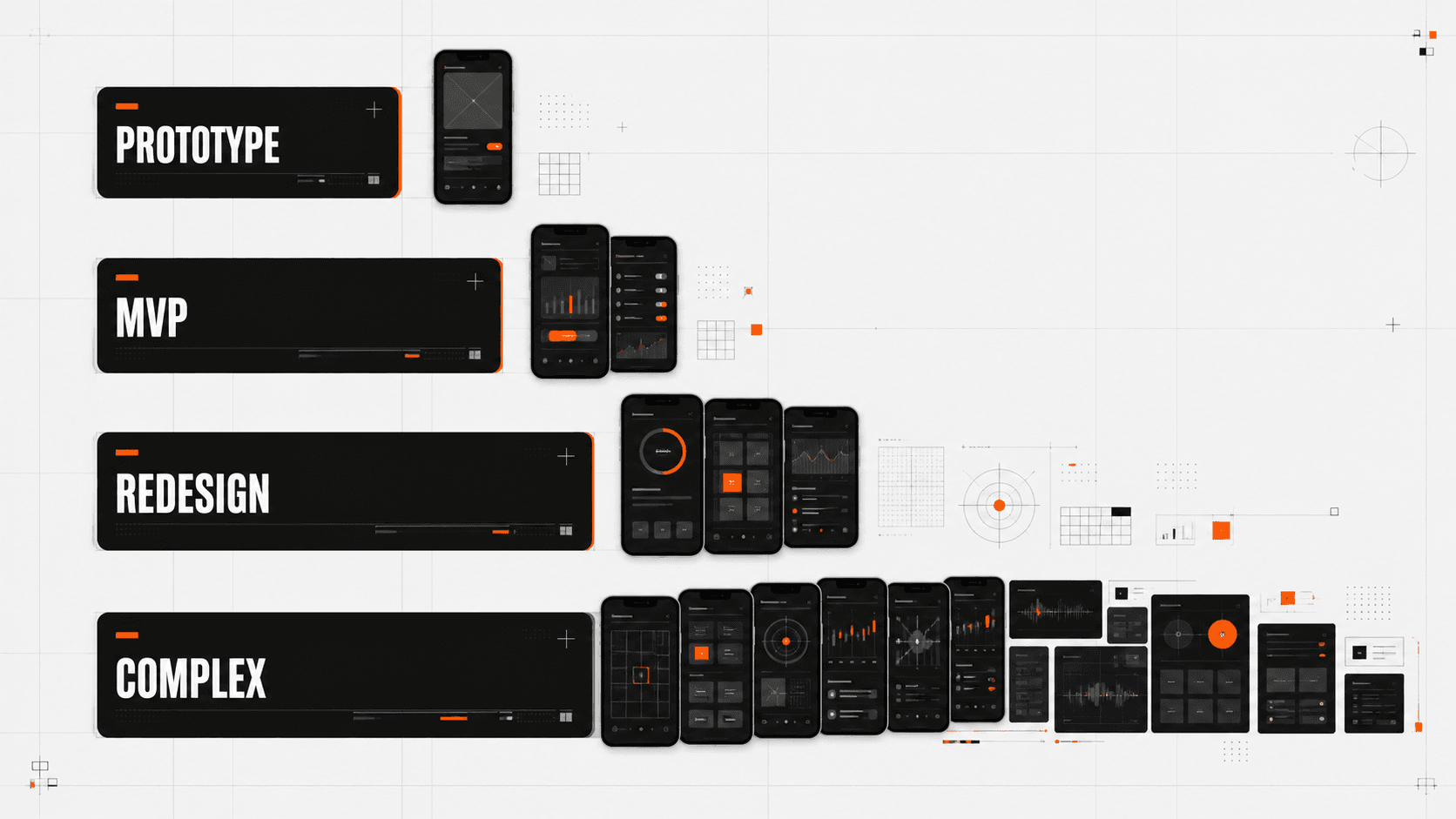
Mobile app design cost usually runs from $15,000 to $30,000 for a focused agency-led MVP, $30,000 to $60,000 for a product redesign, and $60,000 to $120,000 or more for a complex or regulated app. Those are design-only planning ranges. Development, backend systems, integrations, QA, and app-store release sit outside them unless a proposal says otherwise.
DesignX works with founders and product teams that need senior product thinking before engineering spend gets hard to reverse. In our experience, buyers get a clearer budget by asking, “Which product decisions will the design team own, test, and document?” instead of counting screens.
Mobile app design budget summary
- $7,500 to $15,000: one critical flow or validation prototype with a narrow test goal.
- $15,000 to $30,000: focused MVP design with discovery, core flows, UI, prototype, and developer handoff.
- $30,000 to $60,000: growth-stage redesign with research, broader state coverage, testing, and a reusable component system.
- $60,000 to $120,000+: regulated, multi-role, data-heavy, or multi-platform product design.
Published 2026 estimates show why buyers get conflicting answers. Jotform places simple design near $3,000 and complex work above $50,000, while Dribbble’s agency guide spans $10,000 for a small MVP to six figures for larger systems. Parallel puts a focused MVP with research and a lightweight system around $12,000 to $35,000. These are market estimates, not rate cards. Your scope determines where a credible proposal lands.
Mobile app design cost by project type
The ranges below are DesignX planning bands for agency-led design in the United States. They describe product strategy, UX, UI, prototyping, testing, and handoff. They do not include a production codebase.
| Project type | Design-only budget | Typical scope | Best buyer fit |
|---|---|---|---|
| Validation prototype | $7,500 to $15,000 | One core journey, 5 to 12 key screens, clickable prototype, focused feedback | Founders testing demand, investor story, or workflow risk |
| Focused MVP design | $15,000 to $30,000 | Discovery, core flows, 12 to 25 key screens plus states, UI kit, prototype, handoff | Seed-stage team preparing a first production build |
| Growth product redesign | $30,000 to $60,000 | Research, analytics review, revised journeys, 25 to 60 key screens, testing, component system | Live product with activation, retention, or usability friction |
| Complex app system | $60,000 to $120,000+ | Multiple roles, dense data, permissions, accessibility, service patterns, design-system depth | Fintech, healthcare, marketplace, enterprise, or multi-platform product |
A $10,000 prototype and a $55,000 redesign can both be fair. They buy different levels of certainty. The first may prove one workflow. The second may need to resolve existing customer pain, cover live states, preserve known behavior, and give engineers a system they can extend.
What buyers pay for in a mobile app design engagement
Polished screens are one output. The larger value sits in the decisions that precede them and the documentation that follows. A sound engagement gives your team fewer product questions to settle during development.
Product discovery and scope
The team defines the buyer, user, core job, business constraint, and release boundary. This phase may include stakeholder interviews, a product teardown, feature triage, or a working session with engineering. A short discovery phase works when the team already has evidence and a clear problem. A new category or disputed roadmap needs more.
User flows and information architecture
Designers map how users enter, act, recover, and leave. The work covers navigation, permissions, empty states, errors, loading, success, and account conditions. Screen count misses this part. One payments screen can require a dozen states once the team accounts for insufficient funds, network failure, identity checks, cancellation, and receipts.
Visual UI and component rules
The team turns approved flows into an interface system: type, color, spacing, controls, cards, navigation, forms, feedback, and reusable components. A small MVP may need a compact UI kit. A product shared across iOS, Android, web, and tablet needs broader rules and stronger platform judgment.
Prototype, testing, and revision
A clickable prototype lets users and stakeholders react before engineers commit to a build. Testing depth can range from a few moderated sessions to several rounds across distinct roles. NN/g’s remote testing cost model shows that even a five-participant study carries planning, session, recruiting, incentive, and analysis costs. Removing testing saves a line item while leaving the team to learn from production behavior.
Developer handoff
A handoff-ready file includes states, responsive behavior, component logic, interaction notes, content conditions, and a walkthrough with engineering. A Figma link alone leaves engineers to make product decisions inside the build. That hidden transfer of responsibility can add development rework and erase the apparent savings.
The biggest mobile app design cost drivers
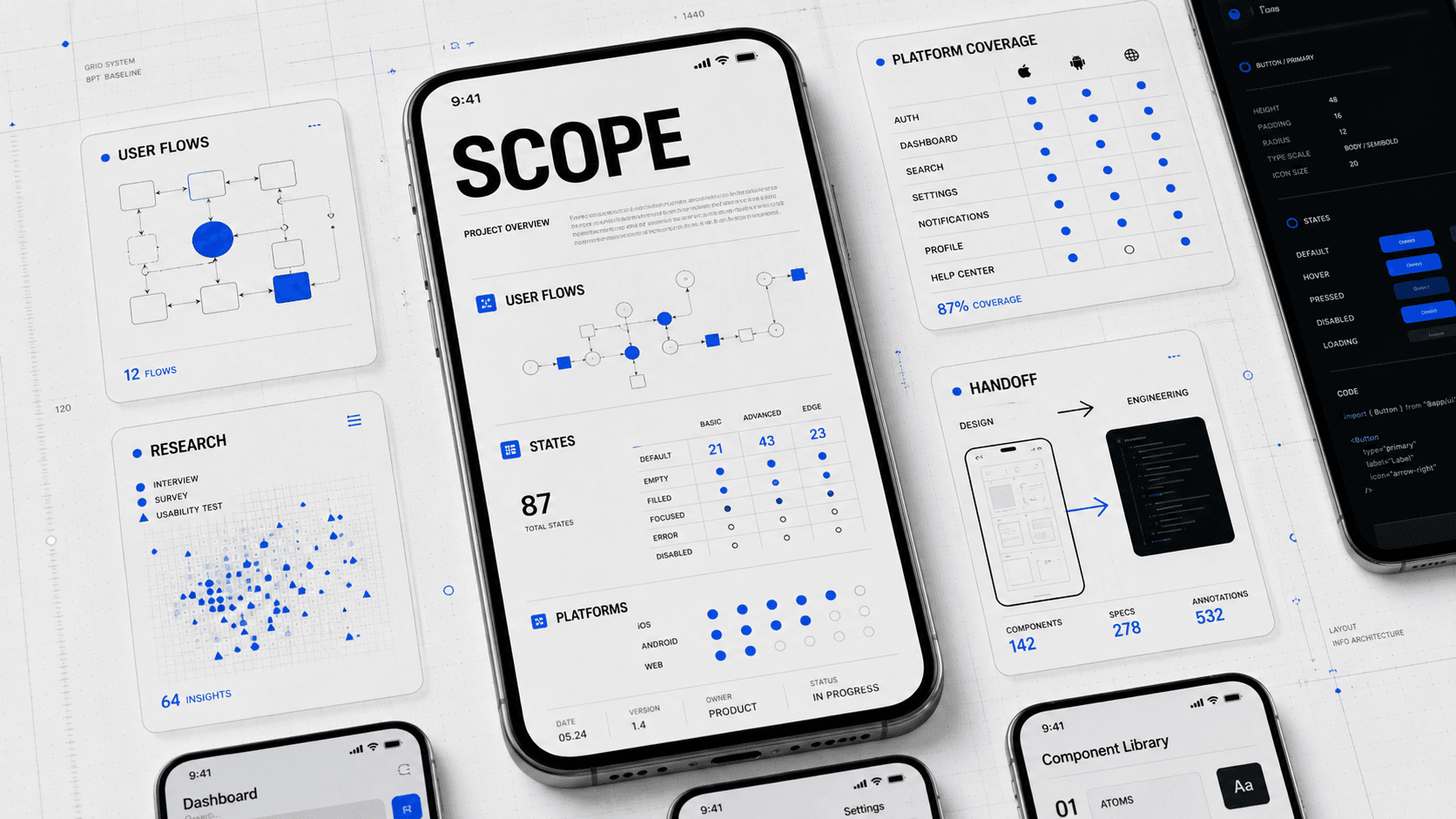
Use these six variables to understand why a proposal lands in a higher or lower budget band.
1. Workflow count and product states
Count unique journeys first, then count the states inside them. Sign-up, onboarding, search, checkout, messaging, notifications, account management, and support each add decision paths. Multi-role apps multiply the work because customers, staff, administrators, and partners may see different controls and data.
2. Research depth
A founder prototype may use stakeholder knowledge and a quick category review. A redesign can require interviews, analytics, support-ticket review, and usability sessions. Each method adds recruitment, review, and analysis time to the budget. The findings can stop the team from polishing a weak workflow.
3. Platform coverage
iOS and Android share product logic but use different platform conventions. Apple’s accessibility guidance also asks teams to consider how people perceive and interact with an app through varied settings and assistive technology. A shared system reduces duplicate work, but designers still need to account for navigation, controls, input, and permission behavior on each platform.
4. Data, permissions, and compliance
Financial balances, medical data, maps, real-time collaboration, AI output, and role-based access add trust and operational decisions to the visual work. Designers need to define consent, error recovery, review states, and escalation paths. W3C’s WCAG overview explains the accessibility principles teams use across perceivable content, operable controls, understandable behavior, and technical compatibility.
5. Existing product debt
A redesign starts with live customers, old patterns, analytics, edge cases, and engineering limits. The design team must decide what to preserve, repair, retire, or migrate. That diagnostic work explains why a redesign can cost more than a new MVP with fewer known constraints.
6. Handoff and design-system depth
A small component set may cover a single release. A product team planning years of work needs tokens, component variants, behavior rules, content patterns, accessibility notes, and governance. Buyers should match the system investment to the roadmap instead of buying a large library for a product that has not found its core workflow.
Mobile app design cost by phase
Phase percentages help you compare proposals that use different labels. The numbers below are planning allocations, not mandatory formulas.
| Phase | Planning share | What the buyer should receive | Tradeoff if reduced |
|---|---|---|---|
| Discovery and scope | 10% to 15% | Goals, user groups, release boundary, assumptions, risk list | More scope disputes and late feature cuts |
| Flows and wireframes | 20% to 30% | Journey maps, screen logic, core states, early prototype | Teams debate behavior after visual work begins |
| Visual UI and components | 30% to 40% | High-fidelity screens, component rules, responsive or platform variants | Inconsistent screens and more one-off engineering |
| Testing, revision, and handoff | 20% to 30% | Findings, revisions, annotations, specs, engineering walkthrough | Product flaws and missing states reach development |
Scope the risky decisions first. A team building a familiar internal utility may put more budget into execution and handoff. A fintech onboarding redesign should put more into research, compliance review, states, and testing. DesignX’s fintech app design guide covers the trust patterns behind that difference.
How to compare mobile app design proposals
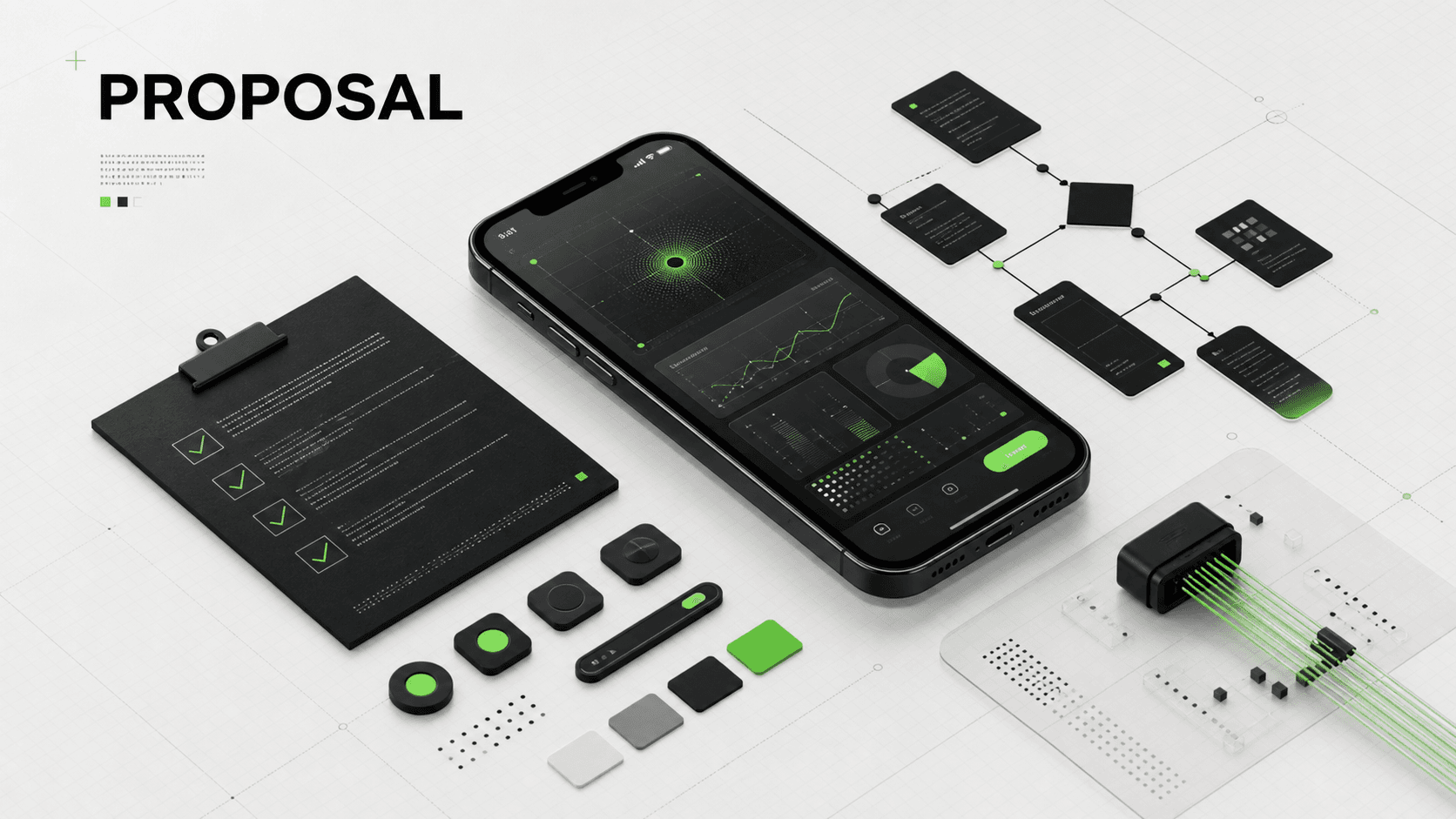
Put each proposal into the same comparison sheet. Ignore the seller’s phase names and compare responsibility.
- Define the product boundary. List included workflows, user roles, platforms, states, and excluded features.
- Name the people doing the work. Confirm seniority, weekly involvement, review structure, and who speaks with engineering.
- Compare evidence work. Record interviews, analytics, usability testing, category review, and who recruits participants.
- Inspect deliverables. Look for flows, wireframes, final screens, components, prototypes, annotations, and source-file ownership.
- Read the revision rules. Check feedback windows, revision rounds, change-order terms, and the cost of a scope decision.
- Check the handoff. Require state coverage, interaction notes, component behavior, and an engineering walkthrough.
A lower total can win if the agency owns the same decisions with a tighter method. A higher total can be sensible when the agency takes responsibility for more research, state coverage, testing, and technical collaboration. DesignX’s guide to hiring a UI/UX design agency covers the team and communication signals that do not appear in a price column.
Where to cut scope without weakening the product
Under budget pressure, narrow the release while preserving the work that makes it usable.
- Design one primary role before adding admin and partner experiences.
- Test the riskiest journey instead of polishing every secondary screen.
- Start on one platform and document how the second will differ.
- Build a component foundation sized for the first two releases.
- Move optional motion, illustration, and secondary flows into a later phase.
A focused MVP is a decision tool. DesignX’s MVP design guide for startups explains how to protect the core product experience while reducing release scope.
Where DesignX fits
DesignX is a senior product design partner for founders and product teams that need a mobile app scope ready for engineering. Our project work often lands between $15,000 and $25,000, with larger redesign or regulated scopes priced according to product risk and delivery depth. We work best when the buyer wants direct senior access, a defined release boundary, and a handoff engineers can build from.
Our Finwallet mobile app case study shows the type of work that shapes a production product: research, information architecture, wireframes, prototypes, iOS and Android UI, and a design system. Buyers comparing a project with an embedded team can also review in-house design versus an agency and fractional design team models.
Get a mobile app design scope you can defend
Bring DesignX your product brief, current app, or rough feature list. We will help define the right design boundary, identify the expensive unknowns, and shape an engagement around the next business decision.
FAQ: mobile app design cost
How much does it cost to design a mobile app?
A focused agency-led MVP often costs $15,000 to $30,000 for design only. A growth product redesign may cost $30,000 to $60,000, while complex, regulated, multi-role, or multi-platform products can reach $60,000 to $120,000 or more. The quote should state whether it includes discovery, research, flows, UI, testing, a component system, and developer handoff.
Does mobile app design cost include development?
Usually it does not. Design covers product scope, user experience, interface design, prototypes, testing, and handoff. Development covers code, backend systems, integrations, technical QA, deployment, and maintenance. Ask for separate design and development totals so you can see which product decisions the design team owns before engineering starts.
How much should a startup budget for MVP app design?
A startup should plan around $15,000 to $30,000 for a focused MVP with one primary user, a disciplined feature boundary, core flows, final UI, a prototype, and handoff. A smaller $7,500 to $15,000 prototype can work when the goal is to test one critical journey rather than prepare an entire product for development.
Why do two app design proposals have such different prices?
The teams may be pricing different responsibilities. One proposal may cover finished screens, while another includes research, state mapping, usability testing, accessibility, components, and engineering support. Compare included workflows, people, evidence, deliverables, revision rules, and handoff. The total makes sense only after those responsibilities match.
Is screen count a good way to estimate mobile app design cost?
Screen count gives a rough boundary, but workflow and state count are stronger measures. A single account screen may need logged-out, loading, empty, error, permission, editing, saved, and conflict states. A proposal priced per screen should explain how it handles variants, responsive behavior, platform differences, and states.
Can I reduce app design cost without creating more development risk?
Yes. Narrow the first release to one user role, one platform, and the workflows that prove the product. Keep enough discovery, flow work, testing, and handoff to settle the risky decisions. Delay secondary roles, decorative motion, deep illustration, and lower-priority features until the core experience has evidence behind it.