
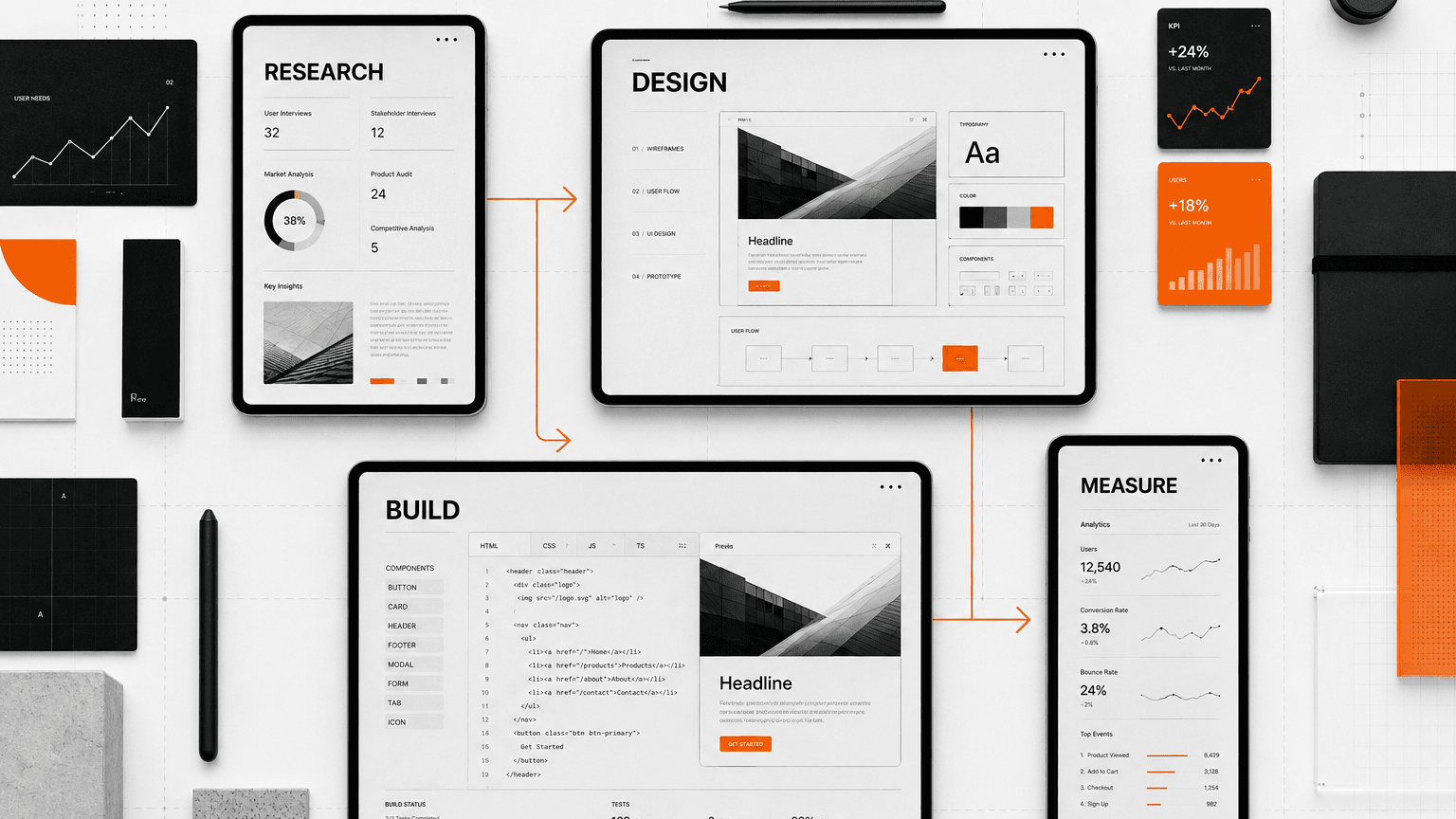
A landing page design agency should connect research, message hierarchy, interface design, production build, measurement, and a test backlog under one accountable scope. Growth teams should hire against those responsibilities and their campaign economics, since a polished Figma file alone cannot show which message, audience, or offer produced a conversion.
DesignX brings senior-team experience from Apple, Shopify, eBay, and Bodybuilding.com to this work. Our client record includes Oura Ring and Klein Tools, where a catalog redesign helped increase dealer adoption by 23%.
- Set the baseline first: document traffic sources, conversion events, conversion value, device mix, and current page results.
- Assign each deliverable: name who owns research, copy, design, development, analytics, QA, and the first tests.
- Compare complete scopes: separate Figma-only quotes from proposals that include production code, integrations, and launch support.
- Buy an evidence plan: require event definitions and a test backlog that reflect your traffic volume.
What a landing page design agency should own
The agency remit starts before the first wireframe. Your partner should learn how the visitor reached the page, which promise earned the click, what the visitor knows at arrival, and what action creates business value. That context shapes the page more than a visual trend or template choice.
Copy and design need one decision path. A strong team maps the ad promise to the headline, develops the proof sequence, places objections near the relevant decision, and gives the primary action enough visual weight. Our conversion-focused landing page checklist covers the page-level details that follow from that work.
Development and measurement also belong in the scope discussion. Ask whether the agency will ship production code, work inside your builder, or hand files to your engineers. Then name who configures forms, CRM routing, consent, analytics events, pixels, and release QA. A missed event or broken form can erase the value of good interface work.
A contract-ready landing page ownership matrix
Put this matrix in the statement of work. Replace each suggested owner with a named person or team, then add acceptance criteria and a due date. Shared ownership without one accountable lead tends to produce gaps at handoff.
| Workstream | Suggested owner | Acceptance evidence |
|---|---|---|
| Campaign and audience research | Client growth lead with agency support | Ad set, audience notes, search terms, and prior results |
| Offer and message hierarchy | Agency strategy lead | Approved promise, objections, proof order, and action |
| Page copy | Named agency or client writer | Final copy in the design, with legal review where needed |
| UX and responsive UI | Agency design lead | Approved desktop and mobile states, including errors |
| Production build | Agency or client engineering lead | Working page in the target stack, ready for release |
| Forms and integrations | Engineering or revenue operations | Test submissions in the CRM with correct routing |
| Analytics and pixels | Growth or analytics lead | Event map plus verified events in a test environment |
| QA and first test backlog | Agency lead with client sign-off | Device checks, release log, hypotheses, and priority order |
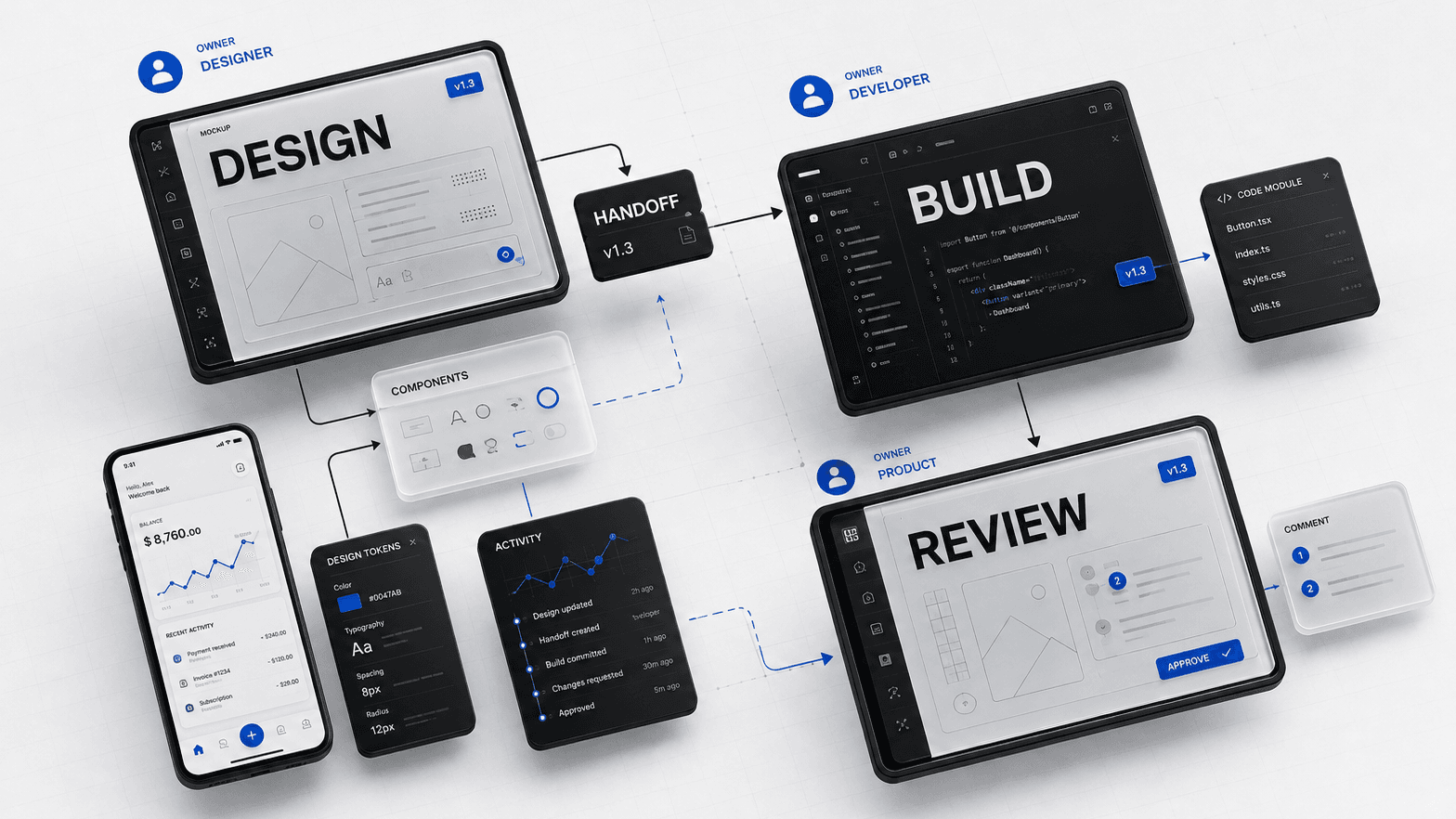
Agency versus freelancer, internal team, and builder
The right delivery model depends on the gaps inside your team. Judge each option against the work you need covered, the number of handoffs you can manage, and the cost of a weak launch.
| Model | Best fit | Buyer watchpoint |
|---|---|---|
| Landing page design agency | Campaigns that need senior research, UX/UI, build coordination, and measurement | Confirm which disciplines sit in-house and who owns the launch |
| Freelancer | A defined design or build task with strong client-side direction | You may need separate copy, analytics, and QA owners |
| Internal team | Frequent page releases with stable staffing and close product knowledge | Protect time for campaign work and bring in outside perspective where useful |
| Landing page builder | Fast assembly after the strategy, copy, system, and event plan exist | The tool supplies components; your team still owns the decisions |
A full-site engagement calls for a wider operating model. If navigation, content architecture, or the core brand system also needs work, use a website redesign agency evaluation instead of forcing those needs into one campaign page.
The evidence an agency should request before design
Good discovery starts with evidence you already have. An agency should ask for source-level traffic, campaign creative, search terms, sales calls, form data, heatmaps where available, and customer objections. It should also ask how your team values a lead, qualified opportunity, purchase, or booked call.
Bring five inputs to kickoff:
- A baseline window: sessions, conversions, conversion rate, spend, cost per conversion, and revenue where attribution permits.
- A campaign map: audience, channel, ad promise, destination, and intended action for each meaningful traffic group.
- Voice-of-customer material: call notes, support questions, reviews, objections, and phrases buyers use.
- Offer constraints: price, qualification rules, service area, capacity, compliance needs, and sales follow-up.
- Technical context: CMS or framework, analytics stack, CRM, consent platform, deployment process, and approval owners.
Benchmarks can frame a conversation, but they cannot set your target. The Unbounce 2024 Conversion Benchmark Report analyzed more than 57 million conversions across more than 41,000 landing pages and 464 million unique visitors. It found a 6.6% median across its data set, while industry medians ranged from 3.8% to 12.3%. Use your own funnel economics and audience mix to set the goal.
Landing page design agency process from baseline to launch
A credible proposal should show the decisions, review points, and outputs across the full release. The process below gives buyers a useful sequence for scoping the work.
- Baseline: agree on the conversion event, value model, traffic segments, reporting window, and current performance.
- Research: review campaign promises, customer language, competitor positions, prior tests, and sales objections.
- Message and UX: set the page argument, content order, proof, form strategy, and responsive wireframe.
- Visual design: apply the brand system, establish hierarchy, and design key desktop and mobile states.
- Build and instrumentation: create the page, connect forms and systems, and implement the approved event map.
- QA and release: test devices, browsers, keyboard access, content, routing, events, and rollback readiness.
- Learning cycle: watch data quality, review segment results, and rank the next hypotheses against impact and effort.
Ask to see comparable work at both ends of the process. The Blox landing page case study and Futurtech business landing page case study show how the page expression changes with the offer and audience.
Measurement, accessibility, and performance requirements
Define the event map before development. Name the primary conversion, supporting actions, required properties, consent behavior, and test procedure. Track qualified outcomes when possible, since raw form volume can reward low-intent traffic.
Google describes Quality Score through expected clickthrough rate, ad relevance, and landing-page experience. Its Quality Score guidance also calls the score a diagnostic, rather than a KPI or direct auction input. Keep the ad promise and page message aligned, but judge the page through business outcomes.
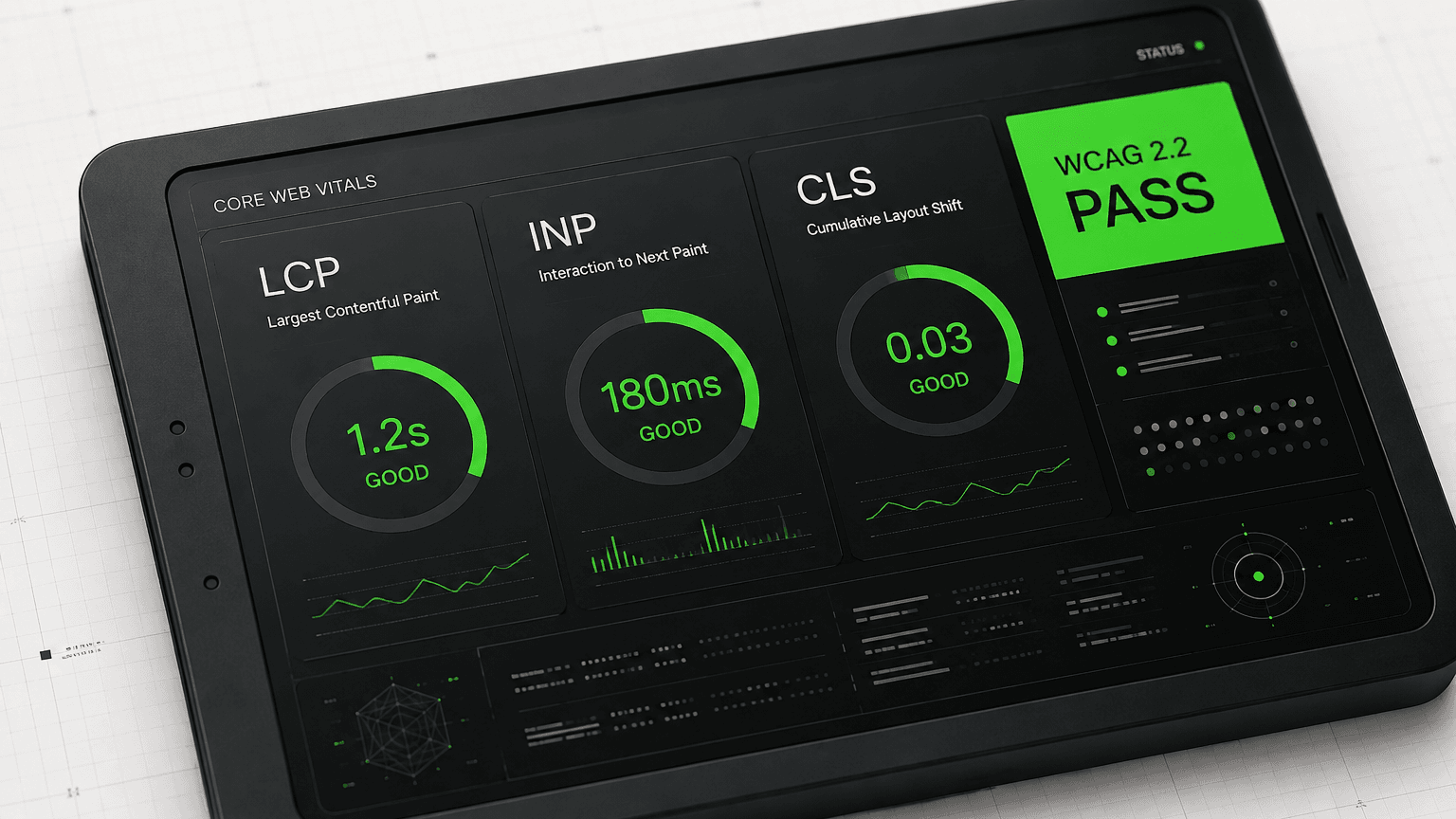
Set performance acceptance criteria in the contract. Google’s Core Web Vitals guidance uses thresholds of 2.5 seconds or less for Largest Contentful Paint, 200 milliseconds or less for Interaction to Next Paint, and 0.1 or less for Cumulative Layout Shift. Specify the devices, network conditions, pages, and test method so both teams judge the same release.
Mobile deserves its own review. Unbounce found that some industries in its report received up to seven times more mobile visitors than desktop visitors, while mobile conversion rates often trailed desktop. Test form controls, keyboard behavior, errors, tap spacing, and sticky actions on physical phones. WCAG 2.2 Success Criterion 2.5.8 sets a 24 by 24 CSS pixel minimum target size, with documented exceptions and spacing rules.
Traffic volume sets the test method. A team with enough qualified sessions and conversions may run a controlled A/B test. A lower-volume team can use session review, sales feedback, message tests, and sequential releases while avoiding claims of statistical certainty. Our guide to conversion rate work through UX explains how research and interface decisions support that learning cycle.
Landing page design agency pricing and proposal comparison
Price comparisons fail when the proposals cover different finish lines. One quote may stop at desktop screens. Another may include research, copy, mobile states, production code, analytics, integrations, QA, and post-launch support. Normalize the deliverables before you compare totals.
Build a proposal worksheet with eight rows: research, copy, UX, visual design, development, integrations, measurement, and launch support. For each row, record the owner, output, revision allowance, acceptance test, timing, and exclusions. Also identify fees for stock assets, software, analytics tools, or outside development.
DesignX publishes project pricing of $15,000 to $25,000 and fractional design support at $9,700 per month. We do not use a fixed landing-page-only quote because scope changes with research depth, copy ownership, build requirements, integrations, and testing support. Teams planning a wider monetization effort may also find our SaaS pricing page design guide useful.
Red flags and selection questions
Watch for proposals that promise a conversion lift before the agency sees your baseline, traffic, or offer. Treat vague references to “best practices” with care when the team cannot explain how it will connect customer evidence to the page.
- The portfolio shows attractive screens but omits the audience, constraints, team role, and measured result.
- The scope says “analytics setup” without an event map, consent plan, or verification step.
- The agency promises A/B test certainty without checking traffic and conversion volume.
- The proposal leaves copy, responsive states, error states, or CRM routing unassigned.
- The schedule removes stakeholder review time and launch QA to create a faster headline date.
- The team cannot name who will perform the work after the sales call.
During interviews, ask who owns each matrix row, which evidence could change the proposed direction, and how the team validates events before release. Ask what happens after launch, how it ranks test ideas, and which deliverables your team keeps. You should leave the call able to describe the working relationship without translating agency jargon.
Is DesignX the right landing page design agency for your team?
DesignX fits growth teams that need one senior partner to connect landing-page research, UX/UI, build handoff, measurement, and an experiment backlog. Our team has worked across Apple, Shopify, eBay, and Bodybuilding.com, with notable client work for Klein Tools and Oura Ring.
We work best when your team can share the campaign context, give access to decision-makers, and agree on how the page creates business value. Review our live pricing and engagement options to see which starting point fits your scope.
Landing page design agency FAQ
What does a landing page design agency do?
A landing page design agency turns campaign and customer evidence into a focused page, then prepares that page for release and measurement. Its scope may cover research, copy, UX/UI, responsive states, development, analytics, integrations, QA, and a test backlog. Your contract should name the owner for each item.
How much does a landing page design agency cost?
Cost depends on research depth, copy ownership, design complexity, development stack, integrations, and post-launch support. DesignX publishes project pricing of $15,000 to $25,000 and fractional design support at $9,700 per month, but we do not claim a fixed landing-page-only price. Compare scopes line by line before comparing totals.
How long does a landing page agency project take?
The schedule depends on scope, stakeholder access, technical requirements, and approval speed. Ask for dates tied to discovery, copy, design, build, QA, and release, with review windows shown. A short timeline means little if the proposal hides client tasks or removes launch checks.
Should an agency write the landing page copy?
The agency can write the copy or work with your writer, but one named person should own the final page narrative. That owner needs access to campaign promises, customer language, objections, and offer rules. Approve the copy inside the responsive design so words and hierarchy receive one review.
Does a landing page agency need to build the page?
An agency does not need to build the page if your engineering team has capacity and the handoff covers responsive behavior, states, assets, and acceptance criteria. The proposal should still name who connects forms, analytics, consent, and CRM routing. Ask both teams to share QA and event verification duties before release.
Can an agency guarantee a higher conversion rate?
No credible agency can guarantee a conversion lift before it studies your traffic, offer, baseline, and measurement quality. Conversion rates also change across industries, channels, devices, and visitor intent. Ask for a defensible hypothesis, sound implementation, clean event data, and a learning plan that matches your volume.
Choose the scope before you choose the partner
Choosing a landing page design agency gets easier once every proposal answers the same questions: who owns the work, what evidence guides it, where the engagement ends, and how your team will judge the result. Use the ownership matrix to expose gaps before signature, then connect launch criteria to campaign economics and qualified outcomes.
DesignX can help your growth team carry that plan from research through a release-ready design system and measured learning cycle. See DesignX pricing and discuss your landing page scope.