
A design system audit service examines how your system works across design files, production components, tokens, documentation, accessibility, governance, and team adoption. The useful output is evidence: where the system has drifted, which gaps slow product delivery, and a prioritized remediation roadmap your team can fund and execute.
DesignX treats the system as part of product delivery. A polished Figma library can still fail if code behaves in another way, product teams bypass components, or no one owns releases. The audit needs to connect those operating problems to specific assets and decisions.
- Inspect design and production evidence, not screenshots alone
- Separate isolated component defects from structural system problems
- Rank remediation by user risk, product impact, reach, and effort
- Give leaders a roadmap while giving practitioners examples they can act on
What a professional design system audit inspects
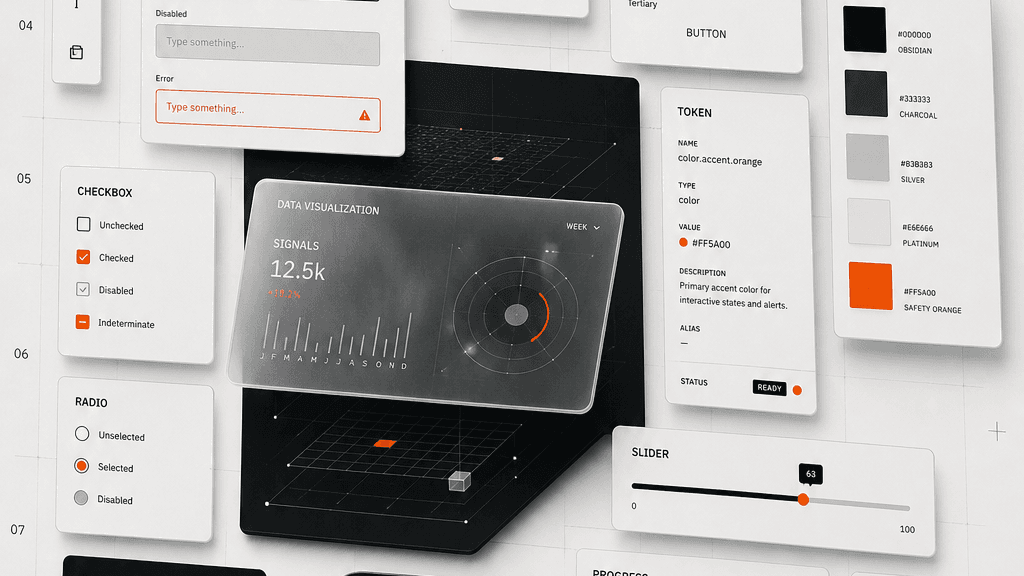
A design system audit should cover the chain from a design decision to shipped product behavior. That chain includes more than components. The Design Tokens Community Group format specification describes tokens as a platform-independent way to share design decisions across tools and technologies. Storybook documents component states as reusable stories for development, testing, and documentation. An auditor should inspect whether those layers support each other in your system.
| Audit layer | Evidence to inspect | Questions the audit should answer |
|---|---|---|
| Foundations and tokens | Token source, naming, aliases, themes, variables, build transforms | Can teams trace a design decision into each product platform without manual translation? |
| Components and patterns | Figma libraries, code packages, states, variants, dependencies, usage | Do design and code represent the same contract, including edge cases and behavior? |
| Accessibility | Keyboard behavior, focus, contrast, semantics, errors, motion, touch targets | Can teams use the components to meet the intended accessibility standard? |
| Documentation | Usage guidance, examples, content rules, design specs, code stories | Can a designer or engineer choose and implement a pattern without a private explanation? |
| Governance and adoption | Ownership, intake, contribution, releases, support, product usage | Who changes the system, who approves releases, and which teams use or bypass it? |
The depth changes with scope. A library review may sample a few high-use components. An enterprise audit may compare several products, brands, frameworks, and regional requirements. Your statement of work should name the products, libraries, repositories, and teams in the sample.
Design-to-code parity
Design-to-code drift creates two versions of the truth. The audit should map Figma components to their code counterparts and record missing states, naming conflicts, unsupported variants, and behavioral differences. It should also identify components that exist in one library but not the other.
Use DesignX’s design system component library guide to frame the asset inventory. The audit should go one step further by checking where product teams use those assets and where they recreate patterns inside feature code.
Accessibility at the component level
Accessibility findings should reference observable behavior and the target standard. The W3C Web Content Accessibility Guidelines 2.2 provide testable success criteria across devices. A component audit can use those criteria to inspect focus order, keyboard access, contrast, labels, error handling, reflow, target size, and interaction states.
An audit does not certify every product screen unless the scope says so. It can identify defects inside shared components, gaps in usage guidance, and product patterns that require separate testing. The report should distinguish those findings so leaders do not mistake component review for full product conformance.
Governance and adoption
Teams often blame low adoption on training when the system lacks coverage or release trust. An auditor should interview system maintainers and product consumers, review contribution and release records, then compare the stated workflow with how teams ship features.
DesignX’s enterprise design system governance model outlines roles, decision rights, contribution paths, and adoption measures. The audit should show which missing operating rule creates each bottleneck, rather than recommending a governance committee by default.
The evidence an audit needs before making recommendations
A credible recommendation needs traceable evidence. Access requirements vary, but the auditor should explain what each source proves and what remains outside scope.
- Design libraries. Current Figma files, published libraries, variables, branches, and deprecated assets show the intended system.
- Production code. Component repositories, package versions, tests, and product usage show what teams ship.
- Documentation. Storybook, guidelines, release notes, and contribution instructions show how teams learn and maintain the system.
- Product samples. Representative workflows reveal overrides, detached components, duplicate patterns, and gaps in coverage.
- Team input. Interviews with maintainers and consumers expose approval delays, support load, and trust problems that files cannot show.
Restricted access does not make an audit impossible, but it limits the strength of the conclusions. A Figma-only review can assess library structure and design consistency. It cannot confirm production parity, package health, runtime behavior, or engineering adoption. The report should label those limits.
Design system audit deliverables worth paying for
Audit deliverables should support two audiences. Leaders need a clear investment case. Designers and engineers need evidence they can reproduce. A long slide deck with unsorted observations serves neither group.
System health scorecard
The scorecard summarizes the audit dimensions, evidence reviewed, maturity rating, and confidence level. Ratings need defined criteria. A red status should point to the failing asset, workflow, or observed product behavior.
Annotated finding register
Each finding should include the affected product or component, evidence, consequence, recommendation, owner, and priority. Screenshots and code references help teams verify the issue. Grouping findings by root cause prevents a report from turning one token problem into dozens of repeated observations.
Prioritized remediation roadmap
The roadmap converts findings into sequenced work. It should identify immediate risk controls, foundation repairs, component work, documentation updates, and adoption changes. It also needs dependencies. Teams cannot repair component parity before agreeing on source ownership and release flow.
Playback and decision workshop
A playback session lets the auditor test conclusions with design, engineering, product, and leadership. The useful outcome is a set of accepted decisions: which risks need action, which work enters the roadmap, who owns it, and what the team will measure after remediation.
The public market supports this evidence-led model. Thinkmill lists annotated Figma and code artifacts, a maturity snapshot, and a priority roadmap. Imperavi lists a written report with architecture, token, component, and documentation findings. The difference in evidence and access matters when you compare the offers.
How long a design system audit takes
Public offers range from one week to four weeks. Thinkmill starts its cross-disciplinary audit at a one-week engagement. Imperavi lists one to two weeks for a focused audit, two to three weeks for a standard audit, and three to four weeks for its broadest package. Belka describes a three-week audit module followed by optional support.
| Phase | Typical work | Client input |
|---|---|---|
| Scope and access | Confirm products, platforms, sample, goals, repositories, and constraints | Owner, access approval, current roadmap, known risks |
| Evidence review | Inventory tokens, components, code, documentation, and product usage | Maintainer walkthroughs and technical questions |
| Validation | Test sample components, compare parity, interview consumers, trace root causes | Product-team interviews and finding review |
| Roadmap and playback | Rank findings, estimate work, map dependencies, present decisions | Priority decisions and owner assignment |
A focused audit can fit inside one or two weeks when the sample is small and access is ready. Add time for multiple code frameworks, brands, products, or stakeholder groups. Security review and slow repository access can delay evidence collection even when the team has bounded the analysis.
How much a design system audit service costs
Public prices offer a useful reference, but they are not a universal rate card or DesignX pricing. The packages use different currencies, evidence sources, and service models. Compare scope before comparing numbers.
| Provider | Published price | Published scope signal |
|---|---|---|
| Belka | From €4,900 | Three-week module, five-pillar review, report, roadmap, and follow-up support |
| Imperavi | $8,000 to $20,000 | One-to-four-week packages covering architecture, tokens, components, documentation, and recommendations |
| Thinkmill | From $15,000 AUD | One-week design and engineering review of Figma, code, tokens, accessibility, governance, and adoption |
Those figures were visible on the providers’ pages during this review. Currency, tax, travel, follow-up work, and implementation terms can change the final contract. Ask each vendor to date the proposal and list what the fee excludes.
Pricing drivers
- System surface. More products, brands, platforms, themes, and libraries increase the inventory and comparison work.
- Evidence depth. Figma review costs less than a design, code, product-usage, and team-workflow audit.
- Component complexity. Data grids, editors, forms, navigation, and overlays require more state and accessibility review than basic controls.
- Access and security. Regulated products may require controlled sessions, redacted evidence, or work inside client systems.
- Roadmap detail. A finding summary takes less effort than implementation-ready work packages with dependencies, owners, and estimates.
- Follow-through. Workshops, remediation design, engineering support, and adoption coaching extend the engagement beyond diagnosis.
For wider build budgets, DesignX’s design system agency pricing guide explains how tokens, components, code, migration, and governance shape an implementation proposal. An audit should reduce uncertainty before that larger spend.
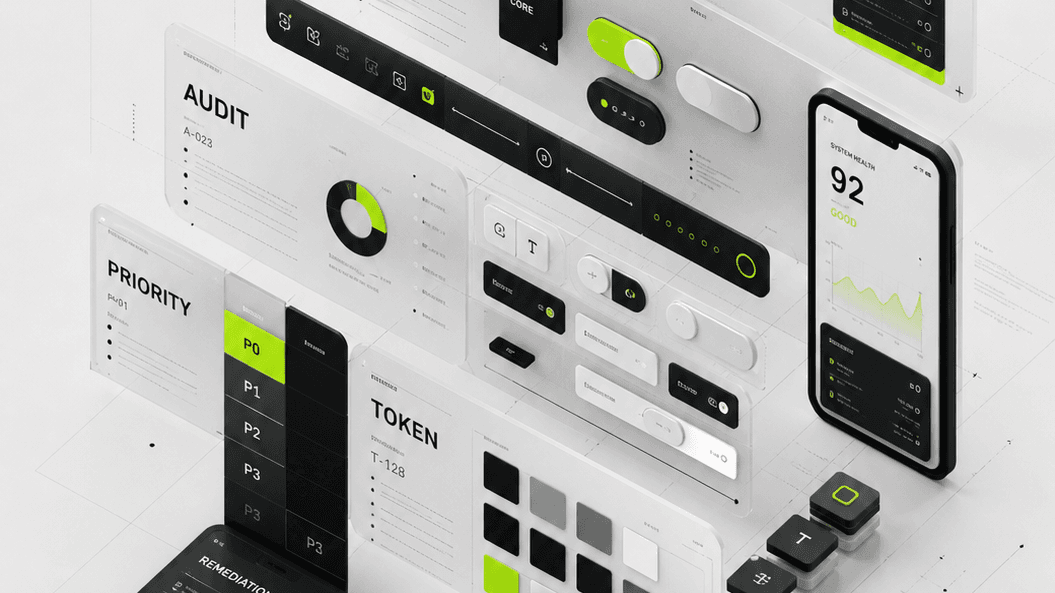
How the remediation roadmap should set priorities
Severity alone produces a weak backlog. A broken pattern with high user risk and wide product reach deserves attention before a naming inconsistency that affects one internal file. The roadmap should score at least four factors:
- User and compliance risk: accessibility failure, blocked task, error exposure, or trust damage
- Delivery impact: repeated rework, review delay, duplicate implementation, or release risk
- Reach: affected products, teams, components, journeys, and customers
- Effort and dependency: repair size, owner, prerequisite decisions, and migration cost
The first roadmap phase often repairs foundations that unblock later work: token source ownership, component naming, release rules, and high-risk accessibility defects. The next phase can consolidate duplicate components and restore design-to-code parity. Documentation and adoption work should run with those repairs so product teams understand the new contract as it ships.
Audit, rebuild, or ongoing design system support?
| Engagement | Best fit | Decision output |
|---|---|---|
| Audit | You have a system or partial library, but teams disagree about its health and priorities | Evidence, risk register, and remediation roadmap |
| Rebuild or expansion | The audit confirms foundational debt, missing product coverage, or a platform migration | New architecture, production assets, migration plan, and ownership model |
| Ongoing support | The core system works, but the internal team needs recurring delivery, releases, or enablement | Backlog capacity, release cadence, adoption support, and system maintenance |
Buy the audit when uncertainty is the expensive part. It gives the team a shared baseline before leaders authorize a rebuild or long retainer. Skip a separate audit when the vendor has already included the same evidence review, decision gates, and roadmap inside a funded discovery phase.
Questions to ask a design system audit vendor
- Which design files, repositories, products, and teams will you inspect?
- How do you test parity between Figma, code, documentation, and shipped product usage?
- Which accessibility standard and component behaviors will you evaluate?
- Can you show an anonymized finding and roadmap work package?
- How do you separate system defects from product implementation defects?
- Who performs the design review, code review, interviews, and playback?
- Which findings include estimates, owners, dependencies, and acceptance criteria?
- What stays outside scope, and what access limits reduce confidence?
Ask the vendor to map each promised deliverable to the evidence source and the decision it supports. That request exposes vague advisory work before procurement signs the statement of work.
Scope a design system audit with DesignX
DesignX connects design craft, product UX, and implementation so the audit can follow a system from Figma into production. We can scope the review around a focused component sample or a broader product portfolio, then turn the evidence into a remediation plan your design and engineering teams can own.
Review DesignX pricing and start a design system audit conversation. Bring your current libraries, code frameworks, product list, accessibility target, and the decision you need the audit to support.
Frequently asked questions
What does a design system audit service include?
A professional audit can include tokens, Figma libraries, production components, documentation, accessibility behavior, governance, and adoption. The statement of work should name the products, platforms, repositories, and component sample. It should also define the evidence, deliverables, and limits of the review so buyers know whether the auditor is checking design files alone or the full design-to-code system.
How much does a design system audit cost?
Public offers reviewed for this guide start at €4,900, range from $8,000 to $20,000, or start at $15,000 AUD. These figures use different currencies and scopes, so they are not universal market rates or DesignX pricing. Product count, code access, component complexity, accessibility depth, stakeholder interviews, and roadmap detail determine the final proposal.
How long does a design system audit take?
A focused audit can take one to two weeks when the sample is small and access is ready. Public packages also run three to four weeks for broader reviews. Multiple products, platforms, brands, repositories, and stakeholder groups add time. Ask the vendor to separate access setup, evidence review, validation, report production, and playback in the schedule.
Does the auditor need access to our code repository?
Code access is necessary if you want the auditor to verify production parity, component states, package health, tests, dependencies, and engineering adoption. A Figma-only audit can still assess library structure and design consistency, but it cannot confirm what users receive in production. Vendors can work within security controls if the contract defines access, evidence handling, and review methods.
Can a design system audit cover accessibility?
Yes. The auditor can evaluate shared component behavior against an agreed standard such as WCAG 2.2, including keyboard access, focus, contrast, semantics, errors, target size, reflow, and motion. A component audit does not replace a full product accessibility assessment unless the scope includes representative journeys, assistive technology testing, and the required conformance coverage.
What happens after the audit?
Your team should leave with an accepted finding register, remediation roadmap, owners, and decision gates. You can execute the plan in-house, hire the auditor for implementation, or use a hybrid model. The first work should address high-risk defects and foundation decisions that unblock later component, documentation, governance, and adoption improvements.