
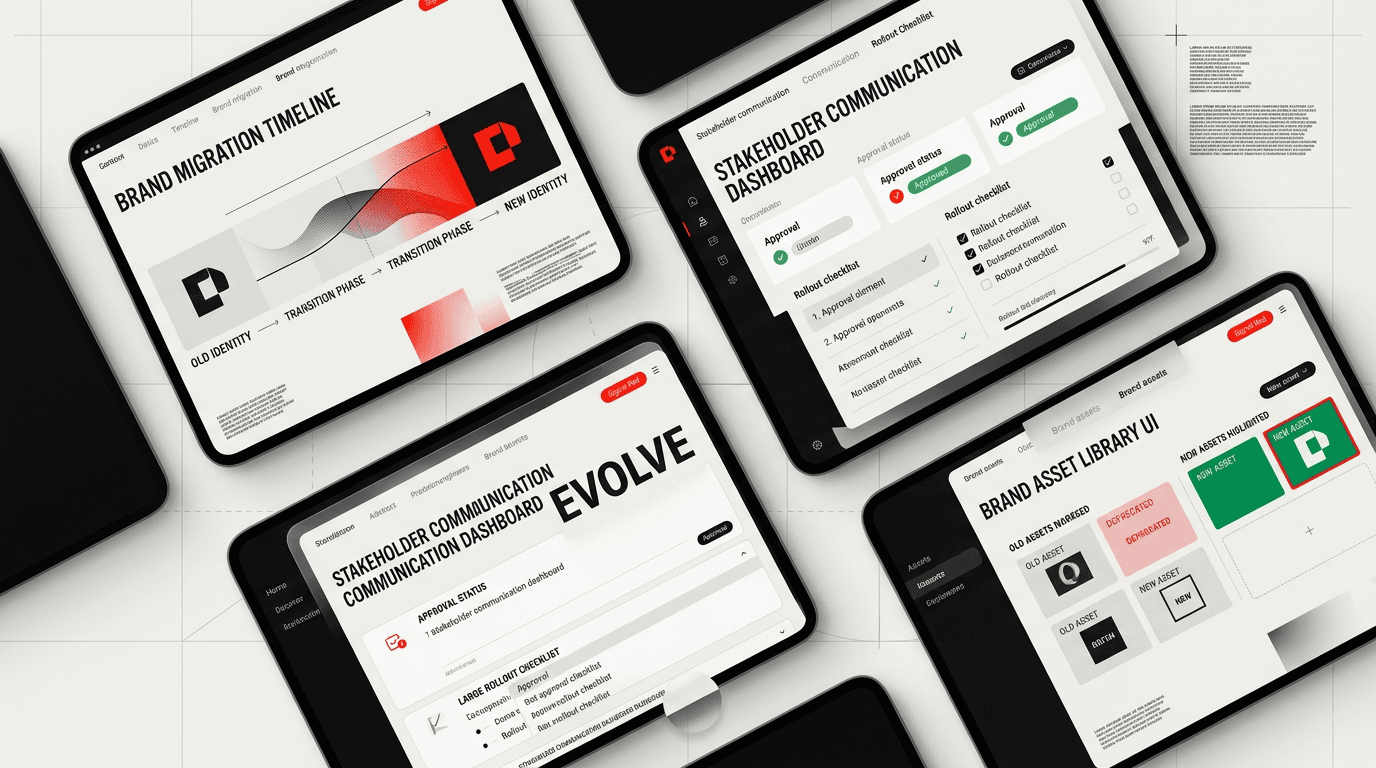
Rebranding a manufacturing company requires careful consideration due to customer reliance on reliability. Customers, such as engineers, value trust built over decades.
The Unique Challenge of Rebranding Industrial Brands
Rebranding a manufacturing company carries a different kind of weight than rebranding a consumer tech startup or a fashion label. Your customers, often engineers, procurement managers, or skilled tradespeople, value reliability, consistency, and a proven track record above flash. They make purchasing decisions based on trust built over decades, not fleeting trends. A rebrand here isn’t just about a new logo; it’s about navigating a delicate balance between refreshing your image and preserving the hard-won credibility that keeps your production lines moving.
We’ve seen companies attempt this without proper planning, changing their visual identity too abruptly, and confusing their established distributor networks. The result is often a dip in sales, frustrated partners, and a costly scramble to reassure the market. The stakes are higher. Your product might be a critical component in another company’s supply chain. Your tools might be what a professional relies on daily for their livelihood. This isn’t just about brand preference; it’s about business continuity and perceived operational risk.
Mapping Your Rebrand Risk: Beyond the Logo
Before any design work begins, you need a clear-eyed assessment of your current brand equity. Where does your brand truly reside in the minds of your customers? Is it the product performance? The reliability of your service? The iconic color of your machines? For a company like Klein Tools, for instance, a significant part of their brand equity is tied to the orange handle and specific form factor of their pliers. Any change there needs careful consideration. We helped Klein Tools redesign their product catalog, a project involving over 40,000 SKUs, where understanding these sacred cows was paramount to a successful dealer adoption lift.
Your risk mapping process should include:
- Customer Research: Conduct quantitative surveys and qualitative interviews with your key customer segments, distributors, and internal sales teams. Ask what aspects of your current brand they value most. What signals reliability to them?
- Visual Audit: Document every single touchpoint where your brand appears. This goes beyond marketing materials. Think about factory signage, vehicle fleets, uniforms, product stamps, instruction manuals, safety labels, and even the color of your machinery.
- Competitive Analysis: Understand how your competitors present themselves. Are they traditional, modern, or somewhere in between? Where can your rebrand create differentiation without alienating your base?
- Internal Stakeholder Interviews: Talk to long-tenured employees. They hold institutional knowledge about why certain design choices were made in the past and how customers react to change.
This deep dive helps identify your “trust marks.” These are the visual or experiential elements that, if changed too radically, could trigger alarm bells for your existing customer base. Sometimes it’s a specific font, a color palette, or a visual motif that has been around for fifty years. Our job is to modernize around these elements, not obliterate them.
The Phased Rollout: Protecting Your Sales Pipeline
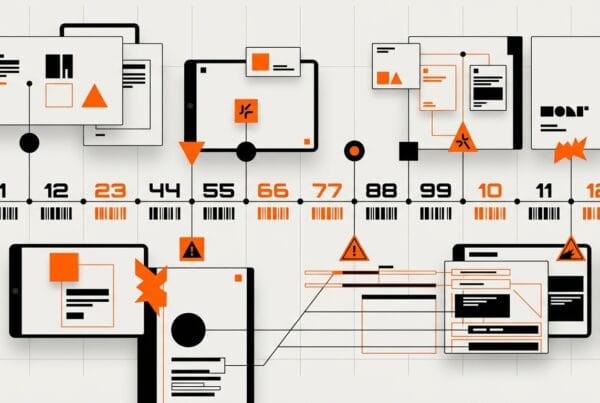
A “big bang” rebrand, where everything changes overnight, is rarely advisable for a manufacturing company. The operational complexities alone make it impractical, let alone the market confusion. A phased rollout strategy minimizes disruption and allows your audience to adapt gradually.
Consider these phases:
- Internal Launch and Training: Before anyone outside your company sees the new brand, ensure all employees understand the rationale, the new guidelines, and how to speak about the change. This is especially true for sales and customer service teams. They are your first line of defense against confusion.
- Digital First, Physical Second: It’s often easier and less costly to update digital assets first. Websites, social media profiles, email templates, and digital catalogs can be updated relatively quickly. This allows you to control the narrative and introduce the new look in a controlled environment. For clients like HP, managing brand consistency across vast digital ecosystems is a constant exercise in detailed planning.
- New Product Introduction: Launching new products with the refreshed brand identity is a natural way to introduce it to the market. This allows the old branding to live on existing products until stock is depleted, creating a smooth transition.
- Packaging and Collateral: Update packaging as existing stock runs out. Prioritize high-volume products or those with the most customer visibility. Marketing collateral can be updated as needed for new campaigns.
- Physical Assets: This is often the longest phase. Rebranding vehicles, factory signage, and machinery is a capital expenditure. Plan this over several years, perhaps tying it to equipment replacement cycles or scheduled maintenance.
The key is controlled exposure. You want your customers to notice the evolution, not a revolution. Think of it less as a switch and more as a dimmer gradually increasing the light.
SKU Systems and Catalog Design: The Hidden Complexity
One of the most underestimated challenges in a manufacturing rebrand involves SKU systems and product catalog design. Manufacturers often have thousands, sometimes tens of thousands, of distinct products, each with a unique identifier, specifications, and regulatory data. A rebrand can impact how these are presented, organized, and communicated across sales channels.
When we worked with Klein Tools, the sheer volume of their product line meant that any redesign of their catalog had to be meticulous. It wasn’t just about making it look better; it was about improving usability for dealers who relied on it to find specific tools quickly. Here’s what we learned:
- SKU Consistency: Do not change your core SKU numbering system unless absolutely necessary. This is the backbone of your inventory, ordering, and ERP systems. A rebrand should primarily affect the visual presentation, not the underlying identification.
- Product Information Management (PIM): A robust PIM system is critical. It acts as the single source of truth for all product data. When updating product imagery, descriptions, or marketing copy to reflect the new brand, a PIM ensures consistency across all outputs, from print catalogs to e-commerce sites.
- Catalog Architecture: Rethink how your products are grouped and presented. A rebrand is an opportunity to improve information hierarchy and navigation. Can customers find what they need in three clicks or less? Is the language clear and consistent?
- Digital-First Catalog: While print catalogs still have a place in manufacturing, especially for distributors, prioritize the digital experience. A well-designed online catalog, complete with search filters, high-resolution imagery, and downloadable specs, offers a superior user experience. This also makes updates simpler and faster.
- Distributor Integration: Your distributors might integrate your product data into their own systems. Any changes to product names, images, or descriptions need to be communicated well in advance, with clear data migration paths or updated data feeds.
Ignoring the intricacies of SKU management and catalog design can lead to ordering errors, frustrated distributors, and ultimately, lost sales. The design needs to serve the utility first.
Balancing Modernity with Market Trust
The goal of rebranding isn’t just to look modern; it’s to look relevant and trustworthy. For manufacturing companies, trust is often built on a perception of stability, engineering excellence, and heritage. A rebrand that throws out all historical cues risks appearing superficial or inexperienced.
Strategies for achieving this balance:
- Evolve, Don’t Erase: Look for opportunities to simplify existing logos or visual elements rather than creating something entirely new. Can your long-standing wordmark be refined for better legibility without losing its character? Can your color palette be updated to feel contemporary while retaining its core identity?
- Storytelling: Use your rebrand as an opportunity to tell your company’s story. Emphasize your founding principles, your commitment to quality, and your history of innovation. This grounds the new look in tradition. We helped Bodybuilding.com evolve their identity, ensuring their heritage of empowering fitness enthusiasts remained core to their updated visual language.
- Focus on Function and Clarity: Industrial buyers prioritize clarity. Your new visual identity should communicate professionalism, precision, and reliability. Avoid overly abstract or “trendy” designs that might confuse or feel out of place in an industrial context.
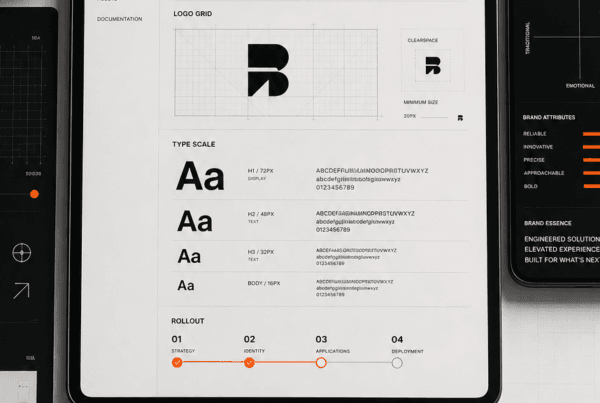
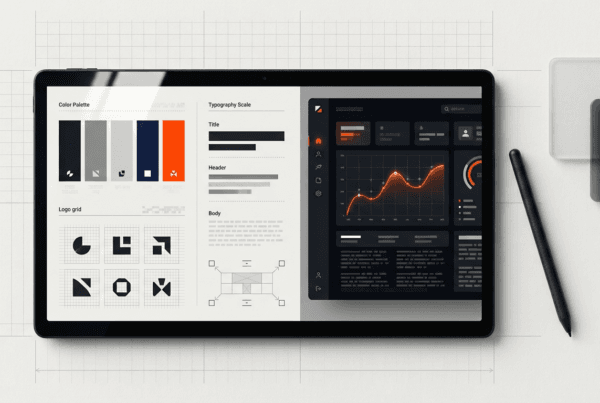
- Consistent Application: Develop a detailed brand guide that covers every aspect of your new identity, from logo usage and typography to color palettes and tone of voice. This ensures that every touchpoint, from an invoice to a trade show booth, reinforces the new, consistent image.
A successful rebrand for a manufacturing company makes your brand feel current without making it feel alien. It’s about building on your legacy, not discarding it.
Measuring Success and Adapting
A rebrand is not a one-time event; it’s a process. Once your new brand starts rolling out, establish metrics to track its reception and make adjustments as needed. This feedback loop is essential.
Consider measuring:
- Brand Perception: Conduct post-rebrand surveys to gauge how your new identity is perceived by customers and distributors. Are they associating the desired attributes (modern, reliable, innovative) with your brand?
- Website Analytics: Track user engagement, bounce rates, and conversion rates on your updated website. Is the new design improving the user experience?
- Sales Performance: Monitor sales trends, especially for products launched with the new branding. Look for any significant shifts, positive or negative, that might correlate with the rebrand.
- Distributor Feedback: Maintain open communication with your distributors. Are they finding the new collateral easy to use? Are they receiving positive feedback from their customers?
- Media Mentions and Social Sentiment: Track how your rebrand is discussed online and in industry publications.
Be prepared to iterate. If certain elements of the rebrand are not resonating, or if there’s confusion in the market, be flexible enough to make small adjustments. The goal is long-term market acceptance and business growth, not rigid adherence to an initial design plan.
Ready to modernize your manufacturing company’s brand without alienating your core customers? Contact DesignX to talk through your project.
Frequently Asked Questions
What should teams know about the unique challenge of rebranding industrial brands?
Rebranding a manufacturing company carries a different kind of weight than rebranding a consumer tech startup or a fashion label. Your customers, often engineers, procurement managers, or skilled tradespeople, value reliability, consistency, and a proven track record above flash. They make purchasing decisions based on trust built over decades, not fleeting trends. A rebrand here isn’t just about a new logo; it’s about navigating a delicate balance between refreshing your image and preserving the hard-won credibility that keeps your production lines moving.
What should teams know about beyond the logo?
Before any design work begins, you need a clear-eyed assessment of your current brand equity. Where does your brand truly reside in the minds of your customers? Is it the product performance? The reliability of your service?
What should teams know about protecting your sales pipeline?
A “big bang” rebrand, where everything changes overnight, is rarely advisable for a manufacturing company. The operational complexities alone make it impractical, let alone the market confusion. A phased rollout strategy minimizes disruption and allows your audience to adapt gradually. Consider these phases: Internal Launch and Training: Before anyone outside your company sees the new brand, ensure all employees understand the rationale, the new guidelines, and how to speak about the change.
What should teams know about the hidden complexity?
One of the most underestimated challenges in a manufacturing rebrand involves SKU systems and product catalog design . Manufacturers often have thousands, sometimes tens of thousands, of distinct products, each with a unique identifier, specifications, and regulatory data. A rebrand can impact how these are presented, organized, and communicated across sales channels. When we worked with Klein Tools, the sheer volume of their product line meant that any redesign of their catalog had to be meticulous.
What should teams know about balancing modernity with market trust?
The goal of rebranding isn’t just to look modern; it’s to look relevant and trustworthy. For manufacturing companies, trust is often built on a perception of stability, engineering excellence, and heritage. A rebrand that throws out all historical cues risks appearing superficial or inexperienced. Strategies for achieving this balance: Evolve, Don’t Erase: Look for opportunities to simplify existing logos or visual elements rather than creating something entirely new.