
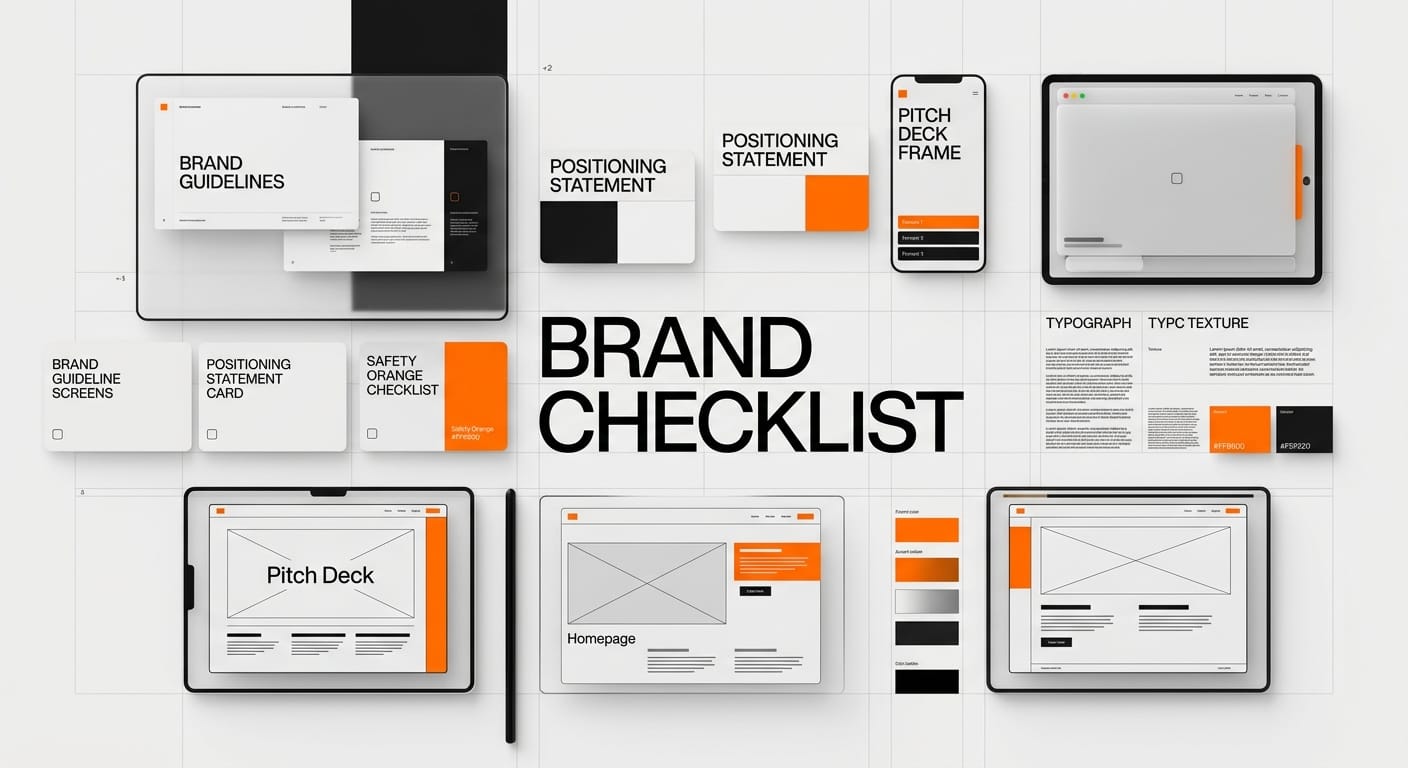
Most startup branding work goes sideways for the same reason. Founders jump to visuals before they have made the harder decisions.
They ask for a logo, a website, or a quick refresh. What they usually need first is clarity. Who are we for? Why should anyone care? What do we want people to remember after one sales call, one pitch deck, or one homepage visit?
This startup branding checklist is built for founders and operators who want to get those decisions right before they burn cash on design that looks polished but does not move the business forward. If you are hiring an agency, bringing in freelance help, or trying to clean up a brand that has outgrown its first version, this is the checklist worth working through first.
Why Most Startup Branding Checklists Miss the Point
A lot of branding advice treats the brand like a layer of paint. New logo. New colors. Better typography. Maybe a moodboard if you are lucky.
That is not how strong brands are built. A brand is a decision system. It tells your team how to talk, what to show, what to leave out, and how to stay consistent when the company grows from one founder and a freelance designer to a real team shipping product every week.
That matters because consistency pays off. Marq’s brand consistency research points to a clear connection between consistency and stronger commercial performance. The exact visual system is not the point. The point is that consistency makes trust easier to build, and startups live or die on trust.
If your startup branding checklist starts with logo sketches, you are already late.
The Startup Branding Checklist Founders Should Use Before They Hire Anyone
Use this checklist in order. Each step makes the next one easier. Skip steps and you will feel it later in revisions, mixed messaging, and launch work that never quite clicks.
1. Define the buyer, not the audience
Founders love broad language here. “Small businesses.” “Modern teams.” “People who want better design.” None of that is useful. A brand gets sharper when the buyer gets sharper.
Write down the person who actually signs, approves, or champions the deal. For DesignX clients, that is often a founder, product lead, or marketing leader carrying pressure from growth goals, investor expectations, and messy product complexity. Your startup needs that same level of specificity.
Ask four questions:
- Who feels the pain first?
- Who owns the budget?
- What are they trying to prove internally?
- What happens if they do nothing for six months?
2. Write the category in plain English
If a smart buyer lands on your homepage and cannot tell what category you belong to, your brand is doing extra work for no reason. Early-stage startups often reach for cleverness here. Clever costs conversions.
Your category line should be simple enough to say on a sales call without a follow-up explanation. If you are a healthcare workflow platform, say that. If you are project management software for industrial field teams, say that. The more pressure your buyer is under, the less patience they have for vague brand language.
This is one reason brand work and B2B UX design are closely tied together. Clarity in the brand should carry into the product and the website, not stop at the headline.
3. Get your position before you touch your visuals
Positioning answers the question behind the question: why you instead of the other options on the table. That does not always mean a direct competitor. Sometimes the real alternative is staying with an internal team, delaying the decision, or buying a cheaper tool that feels good enough.
Good startup branding makes that choice easier. It gives buyers a fast mental model for your company. Are you the premium option? The fastest option? The safest option? The specialist? That matters because weak positioning is expensive. CB Insights found that poor product-market fit keeps showing up in startup failures, which is exactly why the brand has to help the market understand the value quickly.
If you cannot answer that in one tight paragraph, do not approve visual work yet.
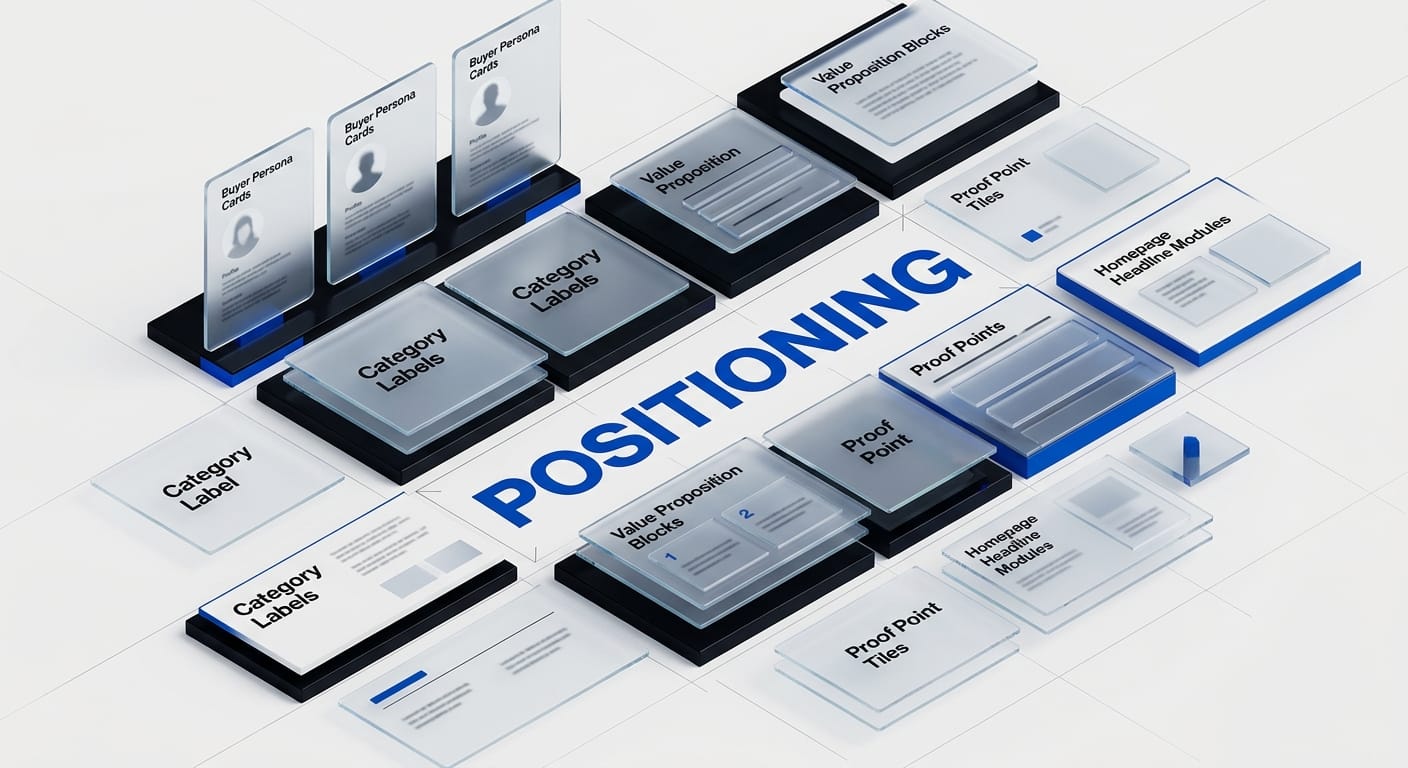
4. List the proof that makes your brand believable
This is where a lot of early brands fall flat. The language sounds confident, but nothing backs it up. Your brand should not just promise. It should signal why the promise is believable.
Your proof can include:
- Customer results
- Founder background
- Industry experience
- Product traction
- Operational detail that shows you understand the work
At DesignX, proof points matter because buyers are not hiring us for decoration. They are hiring us to solve business problems. Klein Tools saw a 23% increase in dealer adoption after a catalog redesign shaped around clearer information architecture and system-level consistency. That number lands because it is concrete. It gives the brand weight.
Your startup needs the same discipline. If you do not have hard metrics yet, use grounded proof. Founder credibility. Pilot outcomes. Customer quotes. Shipped product details. Anything real beats polished vagueness.
5. Build your messaging spine
Before the visual system, build the language system. This is the part founders usually underestimate.
Your messaging spine should include:
- A one-line value proposition
- A homepage headline and subhead
- A short company description for decks and profiles
- Four or five repeatable proof points
- Clear language for what you do, who it is for, and why it matters now
When this work is missing, every page rewrite becomes a debate. The sales deck says one thing. The product demo says another. The founder introduces the company differently every time.
If you want a useful starting point, our startup branding guide pairs well with this checklist.
6. Decide what your visual system needs to do
Now you can talk about visuals. Not before.
Your startup visual system should match the maturity of the business. A seed-stage SaaS company does not need the same depth of system as a later-stage company rolling out sales teams, partner materials, and product marketing across multiple segments. But it does need enough structure to keep the brand consistent.
At minimum, define:
- Logo usage rules
- Color palette and contrast logic
- Typography hierarchy
- Image direction
- UI style cues if product screenshots show up in sales and marketing
This is where founders often confuse preference with strategy. The question is not “do we like blue?” The question is “does this system make us easier to recognize and easier to trust?”
7. Check whether your website can carry the brand
A startup brand does not live in a brand deck. It lives where buyers experience it. Usually that starts with your site.
If your messaging is clear but the site structure is weak, the brand still feels shaky. If the visuals are sharp but the product story is muddled, the brand still leaks trust. That is why branding and web work often need to move together.
For startups shipping quickly, there is also a practical issue: can the site evolve without falling apart? If every new page feels custom, the brand system is too loose. If every page feels identical, the system is too rigid.
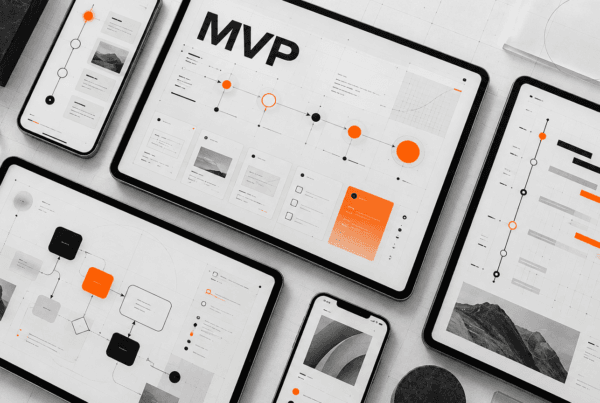
Founders planning a launch usually need to think through the site and the product together. Our article on MVP design for startups is useful here because it frames design around what needs to be clear first, not what looks finished first.
8. Pressure-test the brand against fundraising, hiring, and sales
This is the step most checklists leave out, and it is one of the most important.
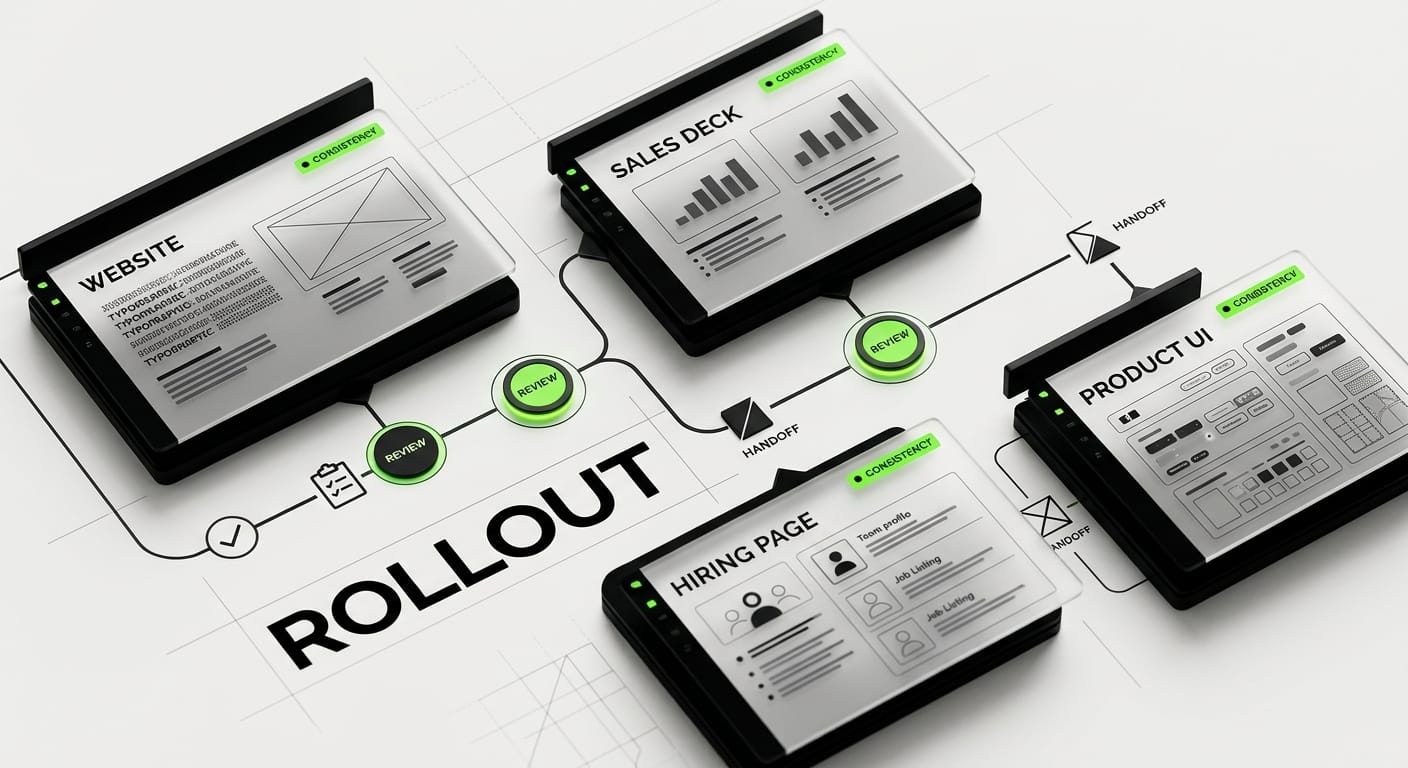
Your brand should work in at least four places without falling apart:
- Homepage and core landing pages
- Pitch deck or investor materials
- Sales deck or outbound material
- Hiring pages and recruiting conversations
If the brand sounds strong on the homepage but weak in the deck, you do not have a finished brand. If it looks clean in Figma but your founder still cannot explain the company crisply in a room, you do not have a finished brand. You have design work in progress.
9. Set decision rules before the work starts
Brand projects stall when there is no agreement on how decisions get made. One founder wants bold. Another wants safe. Marketing wants more polish. Product wants faster rollout. Everyone is right and the work slows to a crawl.
Set the rules early:
- Who gives final approval?
- How many review rounds are included?
- What problem is this brand work meant to solve?
- What would make the project feel successful in 90 days?
This one step will save you more time than most founders expect.
10. Know when to bring in a real design partner
Not every startup needs an agency on day one. Some can get pretty far with a smart operator, a sharp freelance designer, and disciplined messaging work.
But there is usually a moment when that stops being enough. The product gets more complex. The sales cycle gets longer. The stakes get higher. The cost of mixed messaging starts showing up in demos, churn, recruiting, and investor conversations.
That is when a real brand partner starts making financial sense. Not because an agency makes things prettier, but because a good one helps turn scattered brand signals into a system your business can actually use.
If you are trying to figure out what that level of engagement usually costs, our design agency pricing guide gives a practical breakdown.
A DesignX Point of View on Startup Branding
Founders do not need more moodboards. They need sharper decisions.
At DesignX, we think startup branding should do four jobs at once: clarify the business, reduce friction in the buying process, make the product easier to trust, and give the team a system they can keep using after launch. That is why our best branding work usually sits close to product, web, and messaging rather than floating off as an isolated exercise.
Oura Ring is a useful example. Launch identity work matters more when the product category is still being understood in public. The brand has to do educational work and trust work at the same time. That is true for a lot of startups. Your brand is not just a wrapper around the business. It is one of the things doing the business.
Frequently Asked Questions
What should be included in a startup branding checklist?
A useful startup branding checklist should cover positioning, buyer clarity, messaging, proof points, visual direction, website readiness, and rollout rules. Most weak checklists focus too much on visuals and skip the strategic decisions that make the visuals useful. If the checklist does not help a founder make sharper business decisions, it is not doing enough.
When should a startup invest in professional branding?
A startup should usually invest in professional branding when unclear positioning starts slowing down sales, fundraising, hiring, or product trust. That often happens after the first version of the brand has done its job and the company is entering a more demanding growth phase. If the business is strong but the story feels scattered, that is usually the right time.
How much does startup branding usually cost?
It depends on the scope. A lightweight identity engagement is very different from a full brand system tied to web, product, and launch support. At DesignX, most project-based engagements land in the $15k to $25k range, while deeper ongoing support can make more sense as a fractional design relationship. The right budget depends on how much clarity and execution the startup needs, not just how many deliverables are listed in the proposal.
Can a startup do branding internally?
Yes, if the founders are disciplined enough to work through positioning, messaging, and proof before they start chasing visual polish. Internal branding tends to break down when no one owns the process or when every decision becomes a matter of taste. Startups can get far internally, but they usually need outside help once the stakes rise and the brand needs to work across product, web, sales, and hiring at the same time.
What is the difference between startup branding and startup marketing?
Branding sets the system. Marketing puts that system into motion. Your brand defines how the company should be understood, remembered, and recognized. Marketing uses campaigns, channels, content, and distribution to get that message in front of the right buyers. If the brand is unclear, the marketing spend gets less efficient fast.
Ready to Build a Brand That Helps the Business?
If your startup has outgrown its first version of the story, the fix is rarely another quick visual pass. You need a brand system that makes the company easier to understand, easier to trust, and easier to buy from.
That is the kind of work DesignX does. If you want help turning positioning, messaging, and design into one clear system, schedule a consultation with DesignX.
Related DesignX reading: brand identity for B2B SaaS adds more context for founders turning a checklist into a sharper brand system.
If you want a senior design partner to turn this into a sharper product, brand, or website, see how DesignX works.