
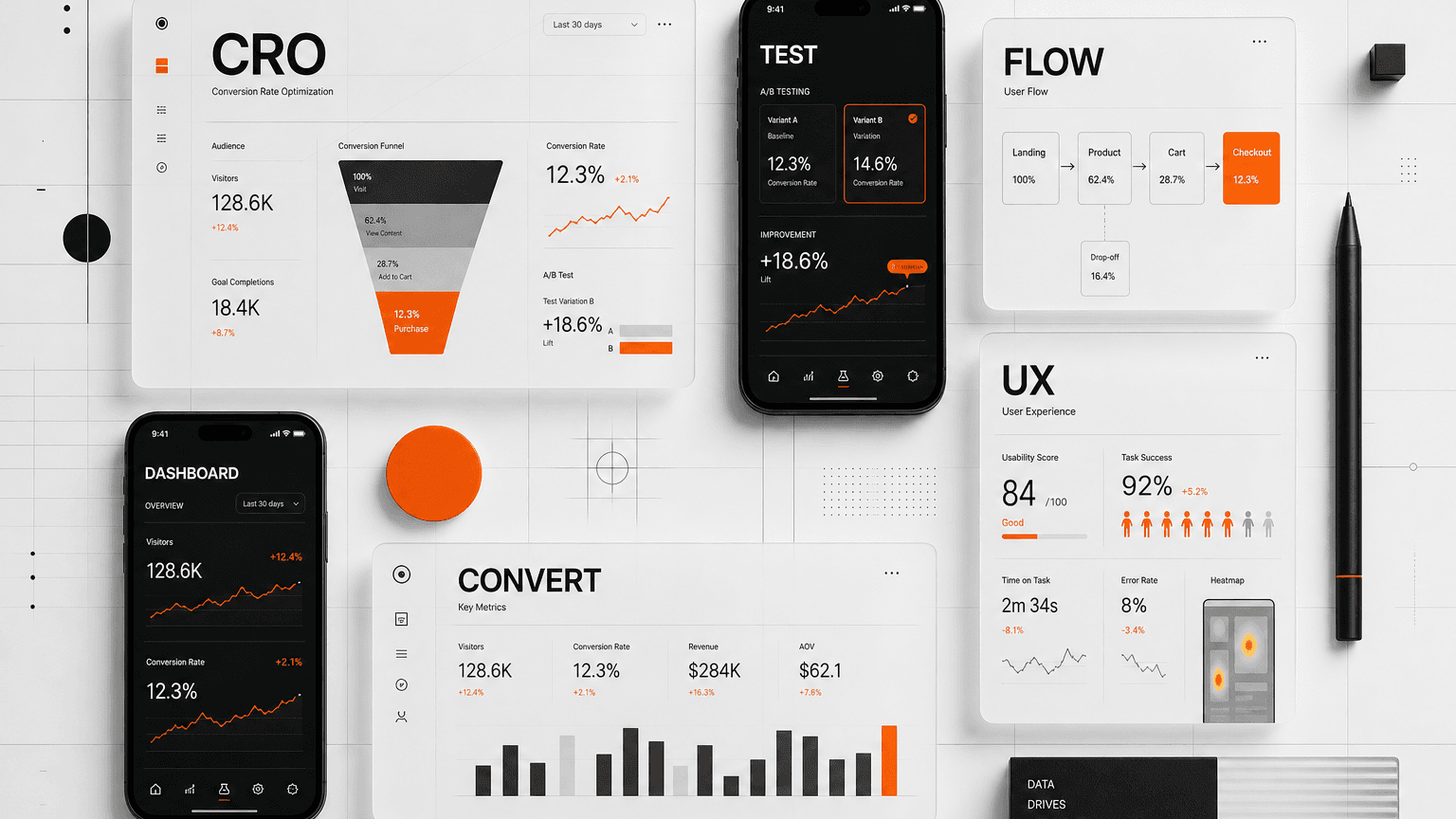
Short answer: Hire a CRO agency when you have enough qualified traffic, trustworthy funnel data, and a steady backlog of testable ideas. Hire a UX design agency when customers struggle with the product flow, information architecture, interaction design, accessibility, or the checkout itself. Bring both disciplines together when the team must diagnose the cause, redesign the experience, instrument it, and measure the result.
A low conversion rate describes an outcome. The constraint still needs diagnosis. DesignX starts this decision by separating experimentation economics from product-flow usability, then scopes the smallest engagement that can produce credible evidence.
- Choose CRO leadership for mature funnels with stable acquisition, clean event data, and enough volume to compare variants.
- Choose UX leadership for confusing journeys, failed tasks, weak information architecture, accessibility gaps, or product behavior that needs redesign.
- Choose an integrated team when research, design, analytics, development, and experimentation need one owner.
- Start with diagnosis when you cannot tell whether the problem sits in the offer, traffic mix, interface, or measurement setup.
CRO agency vs UX design agency: the working difference
A CRO agency runs a measurement and experimentation program around a defined business action. Its team studies funnel behavior, builds hypotheses, prioritizes tests, measures lift, and feeds results into the next test cycle.
A UX design agency studies how people understand and use a product or service. Its team may interview users, test tasks, map journeys, redesign interaction patterns, prototype new flows, and work with developers through implementation. The broader relationship between conversion rate optimization and UX matters, but buyers still need one discipline to lead the first engagement.
| Comparison criterion | CRO agency | UX design agency |
|---|---|---|
| Primary question | Which change improves a defined conversion metric? | Why are users struggling, and how should the flow work? |
| Best starting inputs | Reliable analytics, traffic, conversion events, and a testable funnel | User tasks, product goals, research access, support evidence, and current designs |
| Core methods | Funnel analysis, experiment planning, A/B testing, and results analysis | Interviews, usability testing, journey mapping, prototyping, and interaction design |
| Typical deliverables | Measurement plan, hypothesis backlog, experiment designs, and readouts | Research findings, task flows, prototypes, interface designs, and implementation guidance |
| Speed to first evidence | Fast when instrumentation and traffic already support a valid test | Fast when a focused usability study can expose the blocking task |
| Data requirement | Enough observations or conversions for the chosen experiment design | Access to representative users, workflows, and product context |
| Implementation ownership | Varies from recommendations to full experiment development | Varies from research and design to production support |
| Common failure mode | Testing small changes while a deeper journey problem stays in place | Shipping a stronger design without a measurement plan for business impact |
Classify the constraint before you compare agencies
Four questions will expose which discipline should lead. Your answers also give each agency a tighter brief, which makes proposals easier to compare.
- Do you trust the measurement? Confirm that key events fire once, revenue or lead values connect to the right session, and the funnel matches how customers buy.
- Can the current traffic support a decision? Estimate the sample required from the baseline conversion rate, the smallest effect worth detecting, and the number of variants.
- Can users complete the core task without help? Watch representative customers attempt the task. Note errors, hesitation, workarounds, and failed expectations.
- Can your team ship and learn from the change? Name the owner for design, development, analytics, QA, and the decision after results arrive.
Teams often discover two constraints in this exercise. Weak event tracking can hide a broken checkout. A polished interface can sit behind low-intent traffic. In those cases, the engagement needs a lead discipline plus a defined handoff, or one integrated partner.
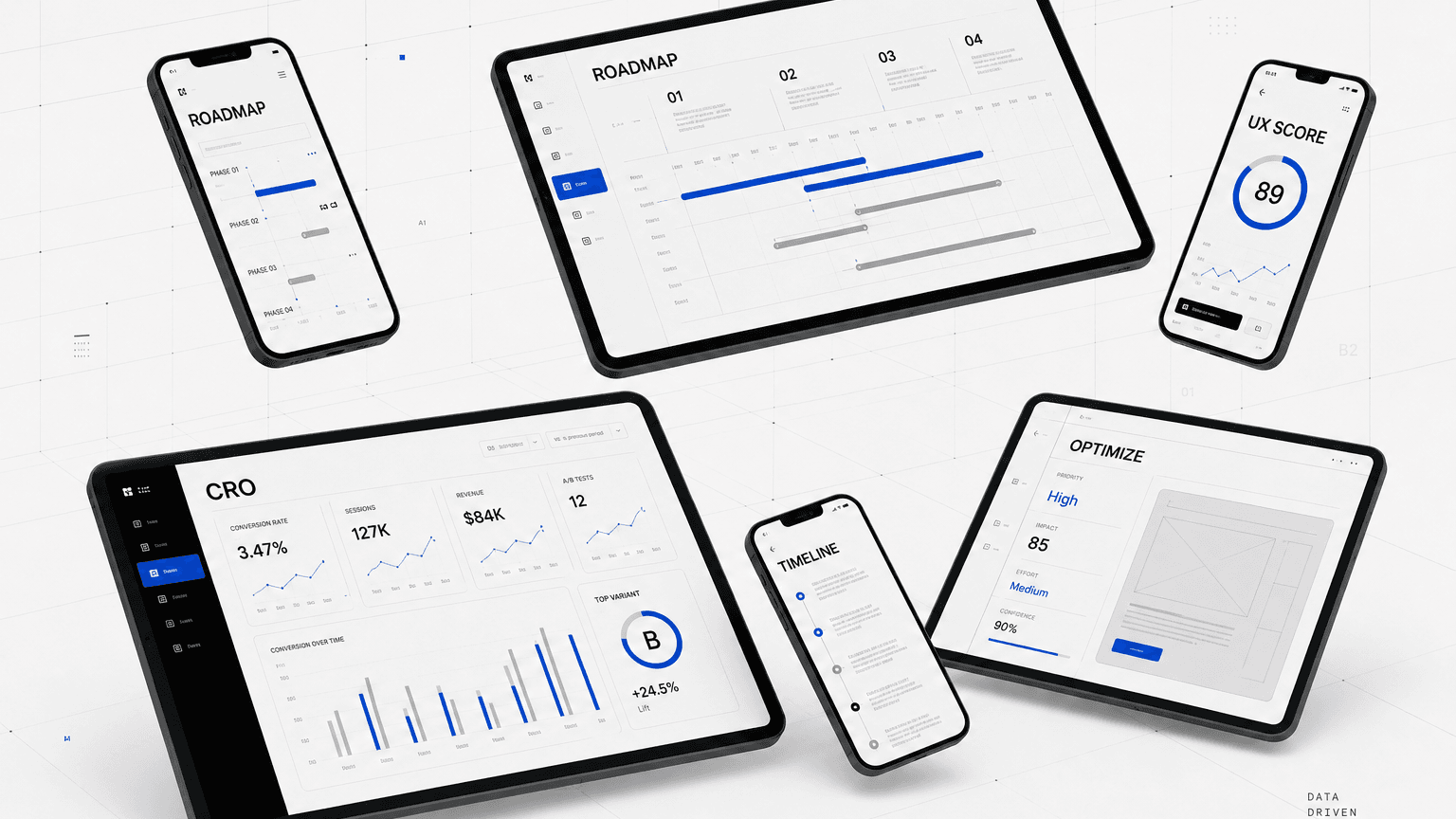
Hire a CRO agency when experimentation economics work
CRO earns its keep when you can run a credible test within a useful business window. Traffic alone gives a poor answer. Baseline conversion rate, minimum detectable effect, allocation across variants, and acceptable risk determine how many observations you need.
Optimizely’s sample-size guidance uses the baseline conversion rate and minimum detectable effect to plan the sample, then multiplies the per-variation requirement by the number of variations. A company with low conversion volume may wait months for a subtle result. That team will learn faster from focused research and a stronger redesign hypothesis.
A CRO agency should lead when most of these conditions are true:
- The funnel receives stable, qualified traffic and captures the business event that matters.
- The team can define a meaningful outcome, such as completed checkout, qualified demo, activation, or expansion.
- Developers can launch variants without creating product debt or measurement drift.
- The organization wants an ongoing testing cadence and has capacity for repeated learning.
- Leaders accept that a valid experiment may produce a neutral result.
Ask prospective CRO partners to show how they calculate sample needs, prevent event errors, prioritize hypotheses, and decide when to stop a test. Request an example readout that includes a losing or inconclusive experiment. A portfolio made only of wins hides how the team handles uncertainty.
Hire a UX design agency when the experience needs investigation or redesign
UX leadership fits problems that analytics can locate but cannot explain. A funnel report can show abandonment at shipping. It cannot show that buyers missed delivery timing, distrusted an error message, or could not recover from an address problem.
Nielsen Norman Group separates the jobs of qualitative and quantitative usability research. Qualitative testing identifies specific interface problems; quantitative testing produces metrics such as completion rate and task time. The same source notes that qualitative studies often use 5 to 8 participants, while quantitative usability studies often use more than 30. A UX team can investigate a costly failure before the site generates enough conversion volume for a narrow A/B test.
Checkout gives the distinction real weight. Baymard’s research puts average cart abandonment at 70.22% across 50 studies. Its survey found that 17% of shoppers had abandoned an order because checkout felt too long or complicated. Baymard also reports 12 to 14 form elements for an ideal checkout flow versus 23.48 in the average US checkout it benchmarked. Your own research must diagnose your checkout. The figures justify watching people use it before your team spends a quarter testing button copy.
A UX design agency should lead when most of these conditions are true:
- Customers fail a core task, contact support for routine steps, or build workarounds outside the product.
- The journey spans several screens, roles, devices, or approval states.
- The team lacks a shared model of the user, the task, or the intended flow.
- Accessibility, information architecture, interaction behavior, or trust needs design work.
- The current interface cannot support a meaningful test without structural changes.
For a bounded first engagement, a UX audit service can connect analytics, customer evidence, heuristic review, and task testing. A larger redesign makes sense when the findings point to system-level changes rather than isolated defects.
Use an integrated CRO and UX team when the handoffs create risk
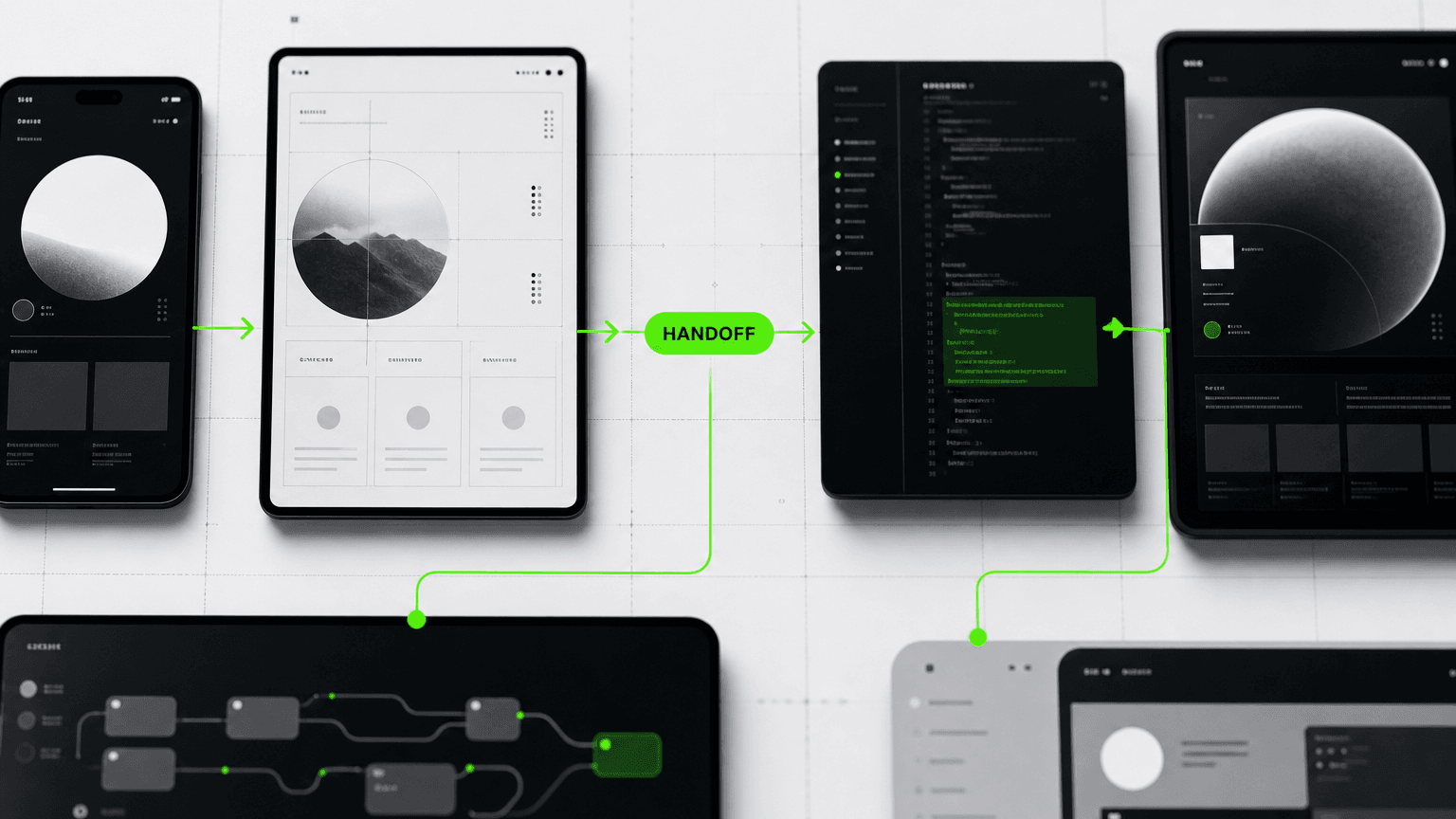
Some problems move through the same loop: research identifies friction, design turns the finding into a testable flow, analytics verifies the event model, development ships the change, and the team reads the result. Splitting that loop across vendors can work, but someone must own the hypothesis and preserve its intent through implementation.
Integrated ownership fits a conversion-focused website redesign, a new ecommerce checkout, or a SaaS onboarding change that spans product behavior and growth measurement. It also fits teams without an internal product designer, analyst, or experiment developer.
Ask an integrated agency to define one lead for the engagement and one artifact that connects the disciplines. A useful artifact might pair each observed user problem with the affected metric, proposed design change, event requirement, and decision rule. That gives product, marketing, and engineering a shared record.
Which agency is faster for a low-converting checkout?
A UX design agency is often faster when the checkout contains visible task failures, broken recovery paths, unclear costs, accessibility defects, or interaction debt. The team can inspect the flow, test it with customers, and prototype a correction without waiting for high conversion volume.
A CRO agency is often faster when the checkout works, event tracking is reliable, traffic is high, and the team has several credible presentation or offer hypotheses. In that setting, the existing funnel can support a controlled comparison.
Speed means time to a trustworthy decision. A one-week test with weak sample economics creates noise. A six-week redesign aimed at a minor message question wastes design capacity. The right first move matches the evidence gap.
How to compare proposals from CRO and UX design agencies
Give each agency the same business problem, current funnel, traffic and conversion data, technical constraints, and access limits. Then compare how each proposal will produce learning. Deliverable volume carries less weight.
| Proposal question | Strong answer | Risk signal |
|---|---|---|
| What will you diagnose first? | Names the decision, evidence, and method | Starts with a fixed package before reviewing the constraint |
| What data do you need? | Requests specific events, traffic, users, and product context | Promises a result without checking data quality or access |
| How will you choose the work? | Shows a prioritization method tied to impact and evidence | Uses a generic best-practice checklist as the roadmap |
| Who implements? | Names design, development, analytics, QA, and approval owners | Leaves the handoff until the final presentation |
| How will you measure progress? | Separates research findings, shipped changes, and business outcomes | Uses conversion lift as the only signal before a baseline exists |
| What happens after a neutral result? | Explains how the team updates the hypothesis and backlog | Treats every test or redesign as a guaranteed win |
Review relevant examples, then ask who did the work shown. A credible team can explain the research question, design decision, instrumentation, implementation limits, and result. If you need a broader agency-selection process, use this guide to hiring a UI/UX design agency alongside the discipline-specific questions above.
Four common scenarios
High-traffic landing page with stable tracking
Start with CRO leadership. The team can inspect acquisition segments, align the page with intent, and test meaningful offer or message changes. A conversion-focused landing page review can help prepare the backlog.
Checkout drop-off with customer complaints
Start with UX leadership. Combine support themes, session evidence, usability testing, and flow review. Add CRO support once the team has a sound redesign hypothesis and enough volume to compare it.
SaaS onboarding with weak activation
Use an integrated team when activation depends on information architecture, empty states, role setup, education, and product analytics. The design and measurement plan should share the same definition of activation.
Low-volume B2B demo funnel
Start with qualitative research and sales evidence. A small number of monthly conversions makes subtle page experiments slow. Interviews, call review, message testing, and task analysis can produce a stronger change before the team measures lead quality over a longer window.
CRO agency vs UX design agency: choose the evidence gap
Choose the partner whose methods close your largest evidence gap. CRO leadership fits teams that can test; UX leadership fits teams that need to understand and redesign a difficult experience. Integrated ownership fits teams that must carry one hypothesis from customer research through measurement.
Start with a conversion and UX diagnostic
Bring DesignX the funnel, product flow, current data, and the question your team cannot settle. We will classify the constraint and scope the first engagement around the evidence you need.
Frequently asked questions
Can a UX design agency do CRO work?
Some UX agencies can plan experiments, define events, and work with analytics. Ask for evidence of statistical planning, experiment implementation, and results analysis. Strong interface design alone does not prove that the team can run a reliable experimentation program.
Can a CRO agency redesign a checkout or product flow?
Some CRO agencies include research, UX design, and front-end development. Review the depth of their product-flow work and confirm who owns information architecture, accessibility, interaction states, and design QA. A series of page variants may fall short when the task needs structural redesign.
How much traffic do I need before hiring a CRO agency?
No single traffic threshold works for every funnel. The required sample depends on baseline conversion rate, the smallest effect worth detecting, traffic allocation, the number of variants, and the experiment’s risk setting. Ask the agency to model sample size and estimated duration before it proposes a testing cadence.
Should I run a UX audit before A/B testing?
A UX audit is a strong first step when the team lacks a credible hypothesis or sees signs of task failure. Research can identify the friction and shape a higher-value test. Teams with a mature backlog and reliable evidence can move straight into experiment planning.
What should the first engagement include?
The first engagement should produce a decision. Define the target outcome, inspect data quality, review the core journey, gather customer evidence, and leave with a prioritized plan that names owners, measurement requirements, and the next learning milestone.