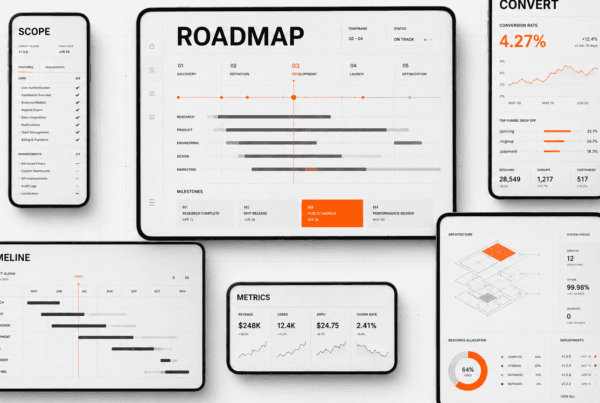

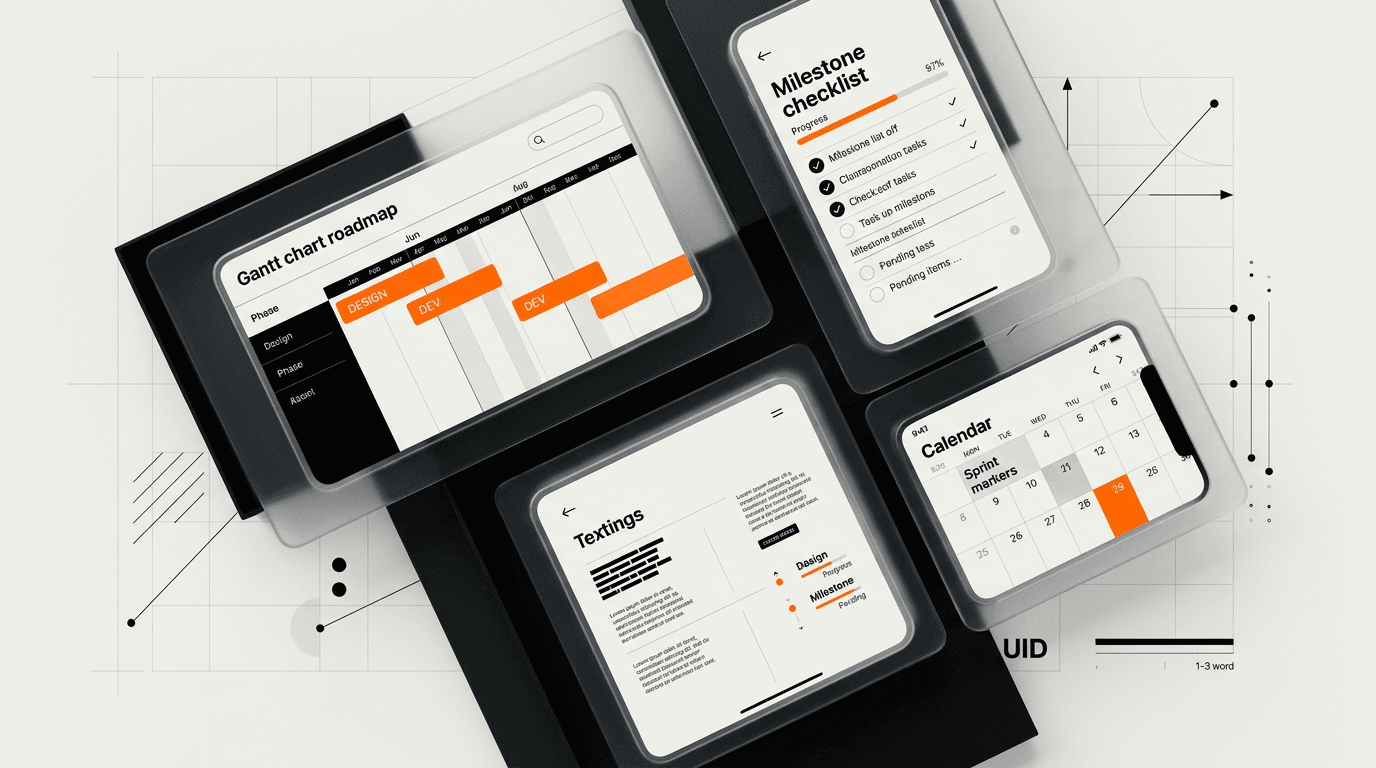
Clients often underestimate website redesign timelines, expecting 8-12 weeks. A realistic timeline for a well-executed marketing website is typically 3-6 months.
The Realistic Website Redesign Timeline
Most clients ask for a website redesign timeline that fits into a neat 8-12 week box. That’s a marketing fantasy, not a real project plan. The actual process for a well-executed marketing website typically takes 3-6 months. For e-commerce platforms, complex web applications, or enterprise-level sites with extensive integrations, expect 6-12 months, sometimes more. Our work with Klein Tools on their expansive catalog redesign, for instance, involved careful planning over many months to manage thousands of SKUs and dealer-specific content. The duration depends heavily on scope, stakeholder availability, and the quality of preparatory work.
A website redesign is rarely a linear sprint. It’s a series of phases, each with its own challenges and potential for delays. Understanding these stages helps set proper expectations and protect your launch date.
Phase 1: Discovery and Strategy (Weeks 1-4)
What Happens
This is where we define the “why” and “what.” We start by understanding your business goals. Are you trying to generate more leads, increase sales, improve brand perception, or support a new product launch like Oura Ring’s identity required? We research your target audience, building out personas that guide design and content decisions. A competitive analysis identifies what works and what doesn’t in your market.
We perform a technical audit of your existing site. This means looking at current performance, SEO rankings, and analytics data. We use tools like Google Analytics to pinpoint traffic patterns, popular pages, and drop-off points. Information architecture planning begins here, outlining the site’s structure with a sitemap and user flows. We often use collaborative tools like Miro to map out these complex relationships.
Output
- A detailed project brief outlining goals, audience, and technical requirements.
- A sitemap showing the hierarchy of pages.
- Basic wireframes, which are structural blueprints of key page types. These are not designs, but guides for layout and functionality.
- A clear statement of work and project plan.
Common Delays
- Stakeholder alignment: Getting consensus across marketing, sales, product, and legal teams takes time. Everyone has an opinion, and synthesizing them requires skill and patience.
- Data collection: Waiting for access to analytics accounts or existing market research can push timelines.
- Undefined objectives: If the “why” isn’t clear, the “what” will be muddled.
Phase 2: Content Strategy and Creation (Weeks 4-12)
What Happens
Content is often the biggest bottleneck in any website project. We conduct a thorough content audit, determining what existing content to keep, revise, or discard. Then comes content gap analysis: identifying what new information or messaging your audience needs. Copywriting and editing are extensive tasks, often requiring multiple rounds of internal and client reviews. We integrate SEO keywords naturally into the copy, ensuring search engines understand your site’s relevance.
Beyond text, this phase includes collecting all necessary assets: high-resolution photography, brand videos, infographics, and other media. For a site like Bodybuilding.com, managing content assets meant coordinating thousands of articles, product descriptions, and user-generated media. That scale alone can add months to a timeline.
Output
- A content matrix detailing every page’s purpose, key messages, and required assets.
- Finalized, approved page copy.
- Curated or newly created imagery, videos, and graphics.
- A clear content migration plan.
Common Delays
- Internal reviews: Legal, brand teams, or subject matter experts can hold up content for weeks.
- Asset creation: If new photography or video shoots are needed, those schedules rarely align perfectly with design or development.
- Lack of a single content owner: Without one person driving content approvals, feedback loops can become endless.
- “We’ll get to it later”: Deferring content decisions inevitably delays the entire project.
Phase 3: Design and User Experience (Weeks 8-16)
What Happens
With strategy and content direction in place, we move into visual design. This starts with detailed wireframes, evolving the structural layouts into functional blueprints. User Interface (UI) design applies your brand’s visual language, creating an aesthetic that speaks to your audience. For Oura Ring, crafting their launch identity meant careful consideration of every visual element to convey innovation and wellness.
Prototyping creates interactive mockups, allowing us to test user flows and gather feedback before development begins. We use tools like Figma, Sketch, or Adobe XD for design and platforms like UserTesting.com for user validation. Iteration is key here; we refine designs based on real feedback, not just subjective preferences.
Output
- High-fidelity mockups of all key page templates.
- A design system or style guide, documenting colors, typography, components, and interaction patterns.
- Interactive prototypes for user testing and client review.
- Approved visual designs ready for development.
Common Delays
- Subjective feedback: “I don’t like blue” without a clear business reason is hard to action. We guide clients to provide objective, goal-oriented feedback.
- Design by committee: Too many cooks in the design kitchen dilute the vision and slow progress.
- Brand guideline interpretation: Disputes over how existing brand rules apply to new digital contexts.
- Lack of understanding of technical limitations: Designs that are difficult or expensive to build can send a project back to the drawing board.
Phase 4: Development and Integration (Weeks 12-24)
What Happens
This is where the designs become a functional website. Front-end developers write the HTML, CSS, and JavaScript that your users interact with. Back-end developers build the server-side logic, database, and content management system (CMS) setup. Whether it’s WordPress, Shopify, or a custom solution, this is the engine of the site.
API integrations connect your website to other essential business tools, such as CRMs, marketing automation platforms, or e-commerce payment gateways. For projects involving complex product catalogs, like our work with Klein Tools, integrating with existing inventory and dealer systems is a significant undertaking. Custom functionality, such as user portals or specialized calculators, is built and tested during this phase.
Output
- A functional, coded website on a staging environment.
- Integrated third-party services.
- strong CMS setup for content management.
Common Delays
- Third-party API documentation issues or unexpected limitations.
- Scope creep: New feature requests emerging during development. “It would be great if it could also do X, Y, and Z.”
- Performance bottlenecks: Discovering that certain database queries or page loads are too slow.
- Data migration complexity: Moving large volumes of content or user data from an old system.
Phase 5: Quality Assurance and Testing (Weeks 20-28)
What Happens
Before launch, every aspect of the site undergoes rigorous testing. Functional testing ensures all buttons, forms, links, and interactive elements work as expected. Cross-browser and device testing verifies the site’s appearance and functionality across different browsers and screen sizes. We test page load speeds using tools like Google Lighthouse to ensure optimal performance.
Security testing identifies vulnerabilities. User Acceptance Testing (UAT) is a critical step where your internal team reviews the staging site, ensuring it meets all business requirements and performs as intended. We maintain a detailed bug report log, systematically addressing and resolving issues.
Output
- A full bug report log with all issues resolved.
- Performance reports (e.g., Google Lighthouse scores).
- Client sign-off, indicating the site is ready for launch.
Common Delays
- Discovering major bugs late in the process, requiring significant development
Frequently Asked Questions
What should teams know about the realistic website redesign timeline?
Most clients ask for a website redesign timeline that fits into a neat 8-12 week box. That’s a marketing fantasy, not a real project plan. The actual process for a well-executed marketing website typically takes 3-6 months. For e-commerce platforms, complex web applications, or enterprise-level sites with extensive integrations, expect 6-12 months, sometimes more.
What happens during phase 1, discovery and strategy (weeks 1-4)?
What Happens This is where we define the “why” and “what.” We start by understanding your business goals. Are you trying to generate more leads, increase sales, improve brand perception, or support a new product launch like Oura Ring’s identity required? We research your target audience, building out personas that guide design and content decisions. A competitive analysis identifies what works and what doesn’t in your market.
What happens during phase 2, content strategy and creation (weeks 4-12)?
What Happens Content is often the biggest bottleneck in any website project. We conduct a thorough content audit, determining what existing content to keep, revise, or discard. Then comes content gap analysis: identifying what new information or messaging your audience needs. Copywriting and editing are extensive tasks, often requiring multiple rounds of internal and client reviews.
What happens during phase 3, design and user experience (weeks 8-16)?
What Happens With strategy and content direction in place, we move into visual design. This starts with detailed wireframes, evolving the structural layouts into functional blueprints. User Interface (UI) design applies your brand’s visual language, creating an aesthetic that speaks to your audience. For Oura Ring, crafting their launch identity meant careful consideration of every visual element to convey innovation and wellness.
What happens during phase 4, development and integration (weeks 12-24)?
What Happens This is where the designs become a functional website. Front-end developers write the HTML, CSS, and JavaScript that your users interact with. Back-end developers build the server-side logic, database, and content management system (CMS) setup. Whether it’s WordPress, Shopify, or a custom solution, this is the engine of the site.