
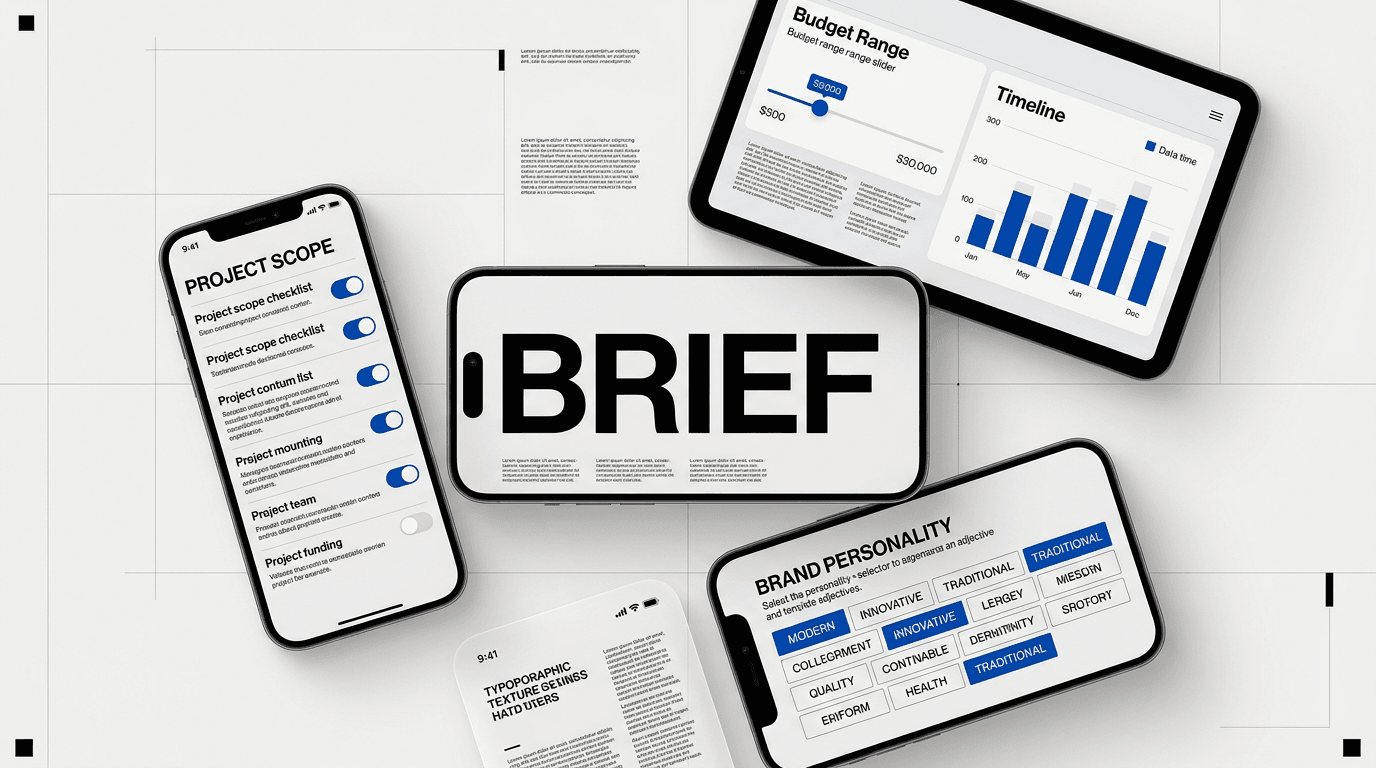
Many design briefs are ineffective because clients misunderstand their true purpose. A brief is a strategic document that frames a business problem and articulates desired outcomes.
The Core Purpose of a Design Brief
Many clients approach us with a design brief. Most of these briefs are, frankly, bad. Not because the client lacks intelligence, but because they misunderstand the brief’s true purpose. A brief is not a shopping list for creative services. It’s a strategic document. It frames a business problem, articulates a desired outcome, and provides the context for a design partner to propose the best solution, not just the most obvious one.
The goal is to align expectations and provide a foundation for collaboration. When we worked with Klein Tools, redesigning their catalog across 40,000+ SKUs, the brief wasn’t just “make the catalog look better.” It was about addressing a specific business challenge: low dealer adoption. The design solution, in that case, was directly tied to a measurable business goal. A good brief enables that kind of strategic partnership.
Anatomy of an Effective Design Brief
To truly get what you want from a design partner, your brief needs structure and depth. Here’s what we look for, and what you should include, when learning how to write a design brief that delivers.
Project Background and Business Context
Start with your story. What does your company do? What’s its history, its mission, its current position in the market? Why are you initiating this project now? What’s the catalyst? Is it a new product launch, a market shift, declining sales, or an outdated brand perception?
Explain the “before and after.” Describe the current state and the desired future state. For example, if you are a startup like Apellix drones, the background might include your unique technology and your aspiration to disrupt an industry. This context helps a designer understand the stakes and the broader implications of their work.
The Problem, Not The Solution
This is where most briefs fall short. Clients often present a prescribed solution: “We need a new website with three specific pages.” Or, “Design a logo that is blue and uses sans-serif font.” That’s like telling a doctor you need a specific surgery, instead of describing your symptoms.
Instead, describe the problem. What challenge are you trying to overcome? What business objective are you trying to achieve? For Oura Ring, the challenge was establishing a launch identity that communicated sophistication and health benefits, not just “make a nice logo.” We needed to understand the market positioning, the product’s unique value, and the target audience’s aspirations.
Focus on the “why.”
- Are current sales stagnating in a particular demographic?
- Is your brand failing to resonate with a new target market?
- Is your internal team struggling with fragmented brand assets?
- Are users abandoning your product at a specific stage?
Quantify outcomes when possible. “Increase dealer adoption by 23%” gives us a clear goal, as it did for Klein Tools. “Improve user retention by 15%.” These metrics allow us to measure success beyond subjective aesthetic judgments.
Target Audience Deep Dive
Who are you trying to reach? Go beyond basic demographics. Provide psychographic profiles, user personas, or even ethnographic insights if you have them. What are their motivations, pain points, aspirations, and behaviors? What do they currently think or feel about your brand, or about the problem you are solving?
If you’re launching a product aimed at professional athletes, for example, understanding their training routines, competitive mindset, and preference for performance-driven tools is critical. Don’t just list “men, 25-45.” Describe their lives. What media do they consume? What problems do they need solved?
Brand Personality and Voice
This section is about the emotional connection. How do you want your brand to feel? What impression should it leave? Adjectives like “modern,” “friendly,” or “authoritative” are a start, but go deeper.
Consider using analogies:
- “If our brand were a car, it would be a Tesla, not a minivan.”
- “If our brand were a person, it would be a thoughtful innovator, not a loud salesperson.”
Provide examples of brands, not necessarily in your industry, whose personality you admire or dislike. Explain *why* you like or dislike them. This helps a designer translate abstract concepts into visual or verbal cues. For Bodybuilding.com, the brand personality was about empowerment and aspiration, driving a specific visual language for their content and product lines.
Competitor Landscape and Differentiators
Who are your direct and indirect competitors? What are their strengths and weaknesses from a design and brand perspective? Where do you fit in? What makes you different, better, or unique?
This helps a designer understand the visual and messaging clutter you need to cut through. It also highlights opportunities for differentiation. Don’t just list them; offer a brief analysis. “Competitor X is very corporate and traditional; we want to appear more approachable and dynamic.”
Deliverables and Scope
List the outputs you envision: a new logo, a website redesign, packaging, marketing collateral, an app interface. Be as specific as you can about what you *think* you need, but remain open. A good design partner might propose alternative or additional deliverables that better address your core problem.
Also, include any known constraints: technical limitations, regulatory requirements, or specific platforms you must use. Outline your ideal timeline, including key milestones or launch dates. This helps us assess feasibility and resource allocation.
The Budget Conversation
This is often the most uncomfortable part of writing a design brief, and it shouldn’t be. Being transparent about your budget is not a weakness; it’s a strategic advantage. It allows design agencies to tailor their proposals to your reality, ensuring they don’t over-scope or under-deliver.
We see two main approaches that work:
- The Range: “We have allocated between $X and $Y for this project, and we are looking for proposals that demonstrate the best value within that range.”
- The Target: “Our target budget for this project is $Z. We are open to exploring options that might exceed this if the ROI is clearly articulated.”
When clients withhold budget information, it often leads to wasted time on both sides. Agencies might propose solutions far outside your financial comfort zone, or conversely, underestimate the scope you truly need. At DesignX, our project fees typically range from $15k-$25k, with fractional retainers around $9.7k/month. Knowing a client’s budget helps us understand if we’re a good fit and how to structure a proposal that meets their needs without unnecessary back-and-forth.
Your budget communicates the scale and ambition of your project. It dictates the team size, the depth of research, and the complexity of the final output. Think of it as an investment, not an expense. A well-placed budget signal helps you receive relevant, actionable proposals.
Common Pitfalls and How to Avoid Them
Learning how to write a design brief also means learning what to avoid.

- Vagueness: Phrases like “make it pop” or “we want something modern” are unhelpful. Always follow up a subjective term with an example or a specific explanation of what it means to you.
- Brief by Committee: When too many stakeholders contribute without a clear editorial voice, the brief becomes a confused mess of conflicting ideas. Appoint a single, empowered decision-maker or brief owner.
- Lack of Internal Alignment: Before sending your brief, ensure your internal teams are aligned on the problem, objectives, and desired outcomes. A brief that reflects internal disagreements will only lead to a design process filled with indecision.
- Ignoring the Brief After Submission: A brief is a starting point, not the end of the conversation. Be ready to discuss it, clarify points, and engage in dialogue with your design partner.
The Brief as a Living Document
Consider your brief a strategic proposal to your potential design partner. It’s the beginning of a conversation. A good agency will ask questions, challenge assumptions, and seek clarity. We often find that our initial discussions with clients, based on their submitted brief, refine the project’s direction significantly. This iterative process ensures the final design solution truly addresses the underlying business problem.

For example, when working with HP, the initial brief might focus on a specific product line. Through conversation, we might uncover a broader brand challenge or an opportunity to apply design thinking to their internal processes, going beyond the initial scope to deliver greater value.
Final Considerations for Your Brief
When you sit down to write your design brief, treat it as an opportunity to gain internal clarity. The process of articulating your goals, audience, and challenges can be as insightful for you as it is for your potential design partner.
- Be concise but thorough. Avoid unnecessary jargon.
- Provide concrete examples wherever possible.
- Be honest about your challenges and limitations.
- Assign one primary point of contact for the design team. This prevents mixed messages and speeds up decision-making.
- Review and revise. Have someone else read your brief before you send it.
A well-crafted design brief is more than a document. It’s an investment in a successful partnership and a clear path to achieving your business objectives through design.
Ready to define your next design project with clarity and purpose? Contact DesignX to talk through your project.
Frequently Asked Questions
What should teams know about the core purpose of a design brief?
Many clients approach us with a design brief. Most of these briefs are, frankly, bad. Not because the client lacks intelligence, but because they misunderstand the brief’s true purpose. A brief is not a shopping list for creative services.
What should teams know about anatomy of an effective design brief?
To truly get what you want from a design partner, your brief needs structure and depth. Here’s what we look for, and what you should include, when learning how to write a design brief that delivers. Project Background and Business Context Start with your story. What does your company do?
What should teams know about common pitfalls and how to avoid them?
Learning how to write a design brief also means learning what to avoid. Vagueness: Phrases like “make it pop” or “we want something modern” are unhelpful. Always follow up a subjective term with an example or a specific explanation of what it means to you. Brief by Committee: When too many stakeholders contribute without a clear editorial voice, the brief becomes a confused mess of conflicting ideas.
What should teams know about the brief as a living document?
Consider your brief a strategic proposal to your potential design partner. It’s the beginning of a conversation. A good agency will ask questions, challenge assumptions, and seek clarity. We often find that our initial discussions with clients, based on their submitted brief, refine the project’s direction significantly.
What should teams know about final considerations for your brief?
When you sit down to write your design brief, treat it as an opportunity to gain internal clarity. The process of articulating your goals, audience, and challenges can be as insightful for you as it is for your potential design partner. Be concise but thorough. Avoid unnecessary jargon.