If you are trying to budget a rebrand or first-time identity build, a brand identity cost breakdown is more useful than a single package price. One proposal says $5,000. Another says $25,000. Another comes in at $80,000 and calls it a bargain. All three numbers can be real. They are just pricing different levels of thinking, craft, and rollout.
This is where a lot of founders and marketing leads get burned. They compare line items that are not equivalent, then wonder why the cheap option ends in extra revision rounds, missing guidelines, and a team that still cannot use the brand consistently six weeks later.
At DesignX, we look at brand identity costs through a buyer lens. What decisions need to get made, what assets need to exist, and what parts of the system will actually get used in sales, product, and marketing? If you want a clean budget before you hire an agency or designer, start here.
Brand Identity Cost Breakdown: What You Are Actually Paying For
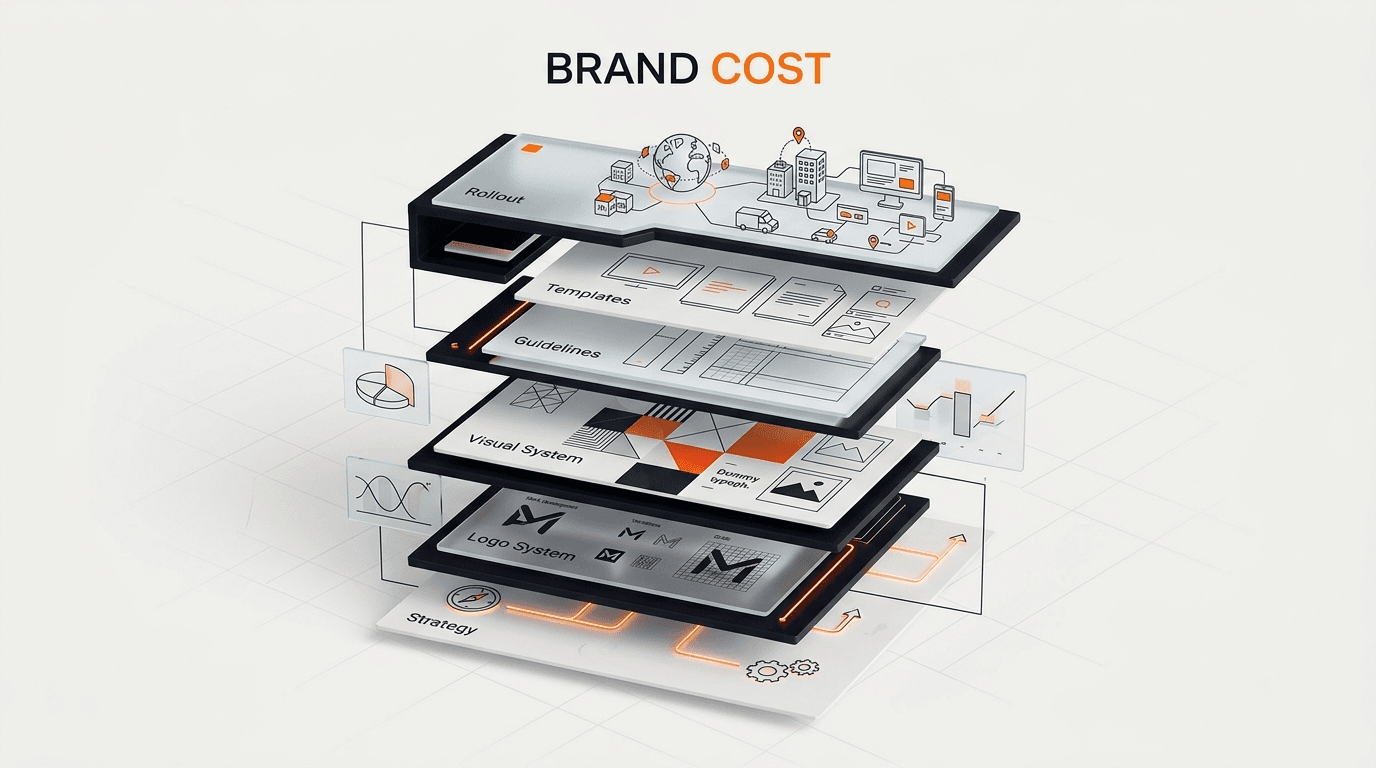
Most solid identity projects have six cost buckets. Some teams need all six. Some only need three. The mistake is assuming every proposal covers the same scope.
| Cost bucket | Typical range | What it usually includes |
|---|---|---|
| Strategy and discovery | $2,000 to $10,000 | Stakeholder interviews, market context, audience definition, positioning inputs, competitive review |
| Messaging and verbal direction | $3,000 to $12,000 | Tagline exploration, value proposition work, tone-of-voice rules, headline direction |
| Logo system | $3,000 to $15,000 | Primary logo, secondary marks, lockups, favicon or icon usage, spacing rules |
| Visual identity system | $4,000 to $18,000 | Color palette, typography, imagery direction, layout rules, supporting graphic elements |
| Guidelines and handoff | $2,000 to $8,000 | Brand guide, file organization, usage examples, editable exports, implementation notes |
| Launch and rollout assets | $2,000 to $20,000+ | Website hero graphics, social templates, pitch deck, sales sheets, email signatures, ad units |
That range is why broad questions like “How much does brand identity cost?” create bad decisions. A project with light discovery and a tight visual scope might land around $8,000 to $15,000. A system with strategy, messaging, identity design, and rollout support can climb into the $20,000 to $50,000 range fast. If the website, packaging, product UI, or a big launch campaign are part of the same engagement, the number climbs again.
If you are comparing broader agency economics, our design agency pricing guide is a useful companion because it shows how identity work fits into a larger design budget.
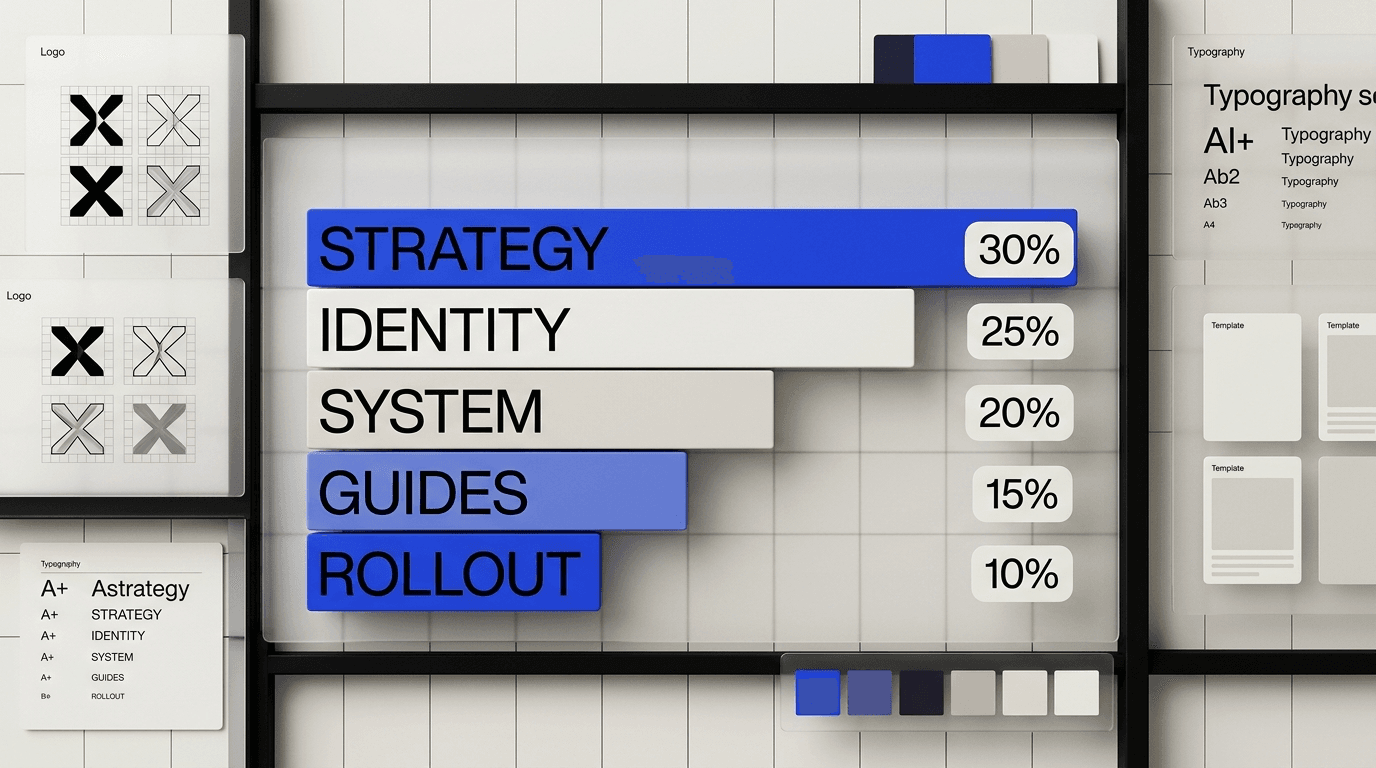
1. Strategy and Discovery Usually Decide Whether the Rest of the Spend Works
This is the part buyers are most tempted to cut. It is also the part that prevents waste later.
Strategy and discovery work answers basic questions before visual exploration starts. Who are we trying to reach? What category do we want to own? What do we want buyers to remember? What should stay from the current brand, and what should go?
Without that layer, the project becomes taste-driven. You end up paying for rounds of design that are actually rounds of unresolved business decisions.
That is one reason clear inputs matter so much. PMI has pointed out that inaccurate requirements management is a leading cause of projects missing goals. Brand work is no different. If the brief is fuzzy, the bill usually grows later.
Founders who are still shaping their category or audience should also read our startup branding guide. It is often cheaper to sharpen positioning first, then pay for identity design once the message is stable.
2. The Logo Is Only One Slice of the Brand Identity Cost Breakdown
A lot of proposals sound logo-heavy because logos feel concrete. They are easy to show, easy to debate, and easy to package. But strong brand identity work does not stop at a mark.
The real cost sits in the system around the logo. That includes color decisions that hold up across web and print, type rules that work in decks and landing pages, image direction that does not feel random, and layout patterns the team can repeat without reinventing the brand every week.
That is why two logo proposals can have a huge price gap. One may cover three logo concepts and a final file export. The other may include a complete identity system with iconography, brand hierarchy, and real application examples. Those are not interchangeable purchases.
If you only need a visual refresh, say that. If you need a system that can stretch across campaigns, sales collateral, and product marketing, budget for the system, not just the symbol.
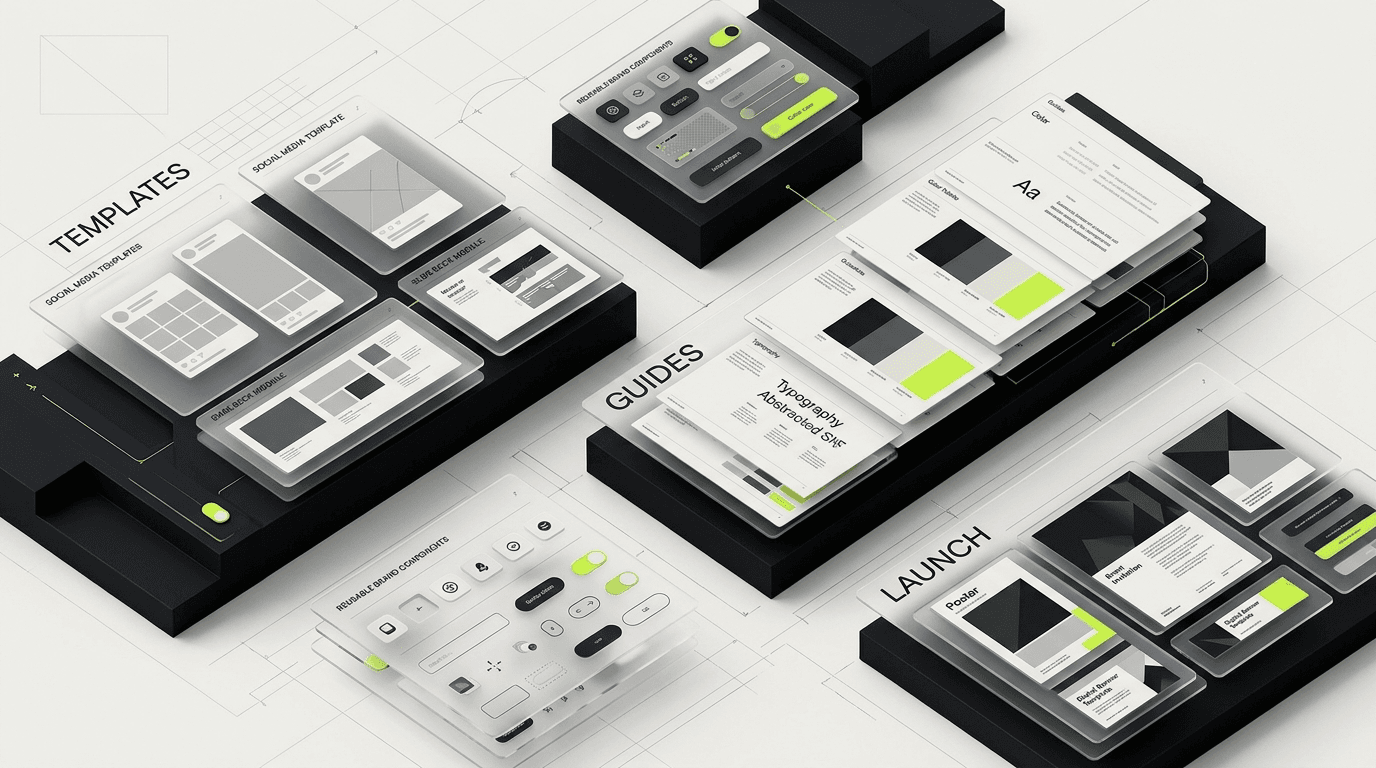
3. Guidelines, Templates, and Rollout Assets Are Where Hidden Costs Show Up
Many buyers think the project ends when final logos are approved. In practice, that is where implementation starts.
A brand that exists only in a Figma file is not operational yet. Teams still need a short guide, editable templates, export packages, and example applications. Someone has to decide what the LinkedIn graphic looks like. Someone has to set the pitch deck master. Someone has to define the image treatment for the website. If none of that is scoped, it comes back later as add-on work.
This is also why brand consistency matters commercially, not just visually. Marq’s work on brand consistency makes the point in plain terms: weak governance confuses buyers and slows teams internally. That drag costs more than most companies expect.
For growth-stage companies, rollout assets often deserve their own mini-budget. Common examples:
- Pitch deck template
- Sales one-pager or case study sheet
- Website hero graphics or homepage art direction
- Social post templates
- Email signature system
- Trade show or event collateral
If your team is launching the new identity publicly, do not bury rollout under “miscellaneous.” Ask for it as a named line item.
What Different Budget Levels Usually Buy
$5,000 to $10,000
This range usually buys focused visual work, not deep brand strategy. Think logo refinement, a simple color and type system, and light documentation. It can work for an early company that already has clarity and just needs a more credible surface.
$12,000 to $25,000
This is where brand identity projects start to feel complete. You can usually afford real discovery, a stronger visual system, cleaner guidelines, and a handful of rollout assets. For many startups and mid-market teams, this is the zone where the spend starts making operational sense.
$25,000 to $50,000+
This range is common when messaging, stakeholder alignment, brand architecture, or more extensive rollout support are involved. It is also where you see stronger creative direction, tighter project management, and more senior strategic input.
$50,000 and up
Now you are often paying for complexity, not just prettier design. Multiple business units, high-stakes launches, packaging, website work, sales enablement, internal brand adoption, and leadership alignment can all drive the number upward.
If speed matters, the delivery model affects cost too. Our take on design sprints vs traditional agencies is useful here because timeline drag creates real hidden spend, even when the proposal price looks lower.
Four Reasons One Brand Identity Proposal Costs More Than Another
1. Seniority
You are not only buying files. You are buying judgment. A senior team tends to make better calls earlier, which reduces wasted rounds and weak concepts.
2. Research depth
Competitive audits, interviews, and strategic workshops cost time. They also reduce the odds that the final work looks generic.
3. Application count
A lean identity for one website is not the same job as an identity that needs to live across product UI, decks, ads, and outbound sales material.
4. Decision complexity
Three aligned stakeholders are cheaper than nine stakeholders with different agendas. Every approval layer adds labor, delay, and revision risk.
There is a bigger business reason to care about design quality too. McKinsey’s research on the business value of design tied strong design performance to stronger revenue growth and shareholder returns. That does not mean every expensive rebrand is smart. It does mean design quality is not cosmetic overhead when the brand sits on top of sales, product, and market trust.
What a Smart Brand Identity Proposal Should Spell Out
Before you sign anything, ask for clean answers to these questions:
- What strategy work is included, exactly?
- How many decision-makers and revision rounds are assumed?
- Are messaging and verbal identity included, or visual identity only?
- What file types, templates, and guidelines are delivered at the end?
- Which rollout assets are included now, and which are phase two?
- Is website design included, referenced, or completely separate?
If a proposal cannot answer those in plain language, the brand identity cost breakdown is not finished yet.
How to Spend Less Without Buying the Wrong Thing
The cheapest way to lower budget is not to squeeze the rate. It is to reduce ambiguity.
Make the scope smaller. Get alignment before kickoff. Decide what is phase one and what can wait. If your immediate problem is sales credibility, maybe the first round is positioning, logo system, and one polished deck template. If your immediate problem is market confusion, maybe messaging deserves more budget than rollout graphics.
AI can help speed up exploration and production work, but it does not remove the need for judgment. Our AI branding guide explains where these tools help and where they still need a human point of view.
The short version: spend on the thinking that reduces bad decisions, then spend on the assets your team will actually use in the next ninety days.
FAQ: Brand Identity Cost Breakdown
How much should a startup spend on brand identity?
For most startups, a practical range is $8,000 to $25,000 depending on how much positioning help, messaging, and rollout support are needed. Under that, the work is often lighter and more visual-only.
Does brand identity pricing usually include strategy?
Sometimes, but not always. Many low-cost packages skip discovery and strategic alignment entirely. Ask whether interviews, positioning input, competitive review, and messaging direction are included or sold separately.
Is website design included in a brand identity package?
Usually not. Some agencies include homepage concepts or art direction, but a full website project is typically a separate scope with its own timeline and budget.
How long does a brand identity project take?
A focused identity project can take three to six weeks. A deeper engagement with messaging, research, and rollout often takes six to twelve weeks, sometimes longer if stakeholder approvals are slow.
What should be in a brand identity proposal?
A solid proposal should define strategy scope, deliverables, revision rounds, timeline, stakeholder assumptions, final files, and any rollout assets included after the core identity is approved.
Final Takeaway
A useful brand identity cost breakdown is not about finding the lowest number. It is about seeing where the money goes before you commit. Strategy, identity design, documentation, and rollout do not cost the same, and they do not matter equally for every company.
If you know what decisions need to get made and which assets the business actually needs, the right budget becomes much easier to defend. If you do not, the cheapest proposal can turn into the most expensive one on the table.
If you want a senior team to help scope the work before you overbuy or underbuy, talk with DesignX. We can usually tell within one conversation whether you need a logo refresh, a full identity system, or a broader brand and web engagement.
If you want a senior design partner to turn this into a sharper product, brand, or website, see how DesignX works.