
E-commerce photography direction is essential for crafting a visual narrative that drives sales. Brands often mistakenly treat product photography as an afterthought.
The Core of Visual E-commerce Storytelling
E-commerce photography direction is not just about taking good pictures. It is about crafting a deliberate visual narrative that speaks directly to your customer, differentiates your product, and drives sales. Many brands treat product photography as an afterthought, a logistical hurdle to clear before launch. This is a mistake. Your images are often the first, and sometimes only, interaction a potential buyer has with your product.
Think about the difference between a product shot that merely shows an item and one that evokes a feeling, solves a problem, or illustrates an aspiration. That difference comes from thoughtful direction, not just a capable photographer. A strong visual strategy can cut through the noise online, building trust and conveying value long before a customer reads a single product description. DesignX has seen this play out repeatedly, whether we are establishing a new brand identity for a startup or optimizing existing visual assets for an established player. For Oura Ring’s launch, the visual identity, including specific e-commerce photography direction, was central to establishing a premium perception and rapid market adoption.
Building Your Visual Foundation: The Mood Board
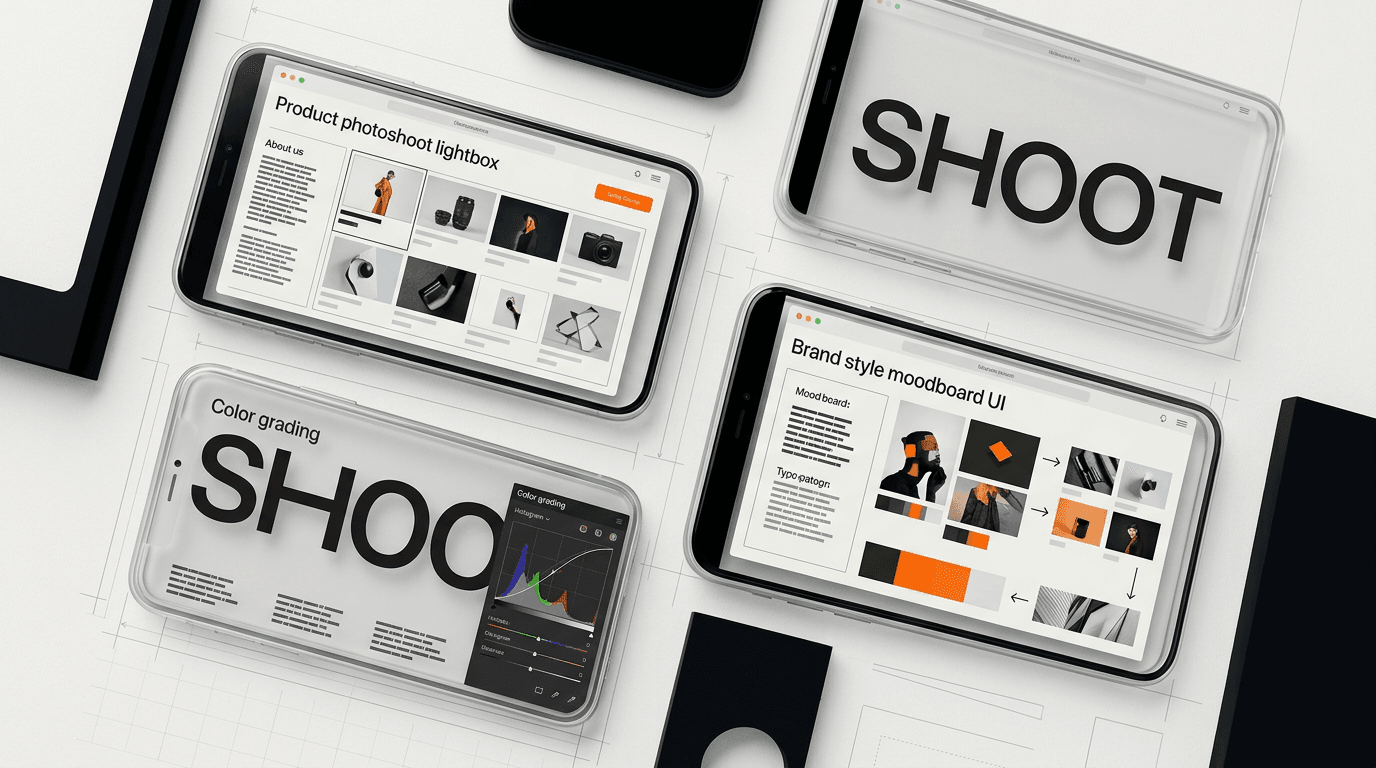
Before any camera gear leaves its case, you need a clear visual north star. This is where the mood board comes in. It is more than a collection of pretty pictures. It is a strategic document that defines the aesthetic, emotional tone, and overall feel of your brand’s visual presence. It ensures everyone involved, from the photographer to the stylist to the marketing team, operates from a shared understanding.
Beyond Pretty Pictures: Defining Brand Essence
A truly effective mood board does not just focus on direct competitors or product shots. It draws inspiration from a wider world to define your brand’s personality. Consider these elements:
- Color Palettes: Not just primary product colors, but the secondary and accent colors that will appear in backgrounds, props, or styling elements. Think about how color impacts mood.
- Lighting Styles: Is it bright and airy, dark and moody, natural daylight, or studio precise? Lighting profoundly influences perception.
- Texture and Materials: If your product is sleek metal, what kind of textures should complement it? Rough wood, soft fabric, industrial concrete?
- Composition and Angles: Are shots wide and expansive, or tight and intimate? Do you favor overhead shots, eye-level perspectives, or dynamic angles?
- Human Element and Emotion: If people are in the shots, what are they doing? What emotions do they convey? Joy, focus, relaxation, adventure? This is crucial for lifestyle photography.
- Overall Vibe: Is it playful, serious, minimalist, luxurious, rugged, approachable? Use adjectives that capture the feeling you want viewers to experience.
Gathering these elements helps you move beyond vague ideas like “professional” or “clean” and into concrete visual language.
Practical Mood Board Construction
Platforms like Pinterest are invaluable for initial collection, but a final, curated mood board should be a focused presentation. I recommend using tools like Milanote or even a well-organized presentation slide deck. Include annotations on why each image was chosen. This explains the underlying rationale. Your mood board should ideally contain 15 to 25 carefully selected images. Too few, and it is not descriptive enough. Too many, and it becomes diluted and unclear.
Label sections clearly. One section might show desired lighting, another specific prop styling, another examples of desired human interaction. This structure gives your creative partners a roadmap, not just a collage.
Deconstructing the Shoot: Shot List Architecture
Once your visual direction is set with the mood board, the shot list becomes your operational blueprint. This document details every single image needed, ensuring no product or angle is missed. It is the tactical plan that translates your aesthetic vision into deliverable assets.
Categorization for Clarity
Organize your shot list logically. A common approach is to group by product SKU, then by shot type within each SKU. For brands with extensive catalogs, like Klein Tools, where DesignX helped redesign their catalog with over 40,000 SKUs, an organized shot list is not just helpful, it is mission-critical for efficiency and consistency. Without it, you are inviting chaos and costly reshoots.
Consider these broad categories:
- Hero Shots: The primary image for product pages.
- Detail Shots: Close-ups highlighting textures, features, or unique selling points.
- Scale Shots: Showing the product in relation to a hand, another common object, or a person for size reference.
- Lifestyle Shots: Product in use, demonstrating benefit or evoking an aspirational scenario.
- Environmental Shots: Product placed within a relevant setting, without necessarily a person interacting.
Each category serves a different purpose in the e-commerce funnel, from initial attraction to detailed examination.
Essential Shot List Data Points
For each individual shot, include these details. This removes guesswork and provides specific instructions:
- SKU/Product Name: Unambiguous identification.
- Shot Type: (e.g., Hero, Detail, Lifestyle, Scale).
- Angle: (e.g., Straight-on, 3/4 front, Overhead, Side profile).
- Specific Features to Highlight: (e.g., “Show the grip texture,” “Focus on the screen interface”).
- Props/Styling Notes: (e.g., “Include a coffee cup and laptop,” “Styled on a minimalist wooden surface”).
- Background: (e.g., “White smooth,” “Soft bokeh outdoor,” “Industrial concrete wall”).
- Reference Image: A direct visual example from the mood board or another source, if specific. This is invaluable.
- Required File Format/Dimensions: (e.g., “JPEG, 3000px on longest side,” “TIFF for print”).
- Priority: (e.g., “High,” “Medium,” “Low”) for managing time on set.
Spreadsheets, Google Sheets, or Airtable are excellent tools for building and managing these lists. They allow for easy filtering, collaboration, and tracking progress.
Balancing the Narrative: Lifestyle Versus Product Ratio
One of the most common questions I hear is, “How many lifestyle shots do we need versus pure product shots?” There is no single magic number, but there is a strategic approach. The ratio depends heavily on your product, your brand’s maturity, and your target audience.
Understanding Your Product’s Role
Pure product shots, often on a white background, are about clarity, detail, and trust. They show exactly what the customer gets. They are essential for every e-commerce product. Customers want to see the product from multiple angles, understand its dimensions, and examine its construction.
Lifestyle shots, conversely, are about aspiration, context, and benefit. They show the product in action, integrated into a desired scenario, or solving a problem. They help customers visualize themselves using the product and connect emotionally with it.
Consider a brand like Bodybuilding.com. Their product pages feature clear, often white-background shots of supplements and gear, but their blog and social channels are rich with lifestyle imagery of athletes working out, fueling their bodies, and achieving goals. Both types of photography serve distinct, important functions.
A Framework for Ratio Decisions
Here is a guideline for thinking about your ratio:
- Functional Products (e.g., tools, basic electronics): Prioritize product clarity. A ratio of 70-80% product-focused, 20-30% lifestyle might be appropriate. The focus is on utility and features.
- Fashion/Home Goods/Cosmetics: These products often benefit from strong lifestyle integration. A 50-60% product-focused, 40-50% lifestyle ratio can be effective. Customers want to see how these items fit into their personal style or living space.
- Experience-Driven Products (e.g., travel gear, high-end electronics, health tech): Lifestyle photography is often paramount to convey the experience. Oura Ring, for example, heavily features lifestyle imagery that showcases the product’s integration into an active, healthy life. A 40-50% product-focused, 50-60% lifestyle ratio can work well.
- New or Complex Products: Initially, lean more heavily into detailed product shots to educate. As the market understands the product, you can introduce more aspirational lifestyle content.
It is not an either/or. It is a strategic blend. Aim for at least four product-focused shots per SKU and two to five lifestyle shots for key products. For core hero products, you might have ten or more images, with a thoughtful mix of both.
Briefing Your Photographer: Maximizing Output, Minimizing Waste
A photographer, no matter how talented, cannot read your mind. A clear, concise brief is the difference between a successful shoot and a day of frustration and wasted budget. Your e-commerce photography direction comes down to this documentation.
The Pre-Shoot Packet
Before the shoot day, provide a full packet to your photographer and creative team. This should include:
- The Final Mood Board: As discussed, annotated and clear.
- The Detailed Shot List: Organized, with all necessary data points and reference images.
- Key Creative Direction Notes: A summary of the brand story, target audience, and project goals. Explain the “why” behind the aesthetic choices.
- Product Information: Any specific handling instructions, assembly notes, or unique features of the products being shot.
- Logistics and Schedule: Call times, location details, contact information for key personnel, and a realistic shot-per-hour target.
Hold a pre-production meeting to walk through this packet, answer questions, and confirm everyone is aligned. This proactive approach saves immense time and money on shoot day.
On-Set Direction: Less Talk, More Show
On the day of the shoot, your role as the director is to guide, not dictate every click of the shutter. Trust your photographer’s expertise. Focus on confirming that the output aligns with the mood board and shot list.
- Reference the Mood Board Constantly: “This shot feels a little too bright. Can we adjust the lighting to match the mood in image #7 on the board?”
- Use Specific Language: Instead of “Make it better,” try “Can we get a tighter crop on the texture, similar to the detail shot we discussed?”
- Provide Real-Time Feedback: Review shots on a monitor as they are captured. Do not wait until post-production to discover a missed angle or an incorrect prop.
- Avoid Micromanaging: Empower your team. If you have chosen the right professionals, they will execute your vision if given clear direction. Your role is to ensure the output matches the strategy, not to operate the camera.
- Be Prepared to Pivot: Sometimes, what looks good on paper does not translate perfectly in practice. Be open to minor adjustments that still achieve the overall goal.
For large-scale projects, like those DesignX has undertaken for HP, coordinating multiple product lines and visual styles requires this level of detailed, yet flexible, direction. It is a balance between precision and practical adaptation.
Post-Production: The Final Polish
Your e-commerce photography direction does not end when the camera stops clicking. Post-production is where consistency is cemented. Ensure your retoucher understands the brand’s aesthetic. Provide color profiles, sharpness guidelines, and specific retouching instructions (e.g., “remove minor dust,” “keep natural skin texture”). The goal is to maintain the visual integrity established in the mood board and shot list, delivering a polished, cohesive visual experience across all touchpoints.
The DesignX Approach to E-commerce Visuals
At DesignX, we approach e-commerce photography direction as an integral part of brand strategy. It is not an isolated task. It is a thread woven through everything from product design to marketing campaigns. We build systems and processes to ensure visual consistency, even across thousands of SKUs, as we did for Klein Tools. Our work with startups like Apellix, a drone company, focused on creating visuals that clearly communicated complex technology in an approachable way. For established brands, we refine and elevate existing assets to improve conversion rates and strengthen brand perception. It is about understanding the business impact of every pixel.
Ready to elevate your e-commerce visuals and tell a more compelling brand story? Contact DesignX to talk through your project.
Frequently Asked Questions
What should teams know about the core of visual e-commerce storytelling?
E-commerce photography direction is not just about taking good pictures. It is about crafting a deliberate visual narrative that speaks directly to your customer, differentiates your product, and drives sales. Many brands treat product photography as an afterthought, a logistical hurdle to clear before launch. This is a mistake.
What should teams know about the mood board?
Before any camera gear leaves its case, you need a clear visual north star. This is where the mood board comes in. It is more than a collection of pretty pictures. It is a strategic document that defines the aesthetic, emotional tone, and overall feel of your brand’s visual presence.
What should teams know about shot list architecture?
Once your visual direction is set with the mood board, the shot list becomes your operational blueprint. This document details every single image needed, ensuring no product or angle is missed. It is the tactical plan that translates your aesthetic vision into deliverable assets. Categorization for Clarity Organize your shot list logically.
What should teams know about lifestyle versus product ratio?
One of the most common questions I hear is, “How many lifestyle shots do we need versus pure product shots?” There is no single magic number, but there is a strategic approach. The ratio depends heavily on your product, your brand’s maturity, and your target audience. Understanding Your Product’s Role Pure product shots, often on a white background, are about clarity, detail, and trust. They show exactly what the customer gets.
What should teams know about maximizing output, minimizing waste?
A photographer, no matter how talented, cannot read your mind. A clear, concise brief is the difference between a successful shoot and a day of frustration and wasted budget. Your e-commerce photography direction comes down to this documentation. The Pre-Shoot Packet Before the shoot day, provide a full packet to your photographer and creative team.