
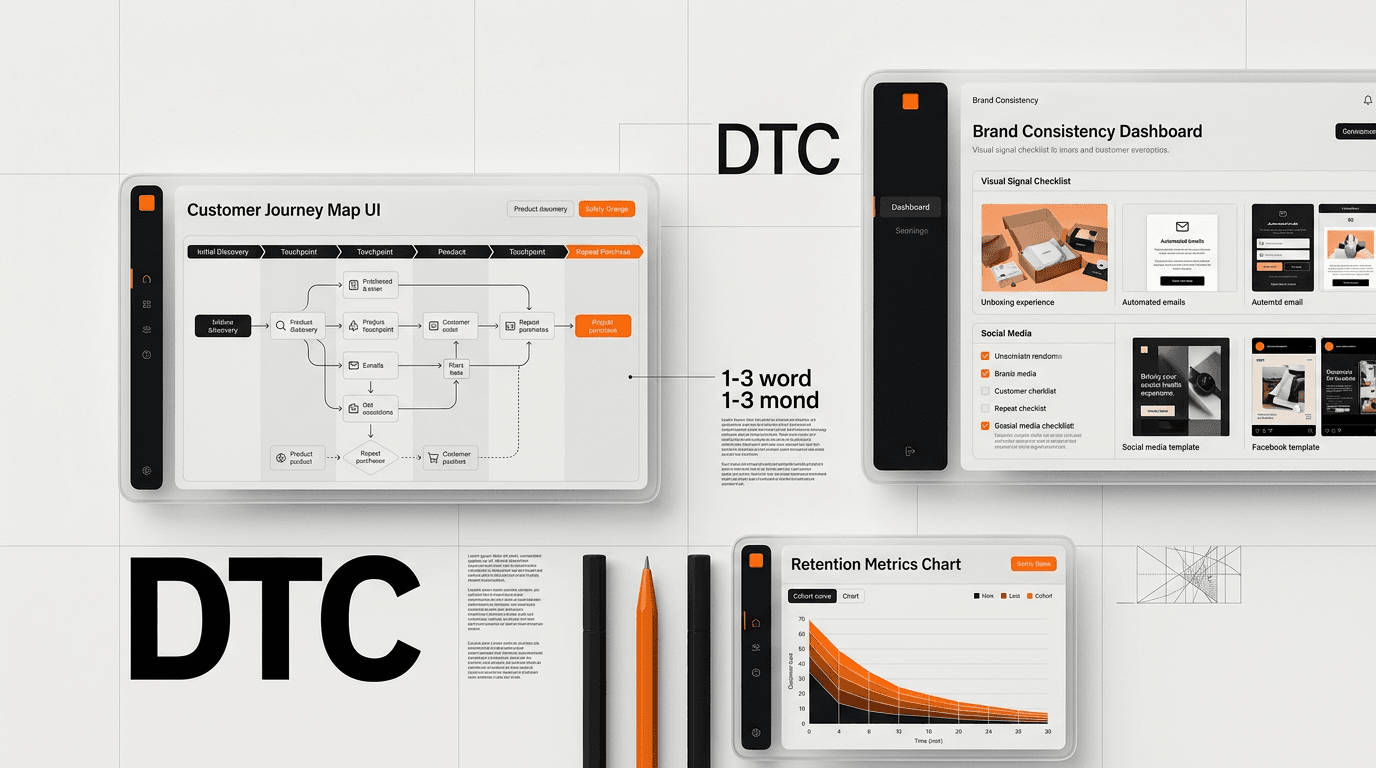
Most DTC brands prioritize customer acquisition, but retention is more cost-effective. Post-purchase brand identity and visual signals are crucial for driving repeat purchases.
The Hidden Power of Post-Purchase DTC Brand Identity
Most DTC brands spend their energy, and marketing budget, on acquisition. They focus on ads, SEO, and top-of-funnel content. This makes sense for initial growth, but it often misses a bigger picture. The reality for a DTC business is that acquisition costs continue to climb. Retaining a customer, on average, costs 5 to 25 times less than acquiring a new one. This shifts the focus from the first sale to the second, third, and twentieth sale. That means moving past the click and into the physical world, into the customer’s home.
The post-purchase experience, particularly the visual signals a brand sends, determines whether a customer becomes a repeat buyer or a one-time transaction. This isn’t just about good customer service or a quality product. It’s about a carefully orchestrated visual and tactile journey that reinforces value and builds loyalty. It’s about how your DTC brand identity extends beyond the screen and into the hands of your customer, driving long-term value (LTV).
Unboxing: Your Brand’s Physical Performance
The unboxing moment is a theatrical performance. It’s a brand’s opportunity to make a lasting impression when the product finally arrives. It needs to be intentional, not an afterthought. We’ve seen brands stumble here, shipping a premium product in a generic brown box with no thought given to the experience. This misses an enormous chance to connect.
Beyond the Box: The Visual Choreography
Think about the layers. It starts with the outer packaging. Is it branded? Does it feel sturdy? Is there a tactile finish? When the customer opens it, what do they see first? Is there tissue paper, a custom dust bag, or a beautifully printed internal box? Each layer unveils more of the brand story. We approached Oura Ring’s launch identity with this in mind. The goal was to create an unboxing experience that felt as premium and forward-thinking as the technology itself, reinforcing its position as a luxury tech item, not just another gadget.
Consider the sensory experience too. The weight of the box, the sound of the seal breaking, the scent of the materials. These non-visual cues contribute to the overall brand identity. The product itself, once revealed, should be presented in a way that feels purposeful, almost like an art piece. This sequence, this visual choreography, builds anticipation and reinforces the perceived value of the purchase.
Packaging Design: Materials and Messaging
The choice of materials speaks volumes. Recycled cardboard or compostable mailers signal environmental consciousness. High-gloss finishes or textured paper stocks communicate luxury or exclusivity. We often guide clients to think about the longevity of the packaging. Will it be discarded immediately, or does it serve a secondary purpose, like a storage box? This consideration affects material selection, print quality, and structural design.
Text on the packaging also matters. A simple, well-designed logo. A short, compelling tagline. Minimal instructions for opening. Every piece of text, no matter how small, must align with the overall DTC brand identity. It’s not just about protection; it’s about persistent branding. For instance, HP’s packaging, while mass-market, still maintains recognizable visual cues that connect to its broader brand promise of reliability and innovation.
Insert Design: The Direct Conversation
Inserts are often misused. Many brands treat them as an obligation, stuffing in generic flyers. But an insert is a direct, personal channel to a customer who has already committed to your brand. It’s a chance to deepen the relationship.
What to Include, What to Skip
The best inserts are purposeful. They either add value, reinforce brand messaging, or drive a desired action. Here are a few effective options:
- A personalized thank-you note from the founder or team. This can be a printed card, but a handwritten signature adds a human touch.
- Concise care instructions or quick-start guides that enhance product enjoyment.
- A warranty card that communicates trust and support.
- A unique discount code for a future purchase, explicitly designed to encourage a second transaction.
- A brief story about the brand’s mission or values, connecting the customer to something larger than the product itself.
- Information about how to share their experience on social media, complete with a specific hashtag.
Skip anything that feels like spam. Don’t include flyers for unrelated products or services unless they are clearly positioned as a special benefit for a loyal customer. The goal is to make the customer feel valued, not upsold immediately after purchase.
Visual Consistency Across Print and Digital
The insert is a physical representation of your digital brand. Its design, typography, color palette, and imagery must align perfectly with your website, social media, and email communications. This consistency builds trust and familiarity. We helped Klein Tools redesign its catalog, which included thousands of SKUs, ensuring that the visual identity translated seamlessly from online listings to physical print materials. This kind of consistency, even across different mediums, helped drive a 23% dealer adoption lift.
When the customer opens the box and sees an insert, it should feel like a natural extension of the brand they interacted with online. If the website uses clean, modern sans-serif fonts and muted colors, but the insert is full of flashy graphics and busy text, it creates a disconnect. This visual dissonance erodes trust and diminishes the premium feel. Every visual element, from the paper stock to the photo style, should sing the same song.
The Long Game: Visual Signals and Loyalty
DTC brand identity is not a one-time project. It’s an ongoing commitment to maintaining a consistent visual language across every touchpoint. This is how brands build enduring loyalty and increase LTV, not just by selling a product, but by selling an experience and a relationship.
Reinforcing Value Beyond the First Use
How does your brand continue to visually reinforce its value after the product has been unboxed and used? Consider products with packaging designed for reuse. A sturdy box that becomes a storage container. A beautiful jar that’s refilled. These elements keep the brand present in the customer’s life. Subscription boxes, for example, rely heavily on a consistently delightful unboxing experience month after month to prevent churn. Bodybuilding.com, a long-term client, understands the importance of visual consistency in its product lines and content, ensuring its community feels connected to a single, powerful brand message across all touchpoints.
Think about the product itself. Does its design reflect the brand’s values? Is it aesthetically pleasing? Does it fit into the customer’s lifestyle? The visual design of the product itself is the ultimate reinforcement of the brand promise. Beyond the product, every email, every customer support interaction, every notification from your app, must carry the same visual thread. An inconsistent email template or a support portal that looks different from your main website creates friction and detracts from the overall brand experience.
Data-Driven Design for Repeat Purchase
Design decisions should not be based solely on intuition. We advise clients to use data to inform and refine their DTC brand identity strategy for repeat purchases. Here’s how:
- Post-Purchase Surveys: Ask specific questions about the unboxing experience. “How did the packaging make you feel?” “Was the insert helpful?” Use a Likert scale or open-ended questions to gather qualitative feedback.
- A/B Testing Inserts: Test different calls to action on your inserts. Does a discount code perform better than a request for a review? Does a story about your mission drive more engagement? Track redemption rates or subsequent purchases.
- Tracking Repeat Purchase Rates: Correlate changes in packaging or insert design with subsequent repeat purchase rates. Did a new, more sustainable packaging design lead to a higher second-purchase rate among a specific customer segment?
- Customer Segmentation: Analyze which customer segments respond best to certain visual cues or messaging in their post-purchase experience. Tailor future experiences accordingly.
By connecting visual design choices to measurable outcomes, brands move beyond guesswork. They build a feedback loop that continually refines the post-purchase experience, turning first-time buyers into loyal advocates. This is the difference between simply shipping a product and actively building a brand relationship.
DesignX’s Approach to DTC Brand Identity
At DesignX, we approach DTC brand identity with the understanding that every visual touchpoint is an opportunity to build or break trust. We don’t just create pretty pictures. We design strategic visual systems that serve business objectives, particularly LTV and repeat purchases. Our process involves deep dives into customer journeys, competitive analysis, and an unwavering focus on consistency across every channel. We work to ensure that from the moment a customer discovers your brand to the point where they become a loyal advocate, the visual signals are clear, compelling, and consistent. We build brands that not only get noticed but also get remembered and re-purchased.
Ready to strengthen your post-purchase experience and drive repeat purchases? Contact DesignX to talk through your project.
Frequently Asked Questions
What should teams know about the hidden power of post-purchase DTC brand identity?
Most DTC brands spend their energy, and marketing budget, on acquisition. They focus on ads, SEO, and top-of-funnel content. This makes sense for initial growth, but it often misses a bigger picture. The reality for a DTC business is that acquisition costs continue to climb.
What should teams know about your brand’s physical performance?
The unboxing moment is a theatrical performance. It’s a brand’s opportunity to make a lasting impression when the product finally arrives. It needs to be intentional, not an afterthought. We’ve seen brands stumble here, shipping a premium product in a generic brown box with no thought given to the experience.
What should teams know about the direct conversation?
Inserts are often misused. Many brands treat them as an obligation, stuffing in generic flyers. But an insert is a direct, personal channel to a customer who has already committed to your brand. It’s a chance to deepen the relationship.
What should teams know about visual signals and loyalty?
DTC brand identity is not a one-time project. It’s an ongoing commitment to maintaining a consistent visual language across every touchpoint. This is how brands build enduring loyalty and increase LTV, not just by selling a product, but by selling an experience and a relationship. Reinforcing Value Beyond the First Use How does your brand continue to visually reinforce its value after the product has been unboxed and used?
What should teams know about DesignX’s approach to DTC brand identity?
At DesignX, we approach DTC brand identity with the understanding that every visual touchpoint is an opportunity to build or break trust. We don’t just create pretty pictures. We design strategic visual systems that serve business objectives, particularly LTV and repeat purchases. Our process involves deep dives into customer journeys, competitive analysis, and an unwavering focus on consistency across every channel.