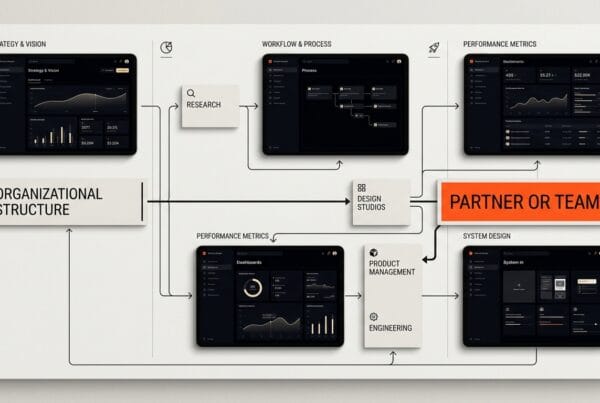

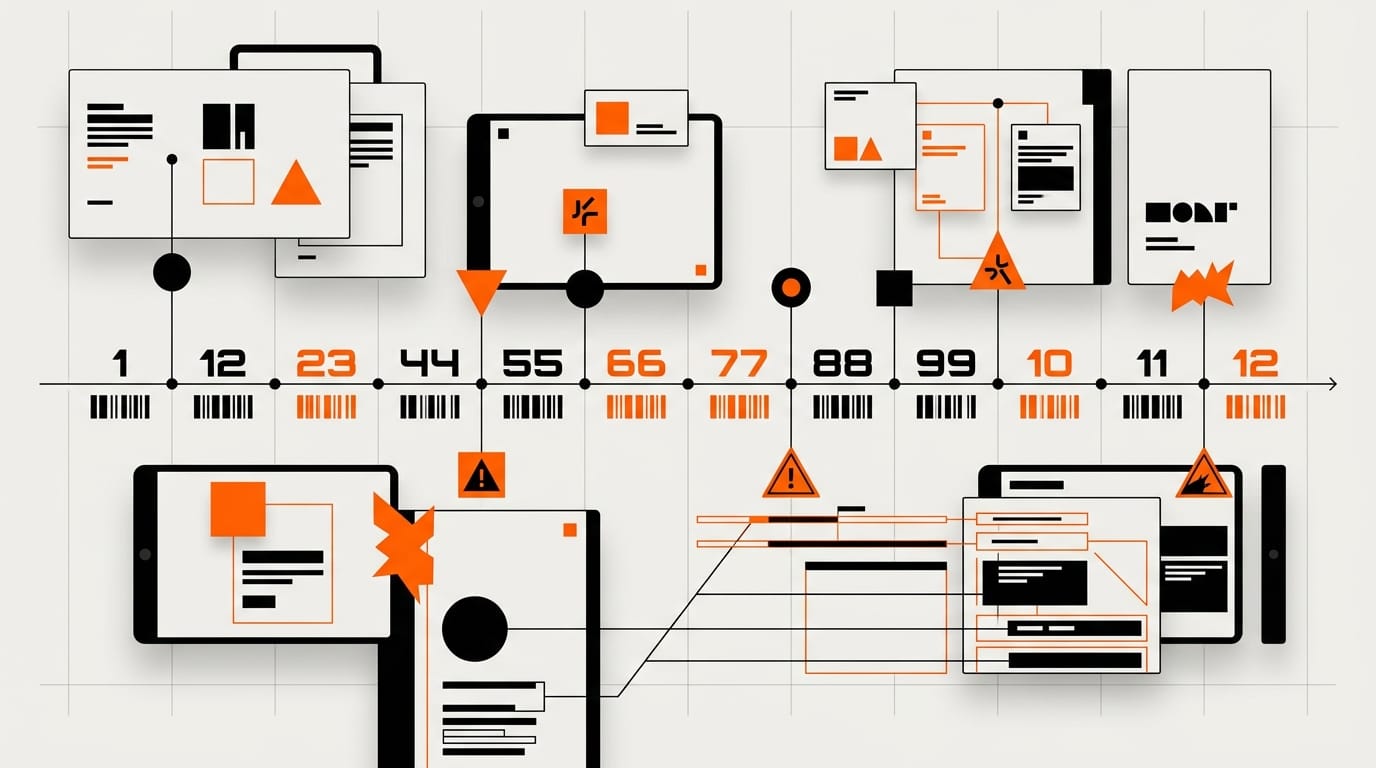
A realistic rebrand timeline and process usually takes 8 to 12 weeks for a focused startup, 3 to 6 months for a mid-market company, and 6 to 12 months for an enterprise brand with many products, regions, or approval groups. The difference is rarely design speed. The real timeline is set by decision quality, stakeholder alignment, launch risk, and how far the new brand must travel into the product experience.
- Plan the rebrand around decisions, not design deliverables.
- Lock positioning before identity work, and test identity before launch production.
- Bring product, sales, customer success, and web owners in before the final identity is approved.
- Treat launch as a risk-managed rollout, not a single announcement day.
- Use a senior design partner when the rebrand must connect brand, website, and product surfaces.
For Denver founders and marketing leaders, this matters because local competition is no longer only local. Buyers compare your brand against venture-backed SaaS teams, national service firms, and polished category leaders in the same browser tab. At DesignX, we approach a rebrand as a business system: positioning, identity, website, product UI, sales assets, and rollout planning need to hold together.
A realistic rebrand timeline and process by company size
Most rebrand guides give a tidy phase list. That helps, but it hides the part that founders feel: the schedule changes when decisions slow down, when the product surface is larger than expected, or when leadership is still debating what the company should become.
SERP research for this topic shows a common pattern. Branded Agency frames small business rebrands at 6 to 12 weeks, growing businesses at 8 to 16 weeks, mid-market rebrands at 3 to 6 months, and enterprise work at 6 to 12 months or more. Everything Design gives a similar B2B range: 4 to 8 months for a full rebrand, with minimal work closer to 6 to 8 weeks. The gap in most ranking pages is the brand-to-product rollout. They explain the phases, but they do not go far enough into product surfaces, launch QA, search risk, and sales enablement.
Use these planning ranges:
| Company situation | Likely timeline | What sets the pace |
|---|---|---|
| Focused startup or founder-led service brand | 8 to 12 weeks | One product, small asset set, fast founder decisions |
| Growth-stage SaaS or B2B company | 12 to 24 weeks | Messaging, website, product UI, sales deck, email templates |
| Mid-market company with multiple teams | 3 to 6 months | Stakeholder input, brand architecture, content migration, launch planning |
| Enterprise or multi-region brand | 6 to 12 months | Legal, localization, product lines, training, governance, vendor rollout |
Those ranges assume the team is not changing the brief every two weeks. If the company is still unsure about the audience, offer, product direction, or category story, add time before design starts. Rushing that stage usually creates more rework later.
Phase 1: Diagnose the business reason for the rebrand
A rebrand starts with a clear business problem. The reason might be a market shift, a new category, a merger, a dated identity, low trust, weak sales conversion, a product pivot, or a mismatch between what the company sells and what buyers think it sells.
Do not accept “we need to look more modern” as the brief. That is an aesthetic symptom. The better question is: what business outcome should the new brand make easier?
Use this discovery checklist:
- Current positioning and the perception gap between how the company talks and how buyers describe it
- Customer interviews, lost-deal notes, sales call patterns, and support themes
- Competitor review, category language, and visual sameness
- Asset inventory across website, product, sales, support, recruiting, events, and partner channels
- Brand equity to preserve, including names, product concepts, taglines, design cues, and customer recognition
- Launch constraints, such as funding news, product release windows, conferences, or seasonal sales cycles
Nielsen Norman Group’s guidance on stakeholder interviews is useful here because it treats stakeholder input as a way to uncover context, business goals, and support. That is the right posture. You are not collecting opinions so the loudest person can steer the brand. You are mapping the forces the brand must survive.
At DesignX, this is where we push clients to separate taste from evidence. Taste matters, especially for founders. But a founder’s taste should be anchored in customer truth, category position, and product reality.
Phase 2: Build the positioning before identity work
Positioning is the point where a rebrand becomes harder, and more valuable. Logo concepts are easier to react to than a sharper claim about who the company serves, what it owns, and why buyers should care.
The output of this phase should be a short strategy system that leadership can approve:
- Primary audience and buying committee
- Category and market context
- Point of view on the customer problem
- Core promise and proof points
- Messaging pillars
- Voice principles
- Brand architecture, if the company has product lines or sub-brands
This stage should have a decision gate. Before visual identity starts, the executive sponsor should approve the positioning in writing. If the positioning is still soft, identity work turns into therapy. Every design review becomes a debate about strategy that should already be settled.
McKinsey has written about brand strategy shifting from static promises to active systems of behavior and experience. That fits what we see in practice. A brand is no longer a deck and a logo pack. It shows up in onboarding flows, product defaults, pricing pages, email tone, empty states, sales decks, and support answers.
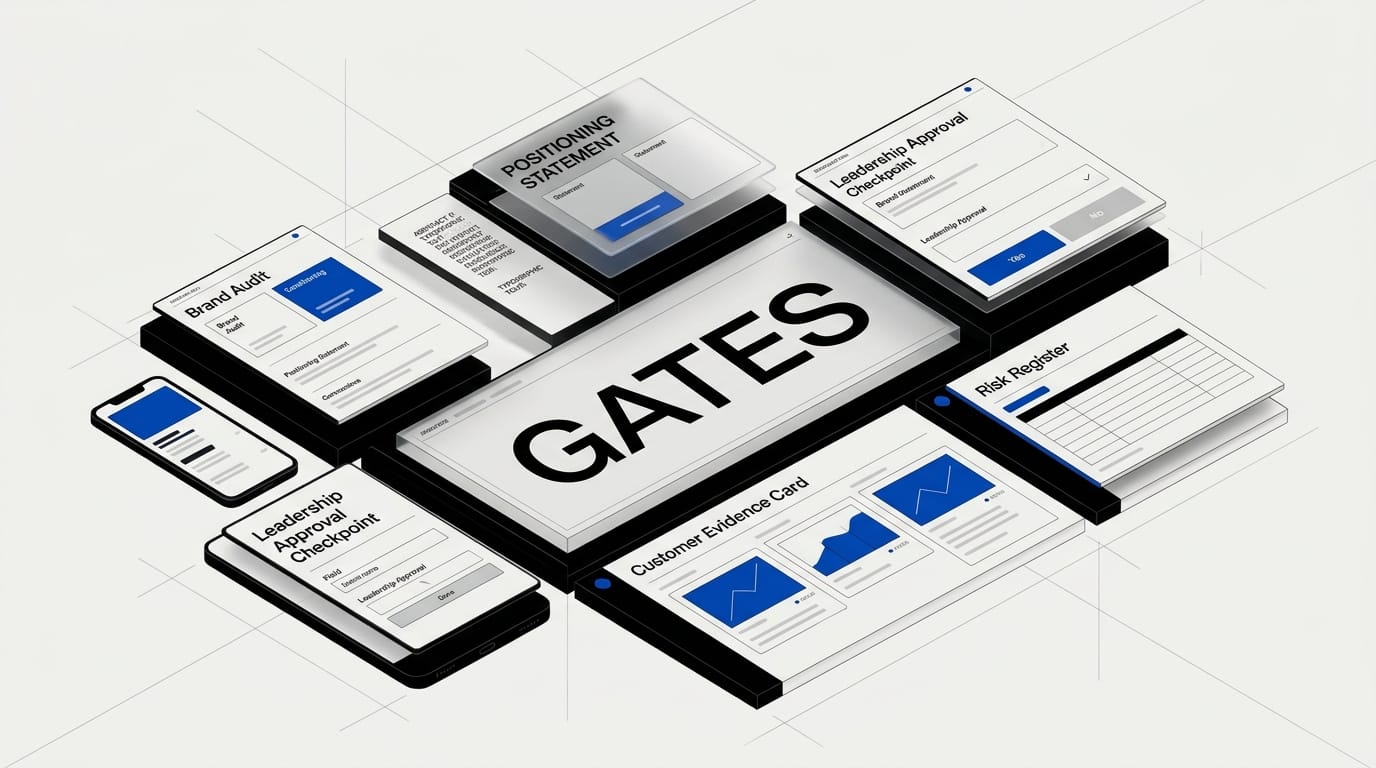
The rebrand timeline and process decision gates that prevent drift
The best rebrand schedules are built around gates. A gate is a decision that must be made before the next phase can move without waste. It protects the team from endless revisions and keeps the rebrand connected to the business goal.
For a founder-led company, we like five gates:
Gate 1: Problem and success metric
Define the reason for the rebrand and how success will be judged. Examples include higher sales conversion, stronger enterprise trust, clearer product packaging, improved recruiting, or category repositioning. One metric is not enough, but a rebrand with no metric becomes subjective fast.
Gate 2: Positioning approval
Approve the audience, category language, core promise, and proof. This is the moment to settle hard strategic choices. If the company wants to serve everyone, the identity will usually feel vague.
Gate 3: Identity direction
Choose one visual and verbal direction before production starts. Do not keep three directions alive too long. That creates hybrid work that nobody fully believes in.
Gate 4: System readiness
Check whether the brand system works across the surfaces that matter: homepage, pricing page, product UI, sales deck, email, social profile, paid ads, support docs, and recruiting pages. This is where product design experience pays off.
Gate 5: Launch readiness
Approve the launch plan only when assets, redirects, analytics, training, and customer-facing answers are ready. The launch date should not be a forcing function for broken work.
DesignX’s Klein Tools catalog redesign is a useful proof point for this mindset. That project had more than 40,000 SKUs, and the result was a 23% dealer adoption lift. The lesson applies to rebrands: design works when the system behind it respects how people choose, compare, and act.
Phase 3: Design the identity system, not a logo package
Identity work turns strategy into signals. The mistake is treating it as a logo, color palette, and typography exercise. Those are parts of the system, but they are not the system.
A modern rebrand identity package should cover:
- Logo system and usage rules
- Color, type, spacing, layout, motion, and imagery direction
- Messaging examples for homepage, sales, product, and hiring
- Icon and illustration rules
- Product UI implications, including navigation, buttons, charts, empty states, and settings screens
- Social, email, presentation, and document templates
- Accessibility checks for color contrast and readability
This is where many rebrands break. The identity looks good in a presentation, then collapses inside the product or website. If the brand cannot live in the product interface, it will feel like a costume.
DesignX is built for that crossover. Our team works across branding, UX/UI, web design, and strategy, with experience tied to brands such as Oura Ring, HP, Bodybuilding.com, Panasonic, and Klein Tools. For a founder or marketing leader, the advantage is fewer handoff gaps. The same strategic thread can move from brand to website to product.
Phase 4: Plan the brand-to-product rollout
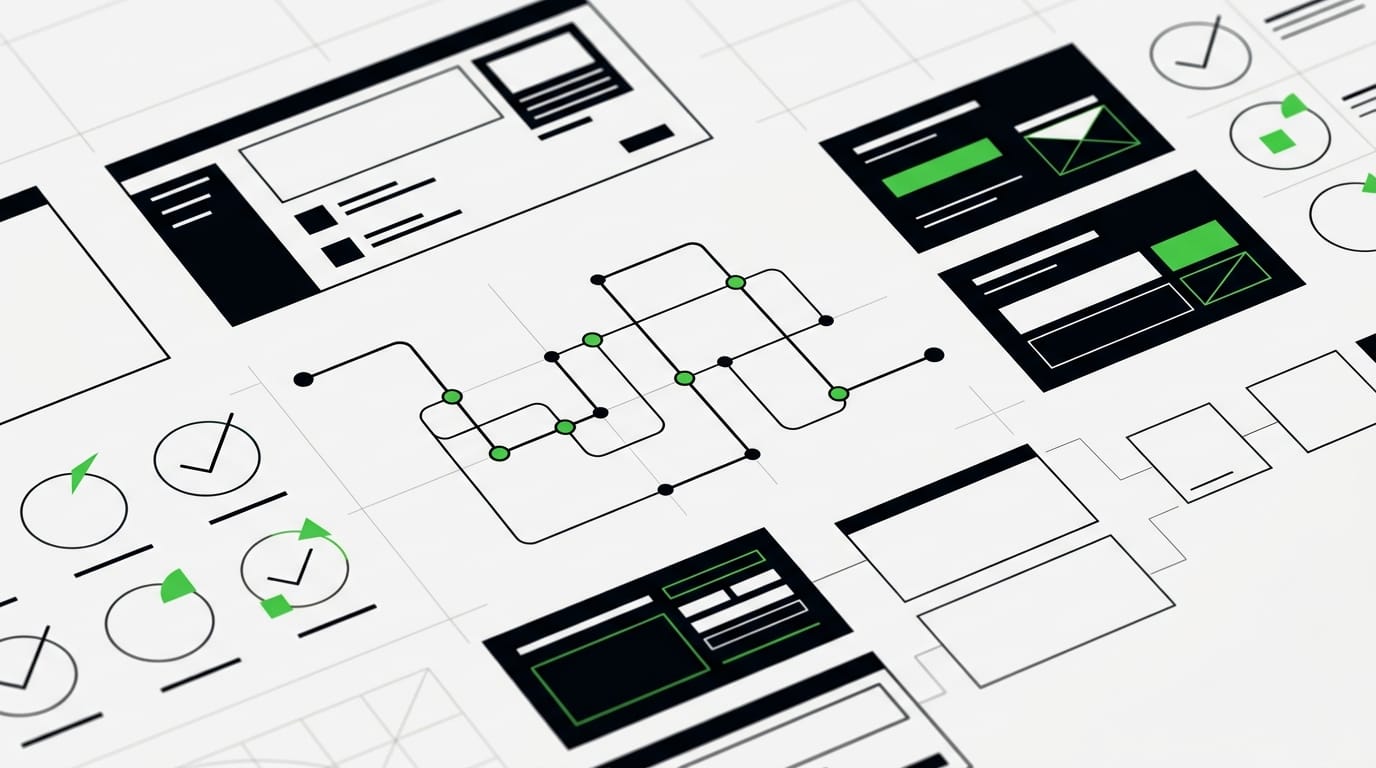
The public launch is usually the visible moment. The rollout is the work that makes the launch believable.
Start with an asset map. Put every public and internal touchpoint into a spreadsheet or project board, then assign an owner, status, and launch requirement. Do not let “update brand assets” sit as one vague task.
Common rollout categories include:
- Website pages, redirects, metadata, schema, forms, tracking, and analytics events
- Product UI, onboarding, transactional email, help docs, release notes, and app store profiles
- Sales decks, proposals, one-pagers, demo scripts, and customer case studies
- Social profiles, paid ad templates, email signatures, newsletter templates, and recruiting pages
- Customer announcement, partner notice, employee training, and support response library
If URLs change, bring SEO into the rebrand timeline early. Google’s Search Central documentation explains that permanent redirects are a canonical signal, while temporary redirects are treated differently. Google’s site move documentation also recommends planning URL changes carefully. That means redirect maps, benchmark reports, crawl checks, sitemap updates, and post-launch monitoring should be part of the launch workstream, not cleanup after traffic drops.
Search Engine Land’s migration checklist calls out risks such as 404 errors, lost rankings, missing content, and lost revenue. That is why a rebrand cannot be treated as a brand studio exercise if the website drives demand. The launch plan needs technical owners.
Phase 5: Launch in layers, then measure adoption
A strong rebrand launch has layers. Internal teams should see the new brand before the public does. Sales and support should know how to explain the change. Key customers and partners may need a heads-up. The website and product should be QA’d before the announcement post goes out.
Use a launch sequence like this:
- Internal preview and training
- Customer and partner notice, if needed
- Website, product, and asset switch
- Public announcement and campaign launch
- Sales enablement follow-up
- 30-day adoption review
- 90-day business impact review
The 30-day review should check adoption and defects: missed assets, off-brand templates, broken redirects, support questions, conversion movement, and sales feedback. The 90-day review should connect the rebrand to business outcomes. Did qualified demos increase? Did enterprise buyers engage longer? Did sales cycles change? Did the new product story make pitches easier?
This is where rebrands either become assets or expensive memories. The company needs governance after launch. Someone owns the brand system, updates the library, reviews new assets, and keeps product and marketing from drifting apart.
Common rebrand timeline mistakes
The pattern is predictable. A company waits too long, gets tired of its old brand, then tries to compress strategy, identity, website, product UI, and launch into one heroic sprint. That can work for a visual refresh. It is risky for a real rebrand.
Watch for these failure points:
- Too many approvers. Input is useful. Approval by committee is slow and usually bland.
- Identity before strategy. Design reviews become personal because the business choices are unresolved.
- No product owner. The brand launches on the website but never feels real in the product.
- Late SEO planning. Redirects, page inventory, and content migration get handled after launch pressure is high.
- No internal rollout. Customers see the new brand before the team knows how to talk about it.
- No governance. The brand looks great for 30 days, then old templates and one-off assets creep back in.
The fix is not more meetings. The fix is a clearer operating model: one sponsor, a small decision group, written gates, asset ownership, and a partner who understands both brand and product execution.
When to bring in a senior rebrand partner
You can manage a light refresh internally if the stakes are low and the asset set is small. Bring in a senior partner when the rebrand affects pipeline, product adoption, investor perception, enterprise trust, or a major market shift.
A good partner should help you answer:
- What should stay because it carries equity?
- What should change because it is costing trust or clarity?
- Which decisions need executive approval?
- How will the new brand live across website and product?
- What launch risks should be resolved before the public reveal?
- How will we judge whether the rebrand worked?
That is the work DesignX is built for. We are not a logo shop. We help founders and marketing leaders turn a brand shift into a usable system across identity, web, and product. If your rebrand has to win trust, support sales, and survive inside a real product experience, the planning needs to be senior from day one.
Frequently Asked Questions
How long should a rebrand timeline take?
A focused startup rebrand can take 8 to 12 weeks when the product is narrow and one executive owns the final call. A mid-market company with more teams, sales assets, and product surfaces should plan for 3 to 6 months. Enterprise rebrands can run 6 to 12 months because legal review, regions, product lines, vendors, and internal training add real coordination work. If a partner promises a full rebrand in a few weeks, they are probably talking about a visual refresh, not the full rebrand timeline and process.
What is the first step in the rebrand process?
The first step is a business and perception audit, not a logo exploration. Your team should document why the current brand is holding the company back, what buyers believe today, which audiences matter most, and which product or sales goals the new brand must support. Stakeholder interviews help surface hidden concerns before the project gets political. This phase gives founders a sharper brief, faster decisions, and fewer late changes.
Who should approve a rebrand?
A rebrand needs one accountable executive sponsor and a small approval group with authority across brand, product, sales, and customer experience. Everyone can give input, but not everyone should have veto power. The cleanest approval model separates advisory stakeholders from final decision makers before the first workshop. That decision map protects the schedule when identity, messaging, website, and product UI work start moving at the same time.
When should the product team join a rebrand?
Product should join during discovery, before identity work is approved. If the new brand cannot work inside the product, onboarding, dashboards, pricing pages, empty states, and lifecycle emails, the launch will feel cosmetic. Product involvement also exposes technical constraints that marketing may miss, such as component debt, icon systems, accessibility rules, and release timing. The brand should be treated as a product system from the start.
How do you reduce launch risk during a rebrand?
Reduce launch risk by staging the rollout, mapping every public asset, and assigning owners before the launch week begins. Build redirect maps for any URL changes, QA the website and product in a staging environment, prepare customer-facing answers, and train sales before the announcement. Google’s redirect guidance matters here because search engines use permanent redirects as canonical signals. A rebrand launch should feel calm because the risky work happened earlier.
Should a rebrand and website redesign happen together?
They can happen together when the website is a major source of buyer perception or pipeline, but the combined scope needs careful sequencing. Brand strategy should lock before final website design, while technical planning and content inventory can start earlier. If the company has a large site, treat the website as its own migration workstream with benchmarks, redirects, analytics checks, and post-launch monitoring. Pairing the work can save time, but only if the plan respects dependencies.
Build a rebrand timeline and process that survives launch
The best rebrand timeline and process is not the fastest one. It is the one that gets the right decisions made early, turns those decisions into a real identity system, and carries that system into the website, product, and customer experience without chaos.
If your company is planning a rebrand and the stakes are higher than a visual refresh, bring in a partner who can connect brand strategy, senior design, website execution, and product rollout.
Ready to plan a rebrand that holds together after launch? Let’s talk →
Related DesignX reading: For teams evaluating rebrand timeline and process, brand redesign cost guide and manufacturing rebrand guide gives practical next steps.