
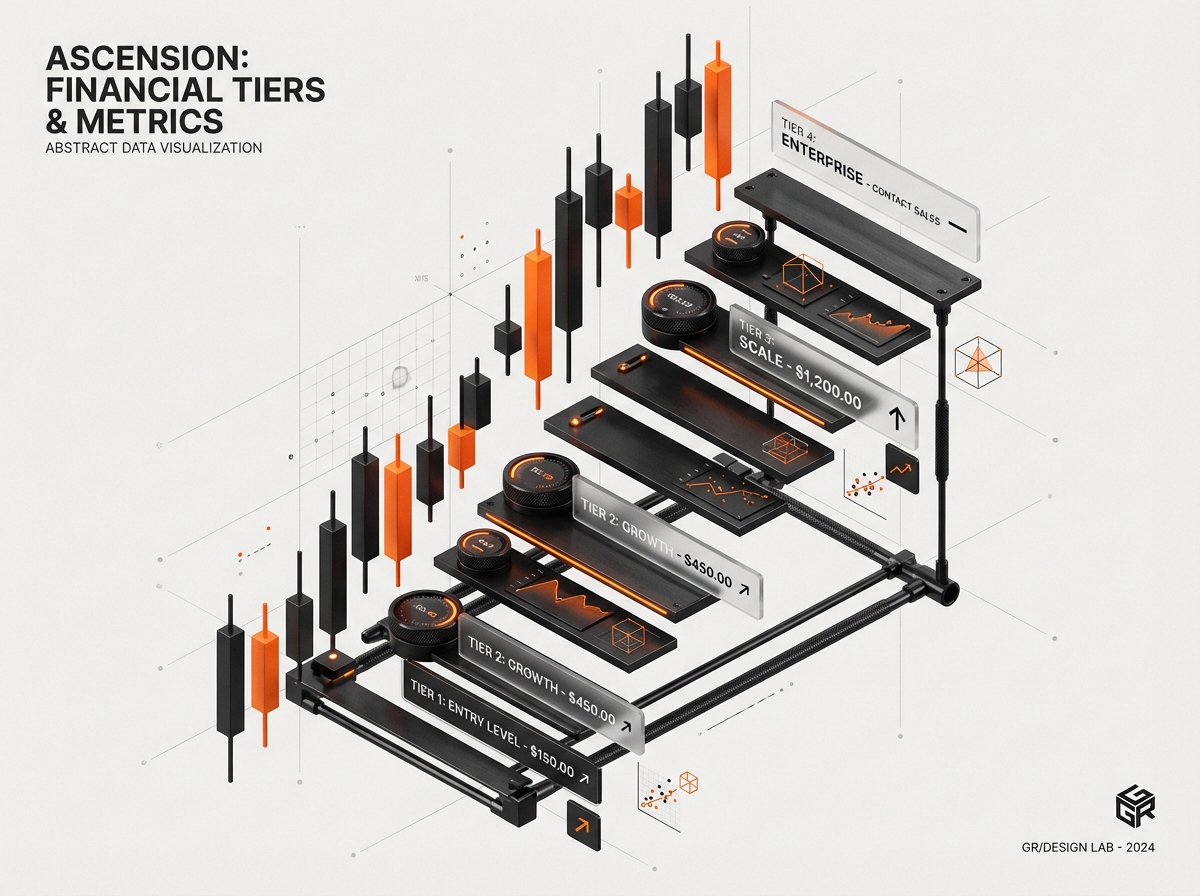
This 2026 guide explains that design agency pricing is variable, not mysterious, helping clients understand what they’ll actually pay. Understanding these cost drivers allows clients, like startup founders budgeting for brand identity, to feel confident in their investment rather than exploited.
“What does this cost?” It’s the first question every design agency hears, and the last one most agencies want to answer directly. The truth is, design agency pricing isn’t mysterious, it’s just variable. Understanding what drives those costs is the difference between feeling exploited and feeling confident in your investment.
Whether you’re a startup founder budgeting for your first brand identity or a marketing director evaluating design agency cost options, this guide cuts through the smoke. We’ll show you real numbers, explain why projects cost what they do, and help you spot the red flags that signal you’re about to overpay (or worse, get burned by lowball estimates that triple mid-project).
By the end, you’ll know exactly what to budget, which pricing model fits your needs, and how to evaluate whether an agency’s rates reflect genuine value or just impressive portfolios.
Understanding Design Agency Pricing Models
Not all agencies charge the same way. The pricing model affects not just your total cost, but how flexible the project can be, how risks are distributed, and what kind of relationship you’ll have with your design team.
Fixed-Price Projects
Fixed-price agreements lock in a scope and a total cost upfront. You know exactly what you’re paying before the work begins, which makes budgeting straightforward. This model works beautifully for well-defined projects: a logo design, a website redesign with clear requirements, or a brand identity package with specific deliverables.
The catch? Change requests cost extra. If you discover mid-project that you actually need six website pages instead of four, expect a change order. Agencies pad their estimates to account for scope creep risk, which means you might pay slightly more than the project actually costs.
Fixed pricing favors clients who know exactly what they want and agencies who are excellent at scoping. It fails when requirements are fuzzy or when discovery reveals the project needs to evolve.
Hourly Rates
Hourly billing offers maximum flexibility. You pay for exactly the time spent, which makes it ideal for ongoing support, exploratory projects, or when you genuinely don’t know how complex the work will be. UX research projects often start hourly because discovery phases are inherently uncertain.
Hourly rates for design agencies typically range from $100-$300+ per hour depending on agency tier and location. Boutique agencies in major metros charge $200-$350/hour. Mid-tier agencies run $125-$200/hour. Offshore or junior-heavy teams might quote $75-$125/hour.
The downside is budget uncertainty. Without strong project management, hours can balloon. Some clients also feel anxious watching the clock, which can discourage necessary collaboration and iteration.
Monthly Retainers
A design agency retainer is like having an in-house design team without the overhead. You pay a fixed monthly fee for a set number of hours or a defined scope of ongoing work. This model shines for companies with continuous design needs: marketing teams launching campaigns monthly, SaaS products requiring constant UI iteration, or brands maintaining multiple digital properties.
Retainer costs typically range from $5,000-$50,000+ per month depending on team size and seniority. A junior designer on retainer might run $5K-$10K/month. A full product design team with UX, UI, and research capabilities could be $25K-$75K/month.
Retainers offer predictable costs and prioritized access. Agencies often discount retainer rates by 10-20% compared to hourly because they value the revenue stability. The commitment also builds deeper product knowledge over time, which makes the work more efficient and strategic.
Value-Based Pricing
Value-based pricing ties the fee to the business impact rather than hours worked. If a conversion rate optimization project could generate an extra $500K in annual revenue, an agency might charge $50K-$100K regardless of whether the work takes 100 hours or 300 hours.
This model requires sophisticated clients and confident agencies. It only works when business outcomes are measurable and both parties agree on the value calculation upfront. You’ll rarely see it for aesthetic projects (logo design), but it’s increasingly common for strategic work like UX design agency pricing for e-commerce or SaaS products.
The advantage? Agencies are incentivized to deliver results, not hours. The challenge? Disagreements about attribution, did the design change cause the revenue lift, or was it the new marketing campaign that launched simultaneously?
Cost Breakdown by Project Type
Let’s talk real numbers. These ranges reflect what you’ll actually pay working with professional agencies in 2026. Low-end figures are for straightforward projects with experienced agencies. High-end is for complex work with premium firms or extensive requirements.
Logo Design: $2,000-$15,000+
A standalone logo design from a reputable agency starts around $2,000-$5,000 for small businesses. This gets you discovery, 2-3 concept directions, a few rounds of revisions, and final files.
Mid-tier projects ($5,000-$10,000) include more exploration, complete brand color and typography systems, and detailed usage guidelines. Think startups that need to look credible to investors or established businesses rebranding.
Premium logo projects ($10,000-$15,000+) involve extensive market research, stakeholder workshops, 4-6 distinct concepts, and strategic positioning work. Major rebrands for funded companies or established businesses fall here.
Anything under $1,500 is either a freelancer (which can be great) or a template-based service. Anything over $20,000 for a logo alone typically includes brand strategy consulting that extends beyond the mark itself.
Website Design: $10,000-$100,000+
Web design agency rates vary wildly based on complexity, page count, and custom functionality.
Small business websites (5-10 pages, template-based CMS, minimal custom features): $10,000-$25,000. This includes responsive design, basic SEO setup, and a content management system like WordPress or Webflow.
Mid-size websites (15-30 pages, custom design system, some interactive features, integrations): $25,000-$75,000. Think e-commerce sites, membership platforms, or marketing sites for B2B companies. Includes UX strategy, user flows, and custom CMS development.
Enterprise or complex web applications (custom functionality, extensive user flows, design systems, multiple user types): $75,000-$250,000+. SaaS products, marketplaces, and enterprise portals live here. This budget includes user research, prototyping, complete testing, and often ongoing support.
The number that shocks people: development often costs 1.5-2x the design. A $30K design might require $45K-$60K in development. Plan accordingly.
App Design: $25,000-$150,000+
Mobile app design is complex because you’re designing behavior systems, not just screens.
Simple apps (single user type, straightforward flows, 10-20 key screens): $25,000-$50,000. This covers wireframing, UI design for iOS and Android, basic prototyping, and design handoff to developers.
Mid-complexity apps (multiple user roles, social features, backend integrations, 30-60 screens): $50,000-$100,000. Includes user research, flow mapping, interaction design, high-fidelity prototypes, and often some UX design agency work on onboarding and retention.
Complex applications (marketplace dynamics, real-time features, extensive customization, 75+ screens): $100,000-$250,000+. Think fintech, health tech, or social platforms. Budget includes complete research, behavioral design, accessibility compliance, and multiple rounds of user testing.
These are design-only costs. Full app development (design + engineering) starts around $75K for simple apps and easily exceeds $500K for complex platforms.
Brand Identity: $5,000-$50,000+
Branding agency pricing depends on deliverable scope and strategic depth.
Basic brand identity (logo, color palette, typography, basic guidelines): $5,000-$15,000. Suitable for small businesses, side projects, or companies with limited brand touchpoints.
complete brand systems (naming, messaging framework, visual identity, photography direction, illustration style, detailed guidelines): $15,000-$35,000. This is the sweet spot for startups raising capital, established businesses rebranding, or companies launching new product lines.
Strategic brand programs (market research, positioning strategy, verbal identity, complete visual system, brand architecture, launch materials): $35,000-$75,000+. Includes workshops, stakeholder interviews, competitive analysis, and often extends into marketing collateral design and brand activation planning.
At $75K+, you’re typically looking at agencies that include business strategy consulting, extensive research, and multi-phase rollout support.
Comparison Table: Project Types
What Actually Affects Design Agency Pricing
Three factors drive how much a design agency costs: the work itself, when you need it, and who’s doing it.
Project Complexity and Scope
Complexity multiplies cost faster than anything else. A 5-page website with template sections costs $12K. A 5-page website with custom animations, personalized content, and complex backend integrations costs $40K+. Same page count, wildly different scope.
Complexity shows up in several ways. User research requirements add $5K-$25K depending on methodology, surveys are cheap, moderated user testing is expensive. Custom illustrations or photography can add $3K-$15K per project. Accessibility compliance (WCAG AA/AAA standards) adds 15-30% to design timelines.
Revision rounds also impact cost. Most fixed-price projects include 2-3 rounds. If you need 5-6 rounds because you’re building consensus across a large team, expect to pay more, not because agencies are greedy, but because iteration is expensive design time.
Integration complexity matters too. Designing for a simple CMS is straightforward. Designing for a custom backend with complex data relationships, API constraints, and legacy system integrations requires significantly more coordination and technical design expertise.
Timeline and Urgency
Need it fast? Expect to pay 20-50% more for rush timelines. Agencies staff projects assuming reasonable timelines. Compressed schedules require pulling people off other work, working overtime, or turning away other clients, all of which carry opportunity costs.
A normal website timeline is 10-12 weeks. If you need it in 6 weeks, agencies charge rush fees. It’s not punishment; it’s compensation for disruption and the reduced ability to do their best thinking (great design requires reflection time).
Conversely, extended timelines sometimes reduce costs. If you can be flexible and an agency can fill gaps in their schedule with your work, they might offer a discount. This works best with retainer arrangements where you’re not blocking their calendar with hard deadlines.
Agency Tier and Expertise
Agency tier dramatically impacts pricing. High-end agencies with prestigious client lists and industry awards charge 2-3x what mid-tier firms charge for similar projects. Are they 3x better? Sometimes yes, often no, but they offer different things.
Boutique/premium agencies ($200-$350/hour, $50K+ project minimums) deliver exceptionally polished work, strategic thinking, and prestige by association. Their portfolios feature household names. They’re worth it when brand perception is critical or when you need genuine strategic innovation.
Mid-tier agencies ($125-$200/hour, $15K-$100K typical projects) offer solid execution, reliable processes, and good value. They’re experienced enough to avoid rookie mistakes but not so exclusive that they’re inflexible or overpriced. This tier is the sweet spot for most growing companies.
Junior agencies and freelancers ($75-$150/hour, $5K-$30K typical projects) can deliver excellent work if you’re a hands-on client who can provide clear direction. The risk is inconsistency, their best work is great, but process and reliability vary.
Geography matters less than it used to (remote work flattened location premiums), but agencies in SF, NYC, and London still command premiums because their operating costs and talent markets are more expensive.
How to Budget for Design Work
Smart budgeting starts before you talk to agencies. Here’s how to approach it without getting burned.
Start with Business Outcomes
Don’t budget based on what you want to spend. Budget based on the value the design should create. If a website redesign could increase conversions by 2% and you do $5M in annual revenue, that’s $100K in value. Spending $40K on design is a no-brainer.
Conversely, if you’re a bootstrapped startup with $10K in revenue, a $50K brand identity is financially irresponsible regardless of how nice it looks. Match investment to potential return.
This doesn’t mean cheap is always smart. Underinvesting in design, especially for consumer brands or digital products where design is the product, causes expensive problems later. Redesigning a poorly designed app costs 2-3x more than doing it right initially because you’re fighting legacy decisions.
Account for the Full Lifecycle
Design budgets should include more than the initial project. Plan for:
- Maintenance and updates: 10-20% of initial cost annually for websites and digital products
- Iteration based on data: Budget $5K-$15K after launch to refine based on user feedback
- Design system documentation: Adds 15-20% to project cost but saves money long-term
- Marketing assets: Brand launches need supporting materials, budget separately for this
A $30K website becomes $35K when you include post-launch optimization, documentation, and initial marketing assets. Plan for the real total, not just the proposal line item.
Get Multiple Quotes (But Not Too Many)
Reach out to 3-5 agencies in different tiers. More than that wastes everyone’s time; fewer limits your perspective. Look for alignment on three things: estimated budget range, timeline, and strategic approach.
Pricing variance is normal. If three agencies quote $25K-$35K and one quotes $8K, the outlier is either missing scope or cutting corners. If quotes are $20K, $35K, and $65K, you’re talking to agencies in different tiers, they’re not quoting the same quality of work.
Use the discovery call to assess value, not just price. Ask: “What does your process include that justifies this investment?” Great agencies will walk you through deliverables, timelines, and how their approach mitigates risk. Mediocre agencies will just send you a price sheet.
Plan for Contingency
Add 15-25% contingency to your budget for scope evolution. Discovery often reveals needs you didn’t anticipate. User research might show your assumed user flow is backwards. Brand exploration might reveal your planned positioning is crowded.
Good agencies will catch these issues and recommend adjustments. Having budget flexibility lets you make smart pivots instead of forcing square-peg solutions because you’re out of money.
Contingency isn’t waste, it’s insurance against the unknown unknowns that derail fixed-scope projects.
Getting Maximum Value from Your Design Investment
Price is what you pay. Value is what you get. Here’s how to tilt that equation in your favor.
Choose the Right Pricing Model for Your Needs
Match the pricing structure to your situation. Use fixed-price when scope is crystal clear and you value budget certainty. Use hourly for exploratory work or when requirements are genuinely uncertain. Use retainers when you have ongoing needs and want consistent support. Use value-based when outcomes are measurable and you’re confident in the agency’s strategic abilities.
Many projects benefit from hybrid approaches: hourly for discovery, then fixed-price for execution. Or a fixed-price initial project followed by a retainer for ongoing optimization. Don’t let agencies force you into their preferred model, structure it to match your needs.
Invest in Discovery
The best money you’ll spend is on proper discovery and research. A 2-week discovery phase ($5K-$15K) that clarifies requirements, validates assumptions, and identifies risks will save you $20K-$50K in mid-project changes and post-launch fixes.
Agencies that skip discovery or bundle it for free are gambling. Sometimes they win and assumptions hold. Often they don’t, and you end up paying for their miscalculation through change orders and blown timelines.
User research isn’t overhead, it’s the foundation that makes everything else efficient. Push for it even when budgets are tight.
Collaborate Actively
Treat the agency as a partner, not a vendor. The client-agency relationship determines outcomes as much as the agency’s talent. Give prompt feedback. Make decision-makers available. Share context about your business, users, and goals.
Agencies can’t read minds. When you withhold information (“let’s see what they come up with”), you waste cycles on work that misses the mark. When you disappear for two weeks during review cycles, you delay projects and inflate costs.
The best results come from clients who are engaged but not controlling, you provide context and constraints, they provide expertise and solutions.
Measure and Iterate
Design isn’t a one-and-done investment. Budget for post-launch measurement and iteration. Set KPIs before the project starts: conversion rate, task completion time, user satisfaction scores, whatever matters for your business.
After launch, collect data for 4-8 weeks, then make targeted refinements. A/B test key flows. Adjust based on user behavior. This iterative approach, initial launch plus 1-2 optimization cycles, delivers far better ROI than trying to perfect everything pre-launch.
Agencies that include post-launch optimization in their proposals (or recommend it separately) understand that great design is a process, not a deliverable.
Pricing Red Flags to Watch For
Some pricing signals scream trouble. Here’s what to avoid.
Unusually Low Bids
If an agency quotes 50%+ below market rate, they’re either inexperienced, desperate, or planning to upsell aggressively through change orders. Rock-bottom pricing rarely delivers value, it delivers corners cut on research, accessibility, testing, and refinement.
There’s a difference between “good value” and “suspiciously cheap.” A $15K website from a solid mid-tier agency is good value. A $3K website from an agency claiming enterprise capabilities is a red flag.
Vague Scope Definitions
Proposals that say “logo design” without specifying deliverables (how many concepts? how many revisions? what file formats?) are designed for scope creep. You’ll end up paying for things you assumed were included.
Demand specificity: number of design concepts, revision rounds, deliverable formats, timeline milestones, what’s included vs. what costs extra. If an agency resists clarity, they’re planning to bill for ambiguity later.
No Discovery Phase
Agencies that quote final prices without discovery are guessing. Sometimes they guess low (bad for you when they demand change orders). Sometimes they guess high (bad for you because you’re overpaying for buffer they don’t need).
Ethical agencies either include discovery as a separately priced phase or invest time in a thorough scoping call before quoting. They’re buying down risk with information, which protects both parties.
Unlimited Revisions
“Unlimited revisions” sounds client-friendly but creates perverse incentives. Without revision limits, there’s no forcing function for decision-making. Projects drag on, quality suffers, and agencies compensate by either cutting corners or padding initial estimates to account for endless iteration.
Healthy projects have 2-3 defined revision rounds with clear criteria for what constitutes a revision vs. a scope change. This creates productive constraints that force clarity and momentum.
Pay 100% Upfront
Standard agency payment terms are roughly: 30-50% deposit, 30-40% at key milestone, 20-30% on completion. Agencies demanding 100% upfront are either cash-strapped or planning to deprioritize your work after they have your money.
Conversely, be wary of agencies offering to start with no deposit. It signals they’re either desperate for work or don’t value their time, neither bodes well for project quality.
No Contract or Weak Terms
Professional agencies use detailed contracts specifying scope, deliverables, timelines, payment terms, revision policies, IP ownership, and cancellation terms. If an agency wants to work on a handshake or a vague 1-page agreement, you have no recourse when things go sideways.
Read the contract. Understand IP ownership terms (do you own the final work? what about drafts and unused concepts?). Clarify what happens if you cancel mid-project. Professional terms protect both parties.
Frequently Asked Questions
How much should a small business budget for design?
Small businesses should budget $10,000-$30,000 for initial design needs (logo, brand basics, and a simple website), then $1,000-$3,000 annually for updates and marketing materials. If you’re bootstrapped, start with $5K-$10K for essentials and expand as revenue grows. The key is prioritizing: a great logo and simple website beat a mediocre everything.
Why do design agencies charge so much?
Design agency cost reflects expertise, overhead, and risk. You’re paying for senior designers ($80K-$150K salaries), project managers, tools and software licenses, office overhead, and the business development time spent on clients who don’t convert. Agencies also carry risk, fixed bids can go over budget, clients can cancel, payments can be late. Pricing accounts for these realities.
What’s the difference between a $5K and a $50K brand identity?
Scope and strategy. A $5K brand gets you a logo, colors, and fonts, visual identity basics. A $50K brand includes market research, competitive analysis, positioning strategy, messaging frameworks, complete visual systems, detailed guidelines, and often supporting materials. The $50K version is a strategic tool; the $5K version is aesthetic packaging. Both can be right depending on your needs.
Should I hire a freelancer or an agency?
Freelancers ($50-$200/hour) are great for small projects, tight budgets, or when you can manage the project yourself. Agencies offer process, accountability, diverse expertise, and scalability. If your project is under $10K and straightforward, freelancers make sense. If it’s complex, strategic, or mission-critical, agencies reduce risk through structure and redundancy (if a freelancer gets sick, your project stops; agencies have backup).
How do I know if a design agency is worth their rate?
Evaluate portfolio quality, process rigor, and client results. Look for case studies showing business impact, not just pretty pictures. Ask about their process, great agencies can articulate how they approach problems, make decisions, and mitigate risk. Check references and look for patterns: do projects finish on time and budget? Do clients come back for more work? Pricing is justified when it’s backed by proven results and reliable delivery.
Can I negotiate design agency pricing?
Sometimes, but value engineering beats haggling. Instead of “can you do it for 20% less?”, ask “what could we adjust in scope to fit $X budget?” Good agencies will suggest strategic cuts, fewer page designs, simpler features, phased delivery, that preserve value while reducing cost. Blunt price negotiation just compresses margins and incentivizes corner-cutting.
What should be included in a design proposal?
A solid proposal includes: project objectives, detailed scope and deliverables, timeline with milestones, pricing breakdown (not just a total), revision policy, team composition, process overview, payment terms, and example work. If a proposal is just a price and a vague scope, ask for details. Specificity prevents misalignment and disputes later.
Conclusion
Design agency pricing in 2026 is straightforward once you understand what drives it: the scope of work, the timeline, and the expertise level. Whether you’re paying $5,000 for a logo or $100,000 for a complete digital product, the key is matching investment to business impact and choosing partners who are transparent about value.
The agencies worth working with don’t hide behind vague estimates or “it depends” evasion. They explain their pricing, justify it with process and results, and help you make smart trade-offs when budgets are tight.
Ready to invest in design that actually drives results? Let’s talk about your project. We’ll walk you through exactly what your goals require, what it will cost, and why, no mysteries, no surprises.