
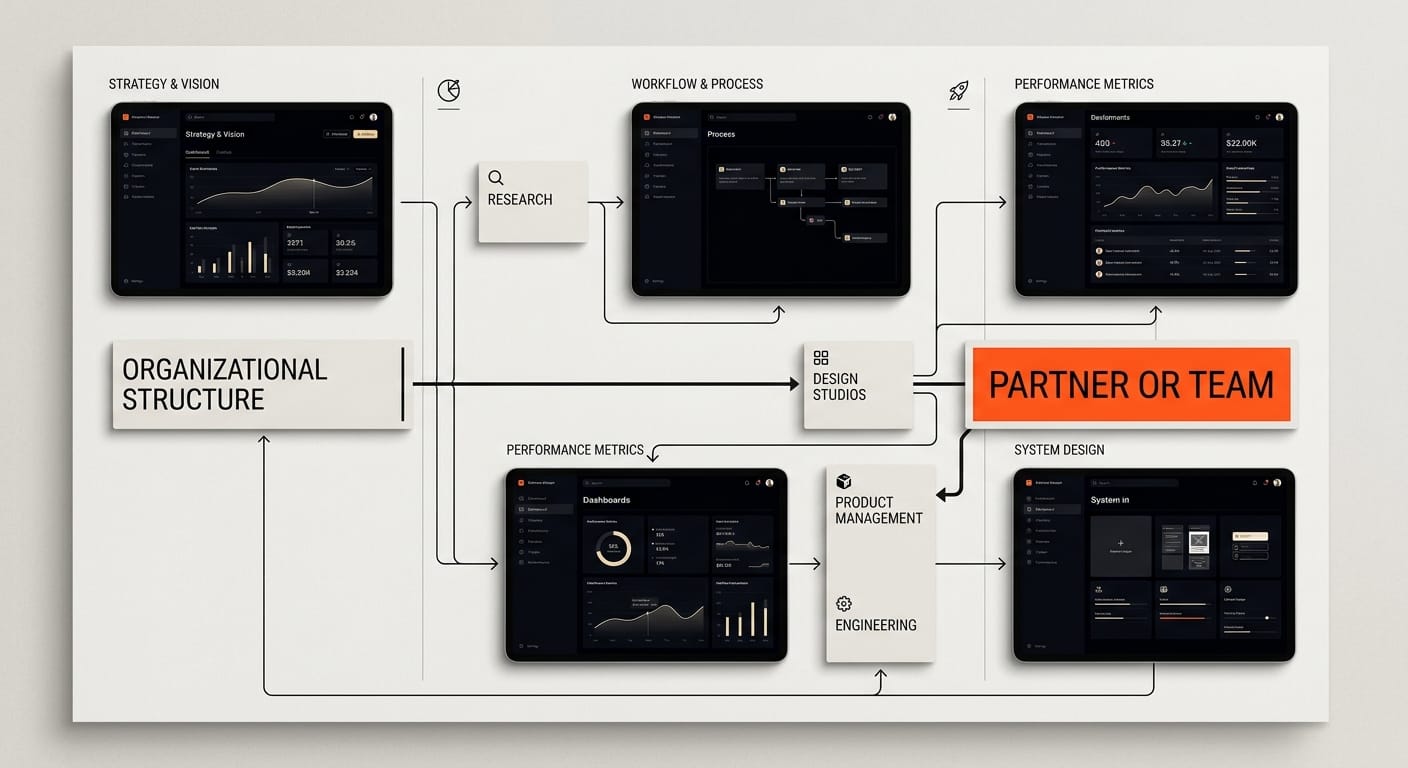
If you are weighing an enterprise design partner vs in-house team decision, you are probably past the stage where a single freelance designer can cover the gaps. The question now is not whether design matters. It is which operating model gives your company the best chance of shipping the right work without wasting time, budget, or leadership attention.
DesignX has a strong point of view here. Most growth-stage teams do not fail because they spend too much on design. They fail because they buy the wrong structure. They hire in-house before the workload is stable. Or they keep design outside the business when the product needs daily ownership. Both mistakes are expensive. They just hurt in different ways.
This guide breaks down where an enterprise design partner fits, where an in-house team fits, and how to decide before the org chart gets heavier than the problem.
Enterprise design partner vs in-house team: the fast answer
If the work is strategic, cross-functional, and close to revenue, a partner usually wins early. If the work is constant, deeply embedded, and tied to a mature product roadmap, in-house usually wins later.
| Question | Enterprise design partner | In-house team |
|---|---|---|
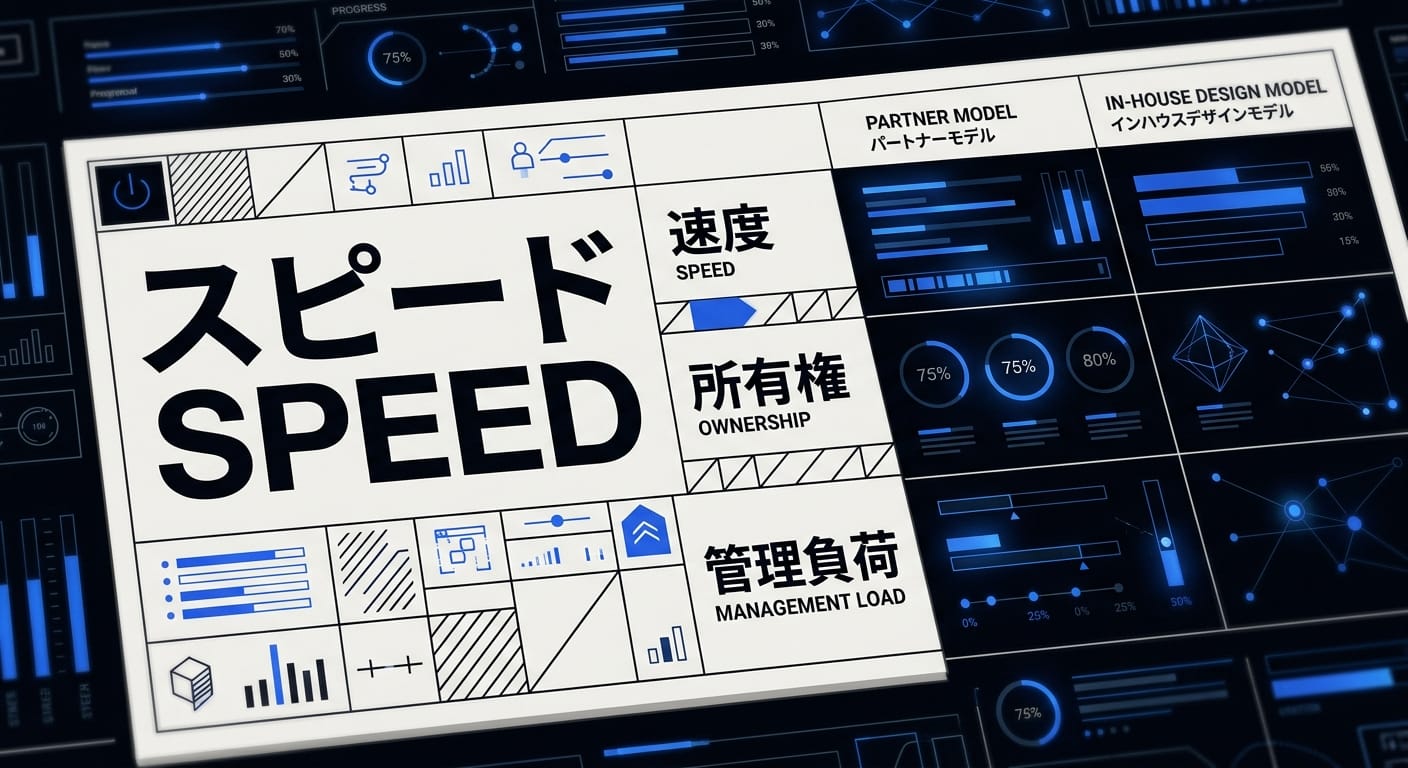
| Best when | You need senior range across product, web, brand, and conversion fast | You have steady design demand and strong internal design leadership |
| Speed to impact | Fast, if the partner already knows how to diagnose and execute | Slower at first because hiring, onboarding, and process setup take time |
| Management load | Lower, if scope and ownership are tight | Higher, because recruiting, coaching, and prioritization stay inside |
| Depth of context | Can ramp quickly, but still external | Best for long-horizon context and day-to-day product ownership |
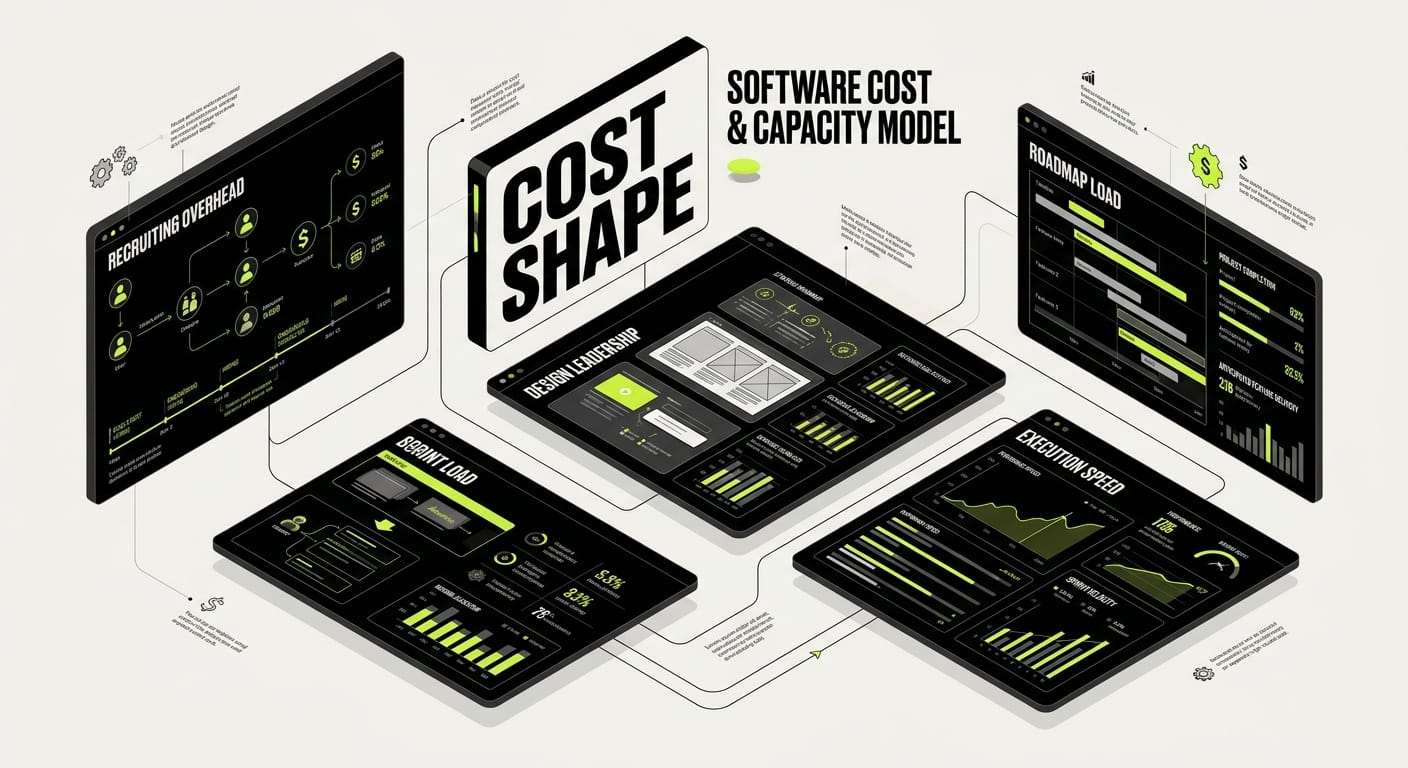
| Cost shape | Higher monthly rate, lower long-term org overhead | Lower surface cost per person, higher total org load once fully built |
The key is matching the model to the phase. A partner is not just rented labor. A strong one can bring pattern recognition, senior judgment, and sharper execution across several design disciplines at once. An in-house team is not automatically cheaper either. Payroll is only part of the cost. Recruiting drag, management time, tooling, missed hiring bets, and slower early velocity count too.
When an in-house team is the smarter call
An in-house team starts to win when design has become a permanent operating function, not a burst of problem-solving.
That usually looks like this:
- You have a stable roadmap with fresh design work every sprint.
- There is already strong product leadership and a clear design manager or head of design.
- You need daily context on internal systems, edge cases, and stakeholder politics.
- The business can support hiring slowly enough to get the right people, not just the first available people.
If you are shipping product work every week for years, building in-house depth makes sense. Internal designers absorb context in a way outside partners never fully can. They sit in the tradeoffs. They see how engineering constraints, sales feedback, and customer support shape the product. That proximity matters once the machine is already running.
But there is a trap here. Founders often assume that hiring one strong designer solves the whole design function. It does not. One person might cover product design, but who owns UX research, brand systems, landing page conversion work, web implementation support, and design QA? The gap is where many internal teams stall.
When an enterprise design partner is the smarter call
An enterprise design partner usually wins when the work is broad, high-stakes, and too important to let hiring lag slow the business.
That often means:
- You need better product UX and a sharper website story at the same time.
- You are entering enterprise sales, a funding process, or a major repositioning push.
- You have design debt, but not enough predictable volume to justify multiple full-time hires yet.
- You need senior-level pattern recognition across product, web, and brand from week one.
This is where a partner earns the fee. You are not just buying output. You are buying decision quality and range.
At DesignX, that range is often the reason clients start with a partner before building internally. A team may need pricing-page conversion work, product onboarding cleanup, enterprise trust signals on the website, and tighter visual consistency across the brand. Hiring one person for all of that is unrealistic. Hiring four people before the shape of the team is clear is riskier than most operators admit.
Klein Tools is a useful example of what partner value looks like when the stakes are real. The challenge was not a simple screen refresh. It was a broader design problem tied to adoption, product clarity, and a large dealer ecosystem. The redesign helped drive a 23% lift in dealer adoption. That kind of outcome is why partner decisions should be judged against business impact, not only headcount cost.
What companies miss in the cost comparison
Most enterprise design partner vs in-house team conversations get stuck on the visible monthly number. That is the shallow comparison.
Here is the deeper one:
- Hiring time is a cost. Every month a key product or conversion problem stays unresolved has a revenue cost attached to it.
- Leadership bandwidth is a cost. Recruiting, onboarding, setting direction, and correcting weak design judgment all land somewhere. Usually on founders or product leaders.
- Bad design hires are a cost. Recovering from the wrong hire is slower than people think, especially when that person shaped systems other teams now depend on.
- Fragmented ownership is a cost. If one person owns product, another owns web, another owns brand, and nobody owns the seams, the user feels the disconnect.
This is why a partner often looks expensive in a spreadsheet and sensible in real life. The business is not paying only for hours. It is paying to reduce time-to-clarity, time-to-decision, and time-to-launch.
On the flip side, if design is already a daily function and the company has enough maturity to support it, a long-term in-house team can beat a partner on continuity and accumulated context. The answer changes with scale.
The hybrid answer is often the right one
For many growth teams, the best answer is not partner or in-house forever. It is partner first, then selective in-house buildout.
That model works well when the company needs senior execution now, but wants internal ownership later. A partner can help fix positioning, sharpen the product experience, stand up a cleaner design system, and create better operating habits. Then the business hires around a clearer design function instead of guessing what roles it needs.
We see this often with SaaS teams preparing for enterprise growth. They need a stronger product story, tighter onboarding, better website conversion paths, and cleaner sales collateral. A partner can move that across the line faster. Once the volume becomes steady and the org can support design leadership, bringing core ownership inside starts to make more sense.
How to choose without wasting six months
If you need a practical rule, use these five questions:
- Is the design workload stable for the next 12 months? If not, a partner is usually safer.
- Do we already have strong internal design leadership? If not, adding headcount alone may not fix the problem.
- Is the work narrow or cross-functional? The broader it is, the more partner range matters.
- How expensive is delay? If a slow hire means slow launches, that should shape the decision.
- Do we need ownership or intervention? In-house is better for permanent ownership. A partner is better for focused intervention with senior depth.
If you are still deciding, it helps to compare this question against adjacent decisions too. Our guides on design agency pricing, UI/UX design agency pricing, design agency vs freelancer vs subscription, B2B UX design, website redesign ROI, and why your SaaS website is not converting usually make the tradeoffs more obvious.
Our point of view
The best enterprise design partner vs in-house team decision is the one that matches the business phase, not the one that sounds more mature on paper.
If design needs to own a permanent lane inside the company, build in-house. If the business needs senior help across product, brand, and web before the org can support a full team, start with a partner. If the stakes are high and the work touches growth, trust, and product clarity at once, speed and judgment matter more than org-chart symbolism.
Ready to decide which model fits your team, then move fast without guessing? Let’s talk.
Frequently Asked Questions
Is an enterprise design partner cheaper than hiring in-house?
Not always on the monthly line item. The difference is that a partner can reduce recruiting time, management load, and early execution risk when the design function is still taking shape. In-house usually becomes more efficient once the workload is steady and the company can support leadership, process, and long-term ownership.
When should a company build an in-house design team?
A company should usually build in-house when design work is constant, the roadmap is stable, and there is enough internal leadership to coach and prioritize the team well. That setup gives the business better continuity and deeper context over time. Without that support, extra headcount can create more noise than progress.
What does an enterprise design partner actually do?
A strong partner does more than produce screens. The right team can shape product UX, website conversion paths, brand systems, launch materials, and implementation-ready design decisions across the parts of the business users actually feel. That is why partners are often useful during transitions, launches, or enterprise growth pushes.
Can a company use both a design partner and an in-house team?
Yes. That is often the best path for growth-stage companies. A partner can help solve the highest-stakes problems first, then the company can hire in-house around a clearer design function and a better operating rhythm.
How do we know which model is right for us now?
Look at workload stability, leadership depth, urgency, and how broad the design problem is. If the work is steady and ownership needs to live inside the company, in-house is usually the right move. If the business needs senior help across several fronts fast, a partner is often the cleaner decision.