
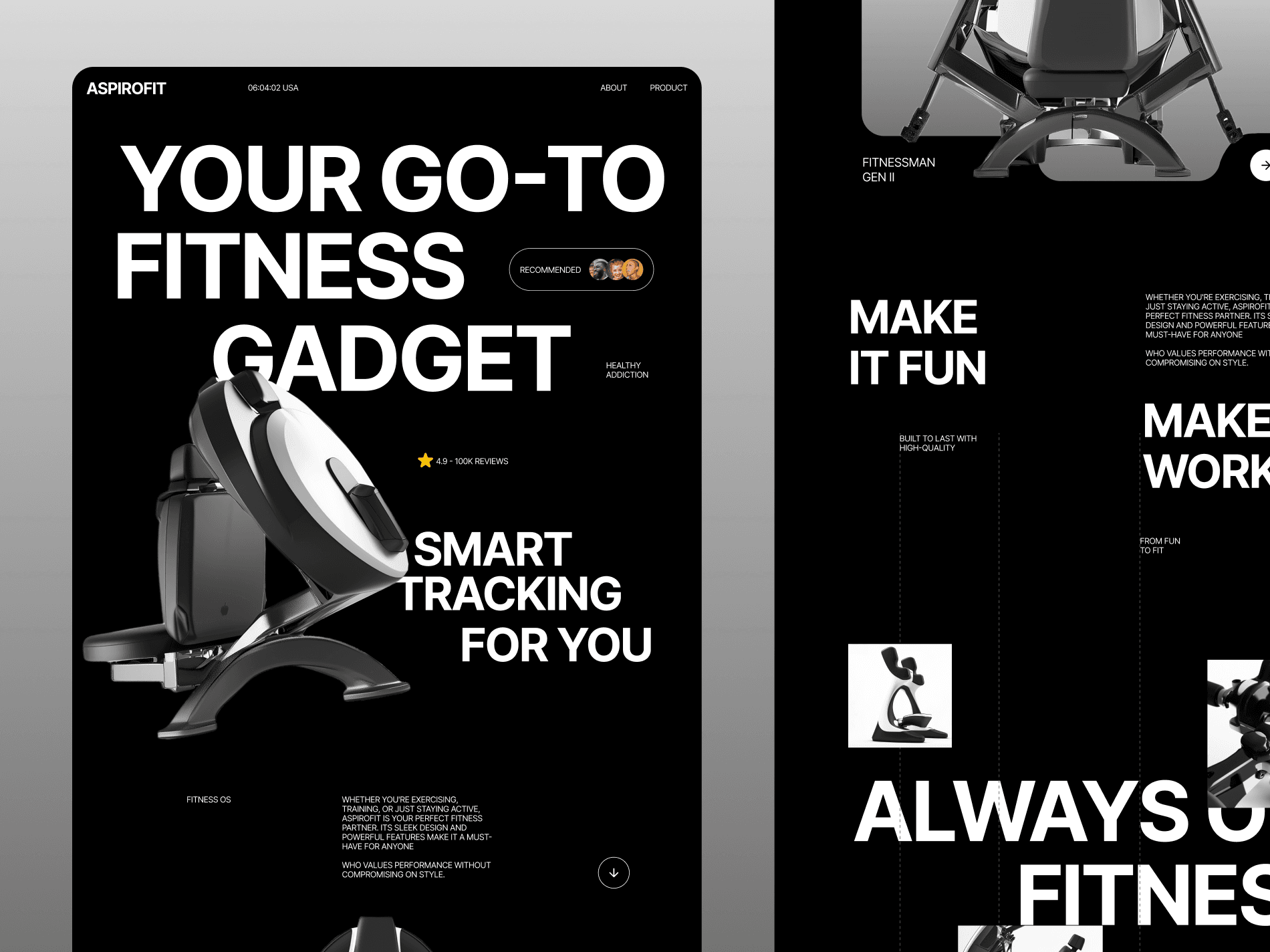
AspiroFit aimed to revolutionize the fitness experience by addressing waning motivation and generic routines. DesignX was tasked with creating a device that fosters adherence through personalized guidance.
The journey to consistent fitness and improved mental well-being is often fraught with obstacles: waning motivation, generic routines, and a lack of integrated support. AspiroFit approached DesignX with a vision to revolutionize this experience, creating a device that not only tracks physical activity but actively fosters adherence through personalized guidance and a mindful approach. Our task was to translate this ambitious concept into a tangible, inspiring, and deeply engaging brand and product design.
Project Overview
| Client Type | Industry | Project Type | Timeline | Deliverables | Tools Used |
|---|---|---|---|---|---|
| Startup Innovator | Health & Fitness, Wearable Technology, Digital Wellness | Brand Identity, Product Design (UI/UX for device and companion app), Marketing Assets, Design System | 5 Months | Brand Guidelines, Logo Suite, UI/UX for AspiroFit Device, UI/UX for Companion Mobile App (iOS/Android), Interactive Prototypes, Marketing Collateral Templates, Comprehensive Design System | Figma, Adobe Creative Suite (Illustrator, Photoshop, After Effects), Miro, Optimal Workshop |
The Challenge
AspiroFit identified a significant gap in the fitness technology market: existing solutions frequently prioritize physical performance metrics while overlooking the critical role of mental well-being and sustained motivation. Users often experience initial enthusiasm followed by a decline in engagement, feeling overwhelmed by rigid plans or disengaged by impersonal interfaces. AspiroFit’s leadership recognized that true adherence required a design that nurtured both body and mind, offering a gentle yet persistent nudge towards self-improvement.
Their challenge to DesignX was multifaceted. They needed a brand identity that conveyed aspiration without intimidation, and a product experience that seamlessly integrated personalized exercise, mindfulness techniques, and gamified progress tracking. The existing concept lacked a cohesive visual language and a clear interaction strategy to unify these diverse features. Specific pain points included how to make abstract concepts like “mental well-being” feel tangible within a wearable device, how to prevent user drop-off common in fitness apps, and how to create a distinct market presence that communicated both scientific backing and empathetic user support. Our goal was to design an experience that felt personal, encouraging, and genuinely helpful for long-term goal achievement.
Our Approach
Our engagement with AspiroFit began with an intensive discovery phase, immersing ourselves in their vision and conducting in-depth workshops with their leadership and product team. We sought to understand not just what AspiroFit wanted to build, but why, and for whom. This foundation informed our subsequent research efforts.
Our research methods were robust and user-centric. We initiated a comprehensive competitive analysis, dissecting the strengths and weaknesses of leading fitness trackers, meditation apps, and personal training platforms. This revealed opportunities for differentiation, particularly in the integration of mental wellness. Simultaneously, we conducted extensive user research, employing surveys and one-on-one interviews with a diverse group of individuals: avid fitness enthusiasts, those new to exercise, and people struggling with consistency. This allowed us to identify common frustrations, motivational triggers, and the psychological barriers to sustained fitness. We explored behavioral science principles, gamification psychology, and established mindfulness practices to inform design decisions that would genuinely support long-term habit formation. The synthesis of this research led to the definition of core user personas, detailed user journeys, and the establishment of key product pillars: genuine personalization, seamless mental wellness integration, and intrinsically motivating progress tracking. This strategic groundwork ensured every design choice was purpose-driven and user-validated.
Key Design Decisions
1. The “Adaptive Flow” UI for Personalized Exercise Routines
To combat the common problem of user fatigue from static workout plans, we designed the AspiroFit device and app UI around an “Adaptive Flow” principle. Instead of offering rigid, predefined exercise schedules, the system intelligently adjusts daily recommendations based on the user’s previous performance, real-time biometric data, self-reported mood, and even recovery metrics. The “Why” behind this was to create a truly living, responsive fitness partner. This dynamic interface presents exercises through fluid, intuitive cards and prompts that evolve, ensuring workouts feel fresh and relevant. By avoiding repetitive sequences and responding to the user’s daily capacity, we aimed to significantly boost adherence and prevent burnout, making the fitness journey feel continuously tailored and achievable.
2. Integrating Mindfulness “Breathing Bubbles” Directly into the Experience
We recognized that for mental well-being to be truly integrated, it could not be relegated to a separate, optional section. Our solution was the “Breathing Bubbles” interaction pattern. During workout cool-downs, recovery periods, or simply as a prompted pause during the day, the device and app display a visually calming animation of expanding and contracting bubbles, synchronized with guided breathing cues. The “Why” was to make mindfulness a natural, effortless part of the daily routine, rather than a task to be consciously initiated. This subtle yet powerful visual cue provides an immediate, accessible entry point into short mindfulness exercises, reinforcing the mind-body connection without disrupting the user’s flow. It transforms abstract mental wellness into a tangible, calming micro-interaction, promoting stress reduction and focus throughout the day.
3. “Journey Map” Gamification, Focused on Personal Progress
Many fitness apps rely on competitive leaderboards, which can demotivate some users. For AspiroFit, we designed a “Journey Map” gamification system. This visual representation allows users to see their entire fitness path as a series of personal milestones and achievements, not just a numerical score. Users unlock virtual badges, new meditation tracks, or personalized tips as they progress through different “zones” on their map. The “Why” was to foster intrinsic motivation and a sense of personal accomplishment. By emphasizing individual growth and consistency over external competition, the Journey Map transforms progress tracking into an engaging, narrative-driven experience. This approach celebrates small victories and provides a compelling visual incentive for continued engagement, making the path to fitness feel like a rewarding personal quest.
Design Highlights
Our visual and interaction design for AspiroFit was meticulously crafted to embody its core values of aspiration, calm, and intelligent support.
Color Rationale: The primary palette centers on a deep, sophisticated Midnight Blue, communicating trust, depth, and a sense of calm, perfectly aligning with the mindfulness aspect. This is contrasted and energized by a vibrant Aqua Teal accent. This accent color signifies energy, innovation, and progress, providing visual cues for active states and achievements. Secondary colors include soft gradients that transition between these two, subtly hinting at the journey and flow of progress. The combination ensures the interface feels both serene and motivating, avoiding the aggressive brights common in many fitness applications.
Typography Choice: We selected a contemporary sans-serif typeface, “Inter,” for all headings and key data points. Its clean lines and excellent readability ensure clarity and a modern aesthetic, even on smaller device screens. For body text and longer informational content, we opted for “Work Sans,” a slightly more humanist sans-serif. This pairing creates a balanced visual hierarchy, offering legibility and a friendly, approachable tone that complements AspiroFit’s supportive brand voice.
Layout Logic: For the AspiroFit device UI, minimalism was paramount. Layouts prioritize glanceability, featuring large, high-contrast typography and essential information. Navigation is streamlined with clear, intuitive touch targets. On the companion mobile app, we employed a clean, spacious card-based layout system. This modular approach ensures content is digestible and easy to navigate, whether users are exploring personalized exercise plans, engaging in mindfulness sessions, or reviewing their progress. A primary dark mode was designed to reduce eye strain, especially during evening use or mindfulness practices, with a well-considered light mode option for user preference and accessibility.
**
Frequently Asked Questions
What problem did the aspirofit Future Of Fitness work need to solve?
AspiroFit identified a significant gap in the fitness technology market: existing solutions frequently prioritize physical performance metrics while overlooking the critical role of mental well-being and sustained motivation. Users often experience initial enthusiasm followed by a decline in engagement, feeling overwhelmed by rigid plans or disengaged by impersonal interfaces. AspiroFit’s leadership recognized that true adherence required a design that nurtured both body and mind, offering a gentle yet persistent nudge towards self-improvement. Their challenge to DesignX was multifaceted.
How did DesignX approach the aspirofit Future Of Fitness work?
Our engagement with AspiroFit began with an intensive discovery phase, immersing ourselves in their vision and conducting in-depth workshops with their leadership and product team. We sought to understand not just what AspiroFit wanted to build, but why, and for whom. This foundation informed our subsequent research efforts. Our research methods were robust and user-centric.
Which design decisions mattered most in the aspirofit Future Of Fitness project?
1. The “Adaptive Flow” UI for Personalized Exercise Routines To combat the common problem of user fatigue from static workout plans, we designed the AspiroFit device and app UI around an “Adaptive Flow” principle. Instead of offering rigid, predefined exercise schedules, the system intelligently adjusts daily recommendations based on the user’s previous performance, real-time biometric data, self-reported mood, and even recovery metrics. The “Why” behind this was to create a truly living, responsive fitness partner.
What stands out in the final Aspirofit Future Of Fitness design?
Our visual and interaction design for AspiroFit was meticulously crafted to embody its core values of aspiration, calm, and intelligent support. Color Rationale: The primary palette centers on a deep, sophisticated Midnight Blue, communicating trust, depth, and a sense of calm, perfectly aligning with the mindfulness aspect. This is contrasted and energized by a vibrant Aqua Teal accent. This accent color signifies energy, innovation, and progress, providing visual cues for active states and achievements.