
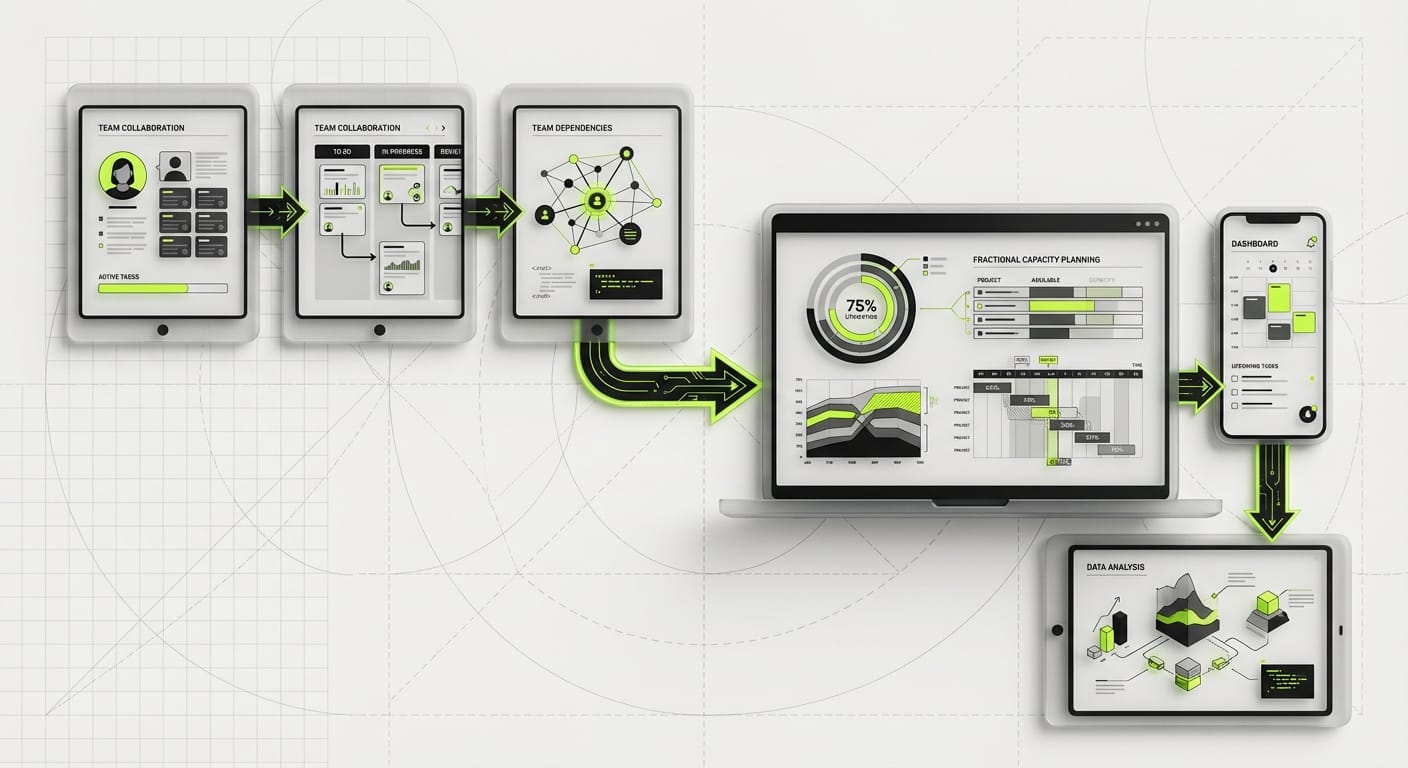
A fractional design team offers senior-level expertise at a fraction of the cost of a full-time hire. This model provides flexibility for companies needing design support.
The term “fractional” has been everywhere in the past few years. Fractional CFO. Fractional CMO. Fractional CTO. The idea is simple: you get senior-level expertise at a fraction of the cost and commitment of a full-time hire.
Fractional design teams work the same way. Instead of hiring a full product design team or commissioning a one-time project with a traditional agency, you get an embedded design function, senior designers, a clear process, ongoing availability, without building a department.
Whether that’s the right model for your company depends on what you’re actually trying to accomplish.
What a Fractional Design Team Actually Provides
A well-structured fractional design arrangement gives you:
- A dedicated, named design team that works on your product consistently (not whoever is available this week)
- Strategic input, not just execution, your team helps define what to build, not just how it looks
- A defined set of weekly hours, clear deliverables, and regular review cadence
- The ability to scale scope up or down based on what you need month to month
What it’s not: a body shop. If an agency just assigns whoever has available time without strategic ownership and continuity, that’s not a fractional model. That’s hourly billing with a different name.
How It Differs From a Traditional Agency Retainer
The line between a fractional design team and a traditional agency retainer is thinner than it sounds, but the differences matter:
A traditional retainer typically means you get agency execution on work you define. You bring problems; they solve them. The agency’s strategic input is limited to the work in scope.
A fractional model means the design team takes ownership of the design function. They help set priorities, flag what’s not working, contribute to product strategy, and operate more like an internal team that happens to be external. The relationship is more collaborative and less transactional.
At DesignX, our fractional design retainer at $9,700/month sits in this category. Clients get senior designers who know their product, attend relevant planning meetings, and make proactive recommendations, not just deliver what’s on the brief.
What It Costs
Fractional design pricing varies significantly based on scope, seniority, and what’s included.

- Light fractional (1-2 days/week): $3,000 to $7,000/month
- Mid-tier fractional (2-3 days/week, broader scope): $7,000 to $15,000/month
- Full fractional team (dedicated team, deep integration): $15,000 to $30,000/month
Compare that to a fully loaded in-house team covering the same scope:
- Two senior designers: $300,000 to $400,000/year
- Plus benefits, recruiting, tools, management overhead
For most companies that don’t need 40 hours of design work per week, the math strongly favors fractional.
When It Makes Sense
Fractional design teams work particularly well in three situations:

You’re past the startup stage but not yet ready for a full design department. You have product-market fit, you’re shipping consistently, and design quality matters, but you can’t justify three or four full-time design hires yet. Fractional fills the gap without locking you into headcount that’s hard to unwind.
Your design needs are real but uneven. Some months are intense, a new product launch, a rebrand, a major UI overhaul. Other months are lighter. Fractional lets you have capacity when you need it without paying for idle time when you don’t.
You need senior expertise that’s hard to hire for. Finding a senior product designer who can also handle brand, web, and strategic input is rare and expensive as a full-time hire. A fractional team typically gives you access to multiple specializations under one retainer.
When It Doesn’t Make Sense
Fractional design is not the right model if design is a continuous, high-volume function that requires daily embedded collaboration with engineering. If your design team needs to be in daily standups, review PRs, and make decisions in real time, the communication overhead of an external team creates friction that slows you down.
It’s also not a good fit if you’re at a stage where deep institutional product knowledge is the primary driver of design quality. For some products, the competitive advantage is knowing the product deeply over years, that accumulates best in-house.
What to Look for When Evaluating a Fractional Design Partner
The things that matter most:
Continuity. Who specifically will work on your account, and will that change? Fractional means you get a team, not whoever’s available.
Strategic ownership. Will the team just execute what you ask, or will they proactively flag problems, challenge assumptions, and contribute to how you think about design priorities?
Process fit. How do they handle feedback cycles, file handoffs, and communication? You want their process to plug into yours, not replace it with something your engineering team has to adapt to.
Outcome tracking. Can they point to measurable results from other clients, not just deliverables, but what happened after the work shipped?
Questions to Ask Before Signing
- Who are the designers who will work on our account?
- How do you handle onboarding, how long until the team knows our product?
- What does a typical week look like in terms of touchpoints and reviews?
- How do you handle months when we need significantly more or less capacity?
- What happens to our files and design system if we end the relationship?
An agency that can’t answer these questions clearly before you’ve signed isn’t structured for a serious fractional engagement.
FAQ
How much does a fractional design team cost per month?
Expect $3,000 to $15,000 per month for most fractional design arrangements, with full-team embedded models running higher. The range depends on scope, hours, seniority, and what’s included (strategy vs. pure execution).
What’s the difference between a fractional design team and a design retainer?
A design retainer typically means ongoing access to an agency for project execution. A fractional model implies a higher level of ownership, the team functions more like an internal design department, contributing strategically and proactively rather than just completing assigned work.
How quickly can a fractional team get up to speed on our product?
A structured onboarding process with access to your product, existing research, and documentation takes 2 to 4 weeks to get a team to productive output. Full context depth takes longer, which is why relationship continuity matters so much.
Is fractional design right for early-stage startups?
Often, yes. Pre-Series A startups that need design but can’t justify a full-time hire get strong value from fractional arrangements. It gets them senior design quality faster than hiring, without the overhead of a full-time employee before they’re sure what they need.
Can we switch from fractional to in-house later?
Yes, and it’s a common progression. Companies often start fractional, use that period to understand their real design needs, and hire in-house once they have clear volume and requirements. A good fractional partner will support that transition, not complicate it.
Is It Right for You?
If you need senior design talent, strategic ownership, and flexibility, and you’re not at a stage where daily embedded collaboration justifies full-time headcount, fractional is worth a serious look.
DesignX offers a fractional design retainer built for product companies that need more than a project agency but aren’t ready for a full design department. If you want to talk through whether it fits, we’ll give you a straight answer.