
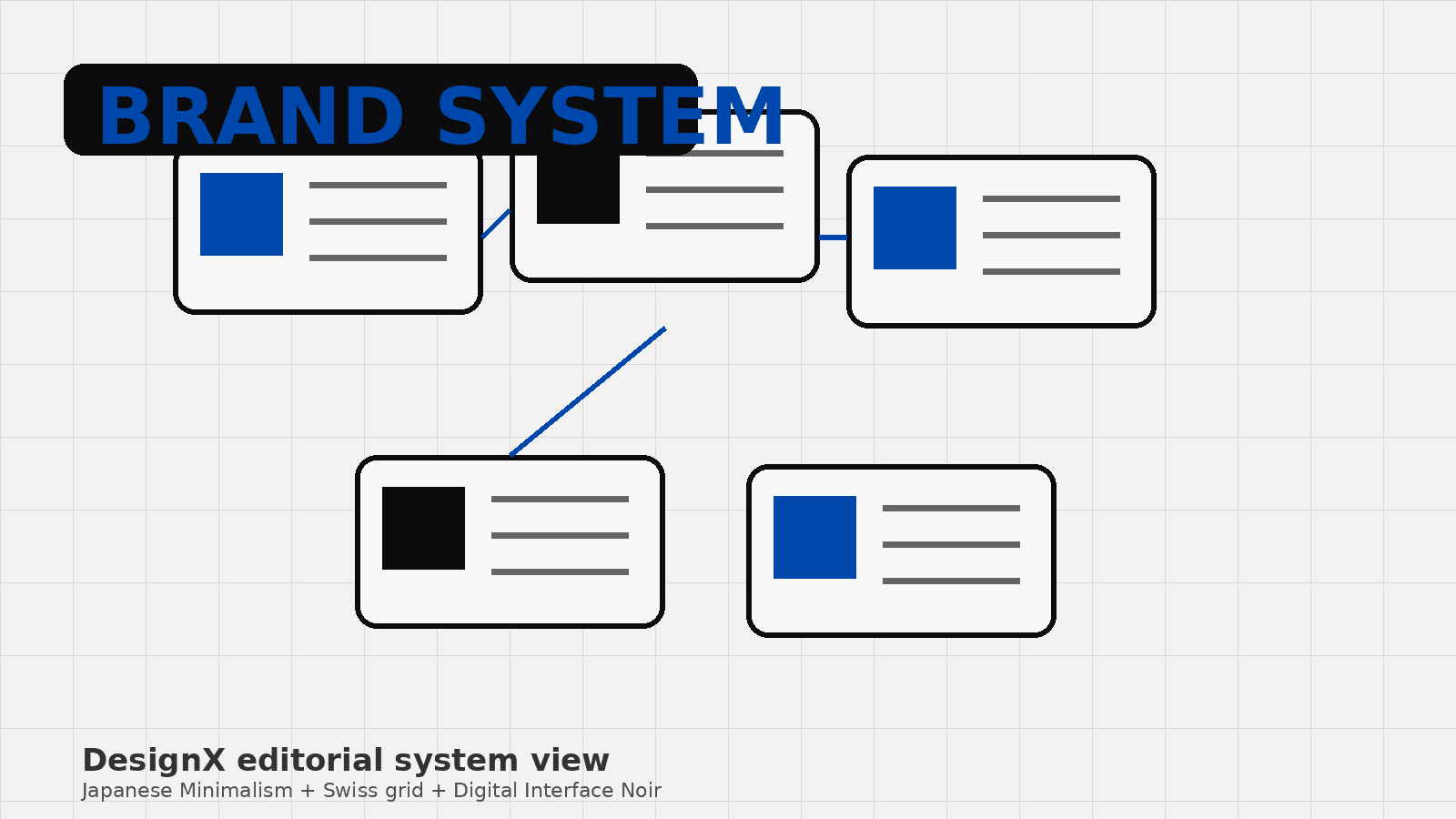
A brand strategy package should include a diagnosis, a position, a messaging system, a voice, a visual direction, and a rollout plan. If it does not help your team make clearer decisions after the workshop ends, it is not strategy. It is a nice PDF.
Brand strategy has been watered down into moodboards, archetypes, and decks full of adjectives. Bold. Human. Premium. Disruptive. None of that helps a sales team handle objections. None of it helps a product team name features. None of it tells a founder what to say on the homepage or what proof the market needs before it believes the claim.
- Diagnosis of the business problem and market situation.
- Audience and buyer truth, based on real decisions and objections.
- Positioning, category narrative, and proof strategy.
- Messaging system, voice rules, and practical homepage language.
- Visual direction and rollout rules for web, sales, product, and hiring.
If you are still comparing budgets, pair this with our guide to brand redesign cost and the broader startup branding guide.
What a brand strategy package should include
Start with the diagnosis. Before a designer touches color or type, the team should understand the business problem. Are you losing deals because buyers do not understand what you do? Are you moving upmarket while the current brand still signals cheap? Are you entering a crowded category where every competitor says the same thing?
A strong package should document that diagnosis in plain language. No ceremonial strategy language. Name the situation and the decisions it creates.
Audience and buyer truth
A persona with a stock photo and a fake name is not buyer truth. A useful brand strategy package defines who makes the decision, what they are trying to avoid, what they already believe, what alternatives they compare against, and what evidence moves them.
This is where market research matters. The SBA market research guide frames competitive analysis as a business planning input, not a branding decoration. A brand package should turn that research into usable choices.
Positioning and category narrative
Positioning is the spine of the package. It should define the category, the enemy, the promise, the proof, and the reason to choose you now. Good positioning creates exclusion. It tells you what you will stop saying because those messages make you sound like everyone else.
Weak teams avoid exclusion. They want the brand to appeal to everyone, so it ends up meaning nothing to anyone. Strong strategy gives the founder permission to choose.
Messaging system and voice
A real messaging system includes the core narrative, homepage headline directions, value propositions, proof points, objection-handling language, product or service descriptions, and tone rules. The goal is not one perfect tagline. The goal is a language system sales, marketing, product, and leadership can reuse without reinventing the story every week.
Visual direction and identity principles
Visual direction should follow the strategic spine. “Premium” is not a color palette. “Enterprise-grade precision for industrial buyers” might become restrained color, technical typography, dense information layouts, and photography that signals build quality.
Oura Ring is a useful reference from the DesignX orbit. Launch identity work for a new behavior has to create trust, desirability, and a world the product can belong to. The visual system carries a strategic job, not a decoration job.
Rollout plan and decision rules
The package should say where the brand shows up first: website, pitch deck, product UI, sales collateral, hiring page, or customer onboarding. It should name what gets replaced, who owns the system, and how future decisions get made.
Apellix shows why this matters. They needed industrial robotics to feel credible, precise, and commercially real. The preview-to-wow-to-close motion worked because the strategy made the future company easier to believe.
What to avoid
- Decks full of adjectives with no business choices.
- Moodboards that cannot guide a homepage, product UI, or sales deck.
- Personas that do not map to buying power or objections.
- Voice rules that sound nice but do not help anyone write.
- Visual systems that look good in a presentation and fall apart in use.
If you want brand strategy that becomes a usable system, review DesignX engagement options and bring the business decision the brand needs to support.
The deliverables should change behavior
A strong brand strategy package should change how the team writes, sells, designs, hires, and evaluates future ideas. If the team still argues from taste after the project ends, the strategy did not create enough decision rules.
Decision rules can be simple. Lead with the buyer pain before the product category. Use technical detail to prove credibility, not to show off. Avoid words competitors already own. Keep the visual system restrained because the buyer equates restraint with maturity. Those rules help the team act without asking the founder to review every line.
How to judge a package before you buy it
- Ask what business decisions the package will help you make.
- Ask which buyer evidence will shape the work.
- Ask how the messaging system will transfer to the website and sales deck.
- Ask what visual decisions will be made and which will wait for identity design.
- Ask how the final strategy will be used after the workshop.
If the answer sounds like artifacts instead of decisions, be careful. A workshop, moodboard, and deck can be useful, but they are not the outcome. The outcome is a brand system your team can use. For pricing context, read our brand redesign cost guide before you compare proposals.
The founder should leave with sharper language
One of the fastest ways to judge brand strategy is to listen to how the founder explains the company after the work. The sentence should get clearer. The buyer should get narrower. The proof should get more concrete. The company should stop sounding like a category average.
If the founder still needs a five-minute preamble to explain the business, the strategy did not do enough compression. Good strategy makes the company easier to repeat. That matters for sales calls, recruiting, investor conversations, web copy, and every intro someone makes on your behalf.
Strategy has to survive outside the deck
A strategy package should be stress-tested against real surfaces: homepage hero, sales deck opener, LinkedIn profile line, product navigation, onboarding email, recruiting pitch, and customer objection. If the strategy cannot help with those surfaces, it is still too abstract.
This is why DesignX connects brand strategy to web, UX, and product expression. The brand has to work where buyers make decisions. The deck is only the container.
The minimum viable version for a smaller team
A smaller company may not need a massive strategy engagement. It may need a tight version of the same thinking: market diagnosis, buyer definition, positioning statement, core message, proof points, voice rules, and a homepage narrative. That can be enough to align sales, web, and product for the next stage.
The mistake is skipping strategy because the company is early. Early companies need fewer artifacts, not weaker thinking. A lean strategy package should make the next website, pitch deck, sales email, and product explanation easier to create.
As the company grows, the package can become a fuller system: identity, campaign language, design principles, content model, product naming, governance, and rollout. The shape changes, but the job stays the same. Brand strategy should reduce confusion and improve decisions.
The approval test
Before you accept the package, ask your team to use it on a real decision. Rewrite a homepage section. Reframe a sales objection. Judge a visual direction. Decide whether a product name fits. If the strategy helps the team move faster and argue less, it is working. If everyone still has to interpret the deck from scratch, the package needs another pass.
That final pass is where good strategy becomes practical. The strategist should remove vague language, sharpen the proof, and turn abstract ideas into rules your team can use without a consultant in the room.
FAQ
What should be included in a brand strategy package?
A brand strategy package should include diagnosis, audience insight, positioning, messaging, voice, visual direction, and rollout rules. The deliverable should help the team make better decisions after the project ends.
Is brand strategy the same as visual identity?
No. Brand strategy defines the market position, buyer, promise, proof, message, and decision rules. Visual identity expresses that strategy through logo, type, color, imagery, layout, and system behavior.
How much does brand strategy cost?
Cost depends on depth, research, stakeholder complexity, and whether identity or web work is included. Founder-led strategy packages often sit in the five-figure range when the work affects positioning, messaging, and launch.
What is a bad brand strategy deliverable?
A bad deliverable uses adjectives, moodboards, and archetypes without making business decisions clearer. If sales, web, product, and leadership cannot use it, it is not doing enough work.
Should startups invest in brand strategy early?
Startups should invest when the brand affects sales trust, pricing, fundraising, hiring, or category clarity. If the company is still testing the offer, keep the strategy lean and decision-focused.
Related DesignX reading: startup branding guide and brand redesign cost gives teams a practical next step from this topic.
Related DesignX reading: brand identity for B2B SaaS gives teams a practical next step from this topic.